

Germany's Military Aims to Launch a Starlink Alternative by 2029
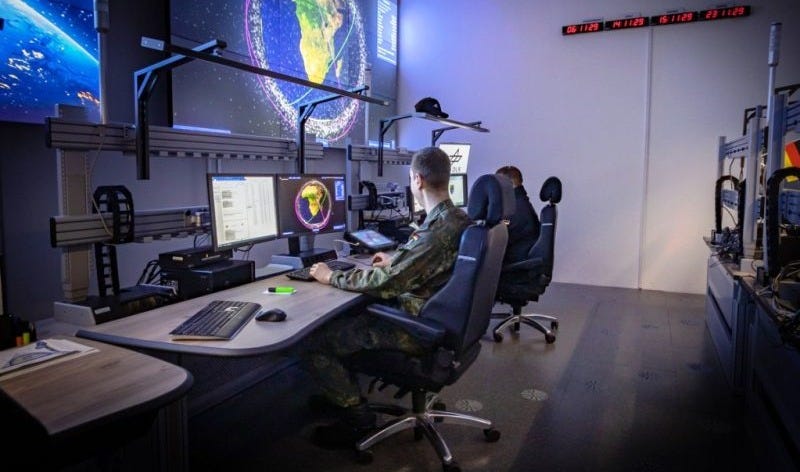
Germany’s military, known as Bundeswehr, plans to build its own satellite constellation as an alternative to SpaceX’s Starlink, with the aim of establishing independent communications capabilities with its own constellation similar to Starlink.
The Bundeswehr seeks to reduce dependence on foreign networks amid rising geopolitical tensions. The German armed forces intend to deploy a constellation of hundreds of satellites for communications and possibly other applications, such as remote sensing. Handelsblatt confirmed the plans with a German Ministry of Defense spokesperson, though details on cost and design remain classified due to national security concerns.
According to the Ministry of Defense spokesperson, Germany is exploring various deployment options as alternatives to Starlink. The Bundeswehr is assessing which service will best meet Germany’s increasing demand for connectivity. Germany's anticipated timeline for establishing a constellation comparable to Starlink is 2029, although it is unclear whether this marks the beginning or completion of construction.
The Bundeswehr's interest in a Starlink alternative originally derives from Ukraine's use of SpaceX’s internet services during the Russian invasion that kicked off in February 2022. Ukraine's use of Starlink highlights satellites' significant role in wartime communications. Starlink has provided a vital communications system to Ukraine’s military since Russia’s full-scale invasion began. It allows the armed forces to coordinate drone strikes, identify targets, and stream battlefield data to troops on the ground in real-time.
U.S. officials threats to cut off the system in Ukraine if the country didn’t meet demands regarding the rights to its vast mineral resources further incentivized Ukraine to explore the development of its own national satellite communication system. Concerns about dependency on foreign systems have also led Russia and China to investigate alternatives to Starlink.
As global powers increasingly regard space as a crucial domain, Germany's initiative aligns with a broader trend of nations striving for control over their space assets. If realized, the Bundeswehr's constellation could impact Europe's defense landscape, offering a counterbalance to Starlink's dominance, while addressing the risks associated with reliance on external providers in a period of heightened global uncertainty. Germany is host to a number of new launch companies that are aiming to reach orbit in the near future and could be involved in launching satellites for the Bundeswehr. These include: HyImpulse, Rocket Factory Augsburg and Isar Aerospace, which recently made its first orbital launch attempt from Andøya Spaceport in Norway.
Other European countries have also looked into alternatives to Starlink. UK’s Inmarsat, Luxembourg’s SES, and Spain’s Hisdesat have also been engaging in discussions with governments and EU institutions about how to provide connectivity. Longer term, Europe is placing its bets on IRIS² ((Infrastructure for Resilience, Interconnectivity and Security by Satellite), a planned multi-orbit satellite internet constellation expected to become active in 2030. There are also reports of an Airbus-Leonardo-Thales Alenia Space joint venture called “Project Bromo” that could challenge Starlink’s global dominance.
The shift away from Starlink in recent months has also been linked to public perceptions of Elon Musk, CEO of SpaceX- though Italy’s Defense Minister advised politicians to focus on Starlink’s technology, rather than Musk's political views, when considering SpaceX’s internet service.