

Germany Announces $41B Defense-Space Plan, Citing Emerging Threats

Germany plans to invest €35 billion ($41 billion) in space-related defense projects by 2030, aiming to enhance the nation’s technological capabilities and safeguard its assets in orbit as outer space becomes more militarized, according to Defense Minister, Boris Pistorius.
The announcement came during his speech at the third annual BDI Space Congress in Berlin, held on September 25, 2025. Pistorius stated that satellite networks are critical to modern societies, noting that attacks on them can cause significant disruption. “Satellite networks today are an Achilles’ heel of modern societies. Whoever attacks them paralyzes entire nations,” said Pistorius. He referenced the Russian cyberattack on the ViaSat satellite network prior to the Ukraine invasion, which impacted the operational control of approximately 6,000 wind turbines in Germany.
Pistorius described a framework for developing military space security measures, including strengthening systems against attacks, upgrading orbital surveillance with radars and telescopes, planning for future “guardian satellites,” and establishing a dedicated military satellite operations center within the Bundeswehr’s Space Command, founded in 2021 under the country’s air force. “We plan to acquire new satellite constellations - for early warning, reconnaissance, and communications. We will also utilize dual-use systems, meaning technologies that can be deployed for both civilian and military purposes,” Pistorius added.
He also mentioned Russia and China as countries with notable activities in space, citing two Russian Luch-Olymp reconnaissance satellites tracking two Intelsat satellites used by the Bundeswehr. Pistorius raised concerns regarding the intent behind such actions and noted the proximity to potential threat scenarios. He described Russia’s conduct in space as presenting challenges that require attention. “Russia and China have in recent years rapidly expanded their capabilities for conducting warfare in space,” the Pistorius said. “They can disrupt, jam, manipulate or even physically destroy satellites.”
The 1967 Outer Space Treaty, ratified by 117 countries, including all major spacefaring nations, restricts placing weapons of mass destruction in orbit and mandates that celestial bodies be used only for peaceful objectives. Pistorius suggested that the country should assess the development of offensive capabilities in space to ensure credible deterrence, marking a shift from Germany’s previous policies, explicitly focused on defense. “We must also be able to deter in space in order to be defensible,” he declared.
Historically, Germany has depended on the U.S. and other European nations for key space capabilities like missile warning, intelligence, and launches. Germany’s military has instead prioritized developing its own radar surveillance satellites as part of allied data-sharing agreements.
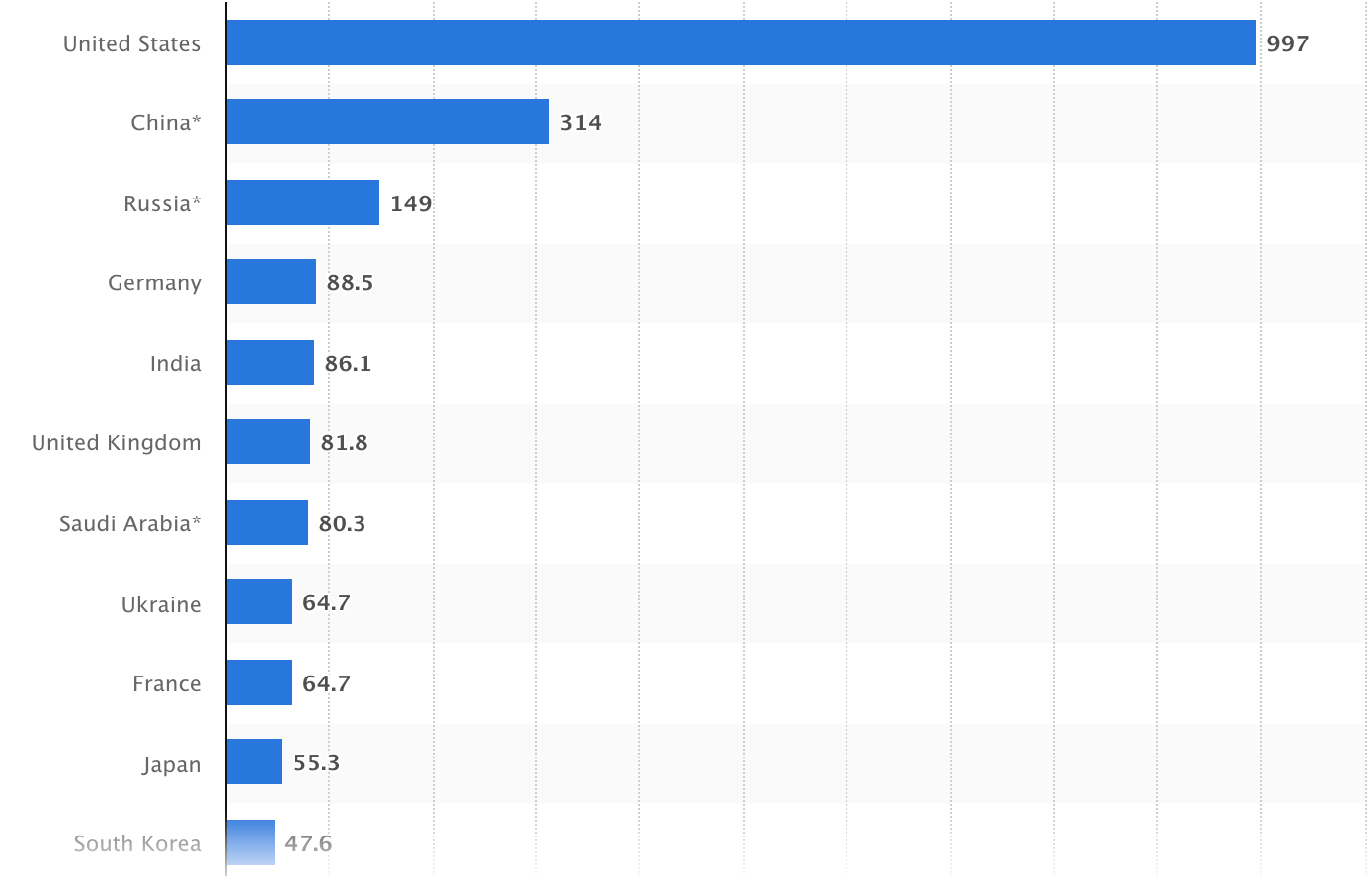
Pistorius noted that the Ministry of Defense is reaching out to German as well as European industry for assistance in making its space plans a reality. Germany’s planned investment in space defense aligns with increases in its overall military budget, making it the fourth largest globally in defense spending, following the U.S., China, and Russia.
.