

Frankenburg Technologies Raises $50 Million as Counter-Drone Defense Draws Capital
Each month, thousands of drones are produced for deployment in Ukraine by both allied forces and adversaries, accelerating a technological arms race in the air. As swarm tactics become more prevalent and unauthorized drone activity spreads beyond active battlefields, attention has increasingly turned to companies developing defenses against unmanned aerial systems.
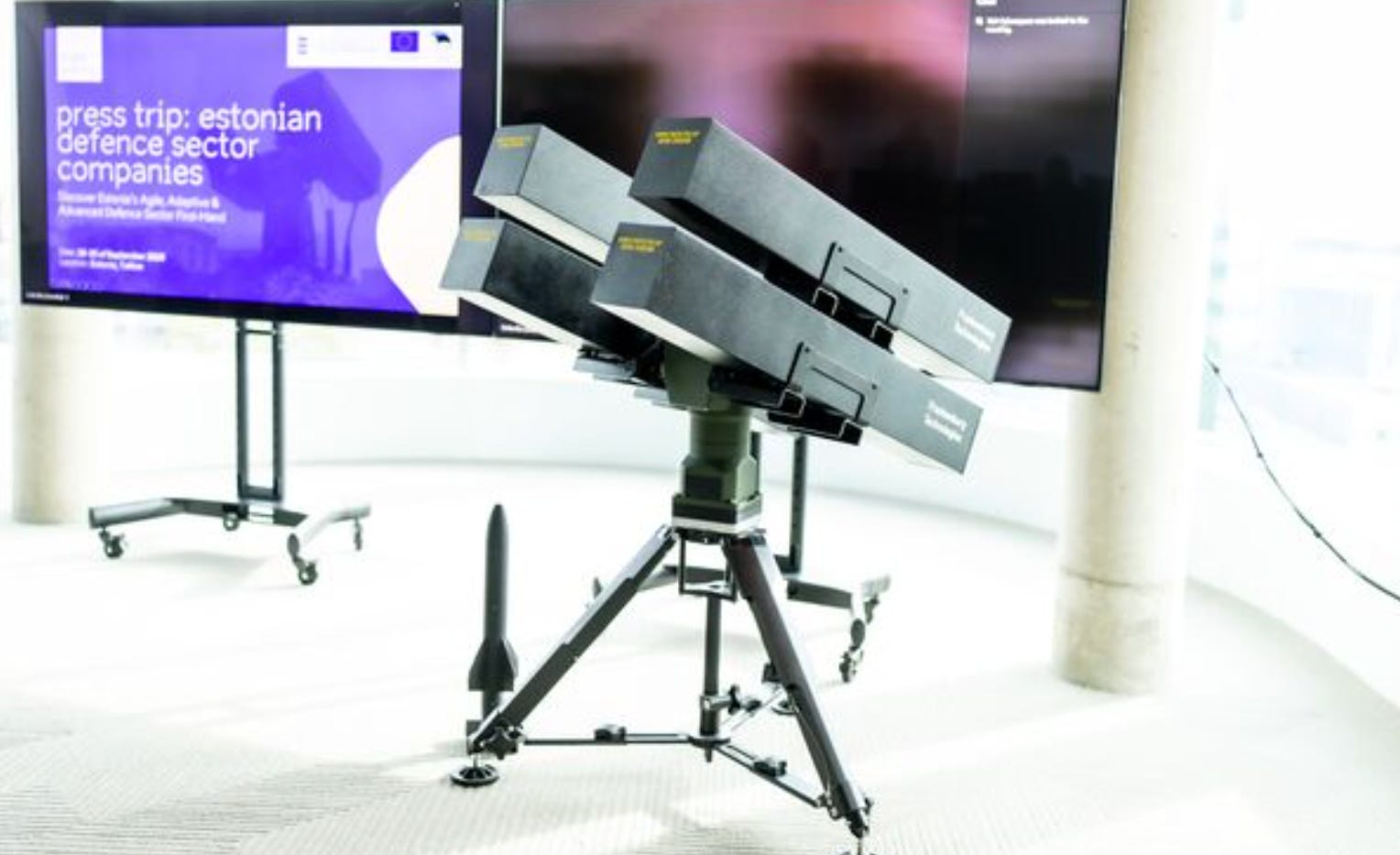
One of the latest beneficiaries of that shift is Frankenburg Technologies, a Baltic defense technology startup focused on affordable, AI-driven anti-drone missile systems. Sources indicate the company has raised nearly $50 million in new funding at a valuation approaching $400 million, with a formal announcement expected soon.
The round introduces several new investors and may set the stage for a larger raise later this year. Existing backers include London-based Blossom Capital, Shellona Ltd, Estonian private equity firm MM Group, and Milrem Robotics CEO Kuldar Väärsi.
A Company Built for a Drone-Saturated Battlefield
Frankenburg was founded in early 2024 in Estonia and Latvia, backed by prominent Baltic technology founders and investors. The company’s core focus is producing fast, cost-efficient interceptor systems designed to counter increasingly cheap and numerous drones, particularly in high-intensity environments like Ukraine.
Since then, the operational context has only intensified. Drone swarms are now a defining feature of the war, and similar incursions have been reported in the airspace of multiple countries. As a result, governments are reassessing whether existing air defense architectures, often designed for far more expensive threats, are suited to this new reality.
That reassessment has driven interest in a wide range of counter-UAS approaches. Some firms emphasize “soft-kill” solutions that exploit the radio spectrum. Others, including Frankenburg, pursue integrated hardware-software systems, ranging from interceptor missiles to concepts such as layered “drone walls.”
Peers in this space include Latvia’s Origin Robotics and LMT, Estonia’s DefSecIntel Solutions, Cambridge Aerospace in the United States, and France’s Atreyd.
Momentum and Partnerships
PitchBook data shows Frankenburg previously raised just over $5 million in seed funding, valuing the company at roughly $161 million. The jump to a valuation near $400 million reflects both increased capital flowing into defense technology and heightened urgency around counter-drone systems.
The company has expanded rapidly over the past year. It opened a UK headquarters in December 2024 and demonstrated a Shahed interceptor in Latvia in December 2025. In January, Frankenburg announced a partnership with Babcock, the UK defense contractor, to co-develop maritime counter-drone systems for ships, ports, and offshore infrastructure.
Leadership and advisory ties have also played a role in accelerating growth. Taavi Madiberk, the company’s non-executive chairman, is also CEO of Skeleton Technologies. Advisor Martin Herem is a former commander of the Estonian Defence Forces. Väärsi serves both as a board member and strategic investor. Since September 2024, CEO Kusti Salm has brought experience from the NATO Innovation Fund and Estonia’s Ministry of Defence.
Capital, Speed, and Skepticism
The investment comes amid record interest in defense and resilience technologies. Depending on methodology, global investment in the sector ranged from $7.1 billion (Crunchbase) to $49.1 billion (PitchBook) last year. Geopolitical risk, rapid technological change, and evolving procurement models have all contributed to the surge.
Speaking at the Resilience Conference last year, Salm noted that procurement cycles have shortened while private capital has become more available. “For the first time in 70 years we are in a situation where there is private money available for developing defense technology and weapons,” he said, adding that entrepreneurs now play a greater role in defining technical requirements rather than simply responding to exhaustive specifications.
Still, not all observers are convinced. One investor familiar with the space cautioned that Frankenburg’s systems may not yet be performing as advertised and that commercial traction remains limited. Such skepticism is common in a sector where battlefield relevance, scalability, and reliability matter far more than pitch decks.
The Bigger Picture
Whether Frankenburg ultimately lives up to its valuation remains to be seen. But its rapid rise underscores a broader shift: capital is increasingly flowing toward companies that promise speed, affordability, and adaptability in response to real operational problems, especially drones.
As governments rethink how they defend airspace saturated with inexpensive, disposable systems, startups like Frankenburg are testing whether new models of defense innovation can keep pace with the battlefield.