

Former U.S. Defense Officials Advise Pentagon to Expand Hypersonic Weapons Development
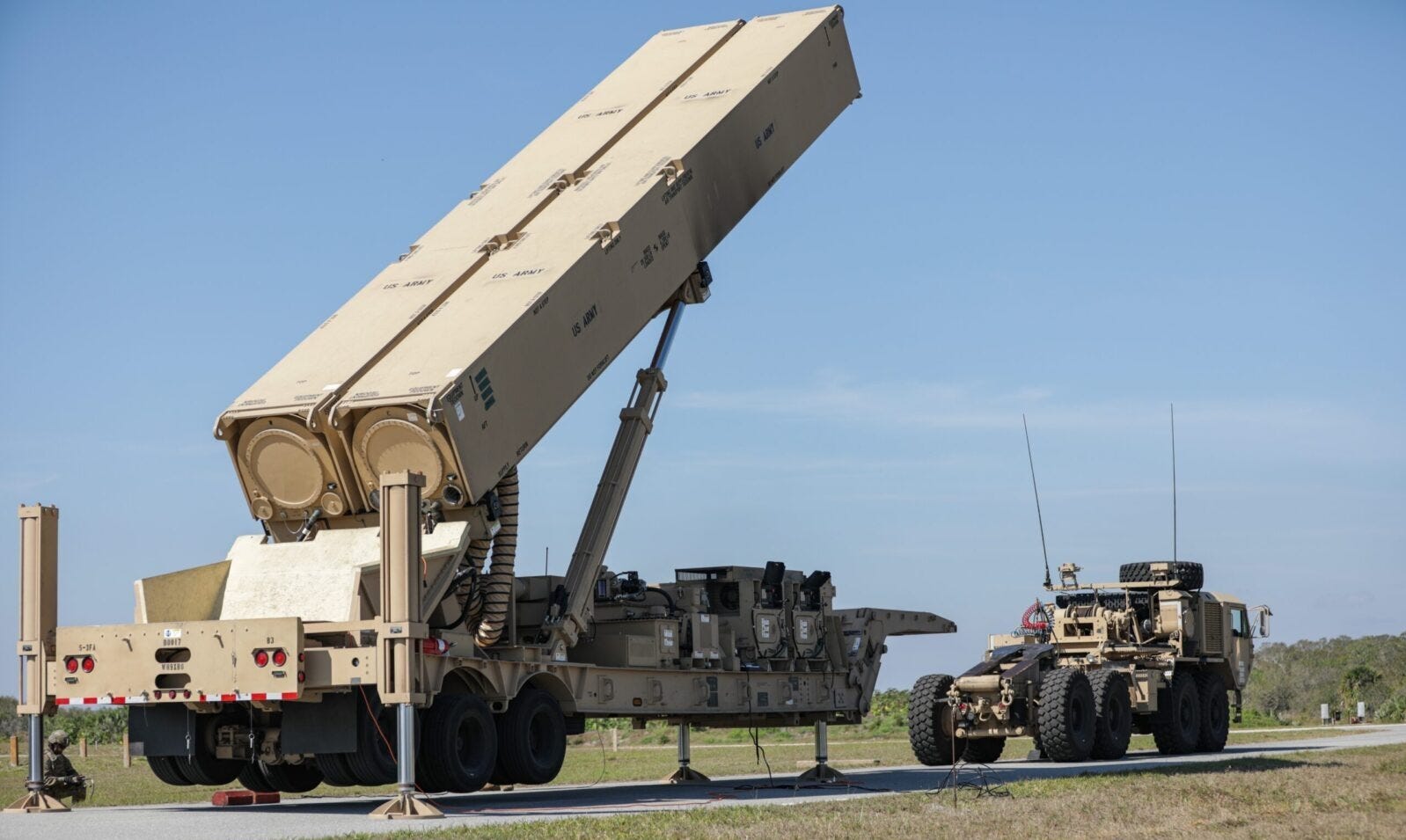
A coalition of former senior U.S. defense officials has recommended that the Pentagon significantly increase investment in advanced hypersonic weapons and manufacturing infrastructure, emphasizing concerns that China and Russia are advancing more rapidly in developing high-speed, maneuverable missile technology that could undermine U.S. military deterrence. This guidance is outlined in a report published on October 9 by the Atlantic Council’s Scowcroft Center for Strategy and Security, which encourages the Department of Defense to promptly deploy both offensive hypersonic strike capabilities and counter-hypersonic defense systems at sufficient scale to establish credible deterrence and address potential threats from adversaries.
The report was produced by the Atlantic Council’s Hypersonic Capabilities Task Force, established in early 2025 and co-chaired by former Air Force Secretary Deborah Lee James and former Army Secretary Ryan McCarthy. The task force comprises former senior Pentagon officials and industry leaders. “With Russia and China making significant progress in hypersonic technologies, the United States faces critical decisions regarding allocation, prioritization, and deployment,” the task force stated.
Hypersonic weapons, able to travel at speeds exceeding Mach 5 while evading detection through agile maneuvering, have emerged as a major strategic priority for U.S. policymakers. China has conducted numerous tests involving hypersonic glide vehicles and cruise missiles, whereas Russia has deployed operational systems during conflicts such as those in Ukraine.
Lead author Michael White, previously principal director for hypersonics in the Pentagon’s research and engineering division, noted that although the U.S. has developed advanced hypersonic missiles, current cost levels are prohibitive. Some existing systems reportedly cost between $15 million and $30 million per unit, restricting production volumes. “While the systems we have ready for deployment are highly capable, their significant expense precludes manufacturing the quantity required to deter adversaries likely to use large-scale attacks,” White remarked during an Atlantic Council panel. He advocated for concerted efforts by the Pentagon and defense industry to achieve a balance between affordability and capability, enabling scaled-up production of hypersonic systems.
The task force suggests that the current U.S. defense industrial base lacks the necessary incentives and structural orientation to produce hypersonic weapons cost-effectively. The report calls for a substantial shift toward manufacturing models inspired by commercial aerospace and automotive sectors, focusing on high-volume, lower-cost production methods rather than bespoke, high-end solutions. “A fundamental change in perspective is needed,” the report asserts, further recommending that investments target innovative means of expanding affordable capacity, as opposed to simply enhancing traditional defense contractor output.
White proposed that the Pentagon should transition from established practices and embrace manufacturing approaches typical within commercial industries, prioritizing cost efficiency akin to strategies used in commercial space enterprises to drive down launch expenses. Whitney McNamara, senior vice president at Beacon Global Strategies and task force member, also identified modernization of hypersonic testing infrastructure as a crucial area of focus. Currently, she observed, facilities and procedures are fragmented, impeding development timelines. McNamara suggested creating an AI-driven test network capable of integrating and analyzing data across multiple programs, thereby substantially reducing costs and accelerating testing processes.
The report highlights recent efforts by the Pentagon’s Test Resource Management Center to upgrade facilities and utilize commercial space assets for more frequent hypersonic flight testing. However, McNamara indicated that advancement has been insufficient: “Commercial innovation must be leveraged more assertively to alleviate testing delays.”
White correlated the drive for extensive hypersonic weapon manufacturing to the broader context of U.S. missile defense initiatives, including the Golden Dome project initiated under the Trump administration to counter hypersonic threats. He underscored that reliance exclusively on kinetic defensive measures risks being overwhelmed by volume, stressing the importance of robust offensive capabilities to proactively deny enemy launches. White concluded that effective deterrence against adversaries such as China and Russia rests on the ability to field a substantial number of hypersonic weapons, both offensive and defensive, rather than limited prototype units, asserting that “capability without sufficient capacity does not constitute effective deterrence.”
The Pentagon and Congress are considering responses to the hypersonic threat, including accelerating new weapons development, appointing a central coordinator, improving interagency cooperation, and updating detection and defense systems. Upcoming U.S. investments in missile defense and collaboration with allies will be important as competitors advance. Congress will continue to hold hearings and review reports on budgets and oversight for hypersonic systems.