

Five Areas Shaping Europe’s Defense Landscape in 2026
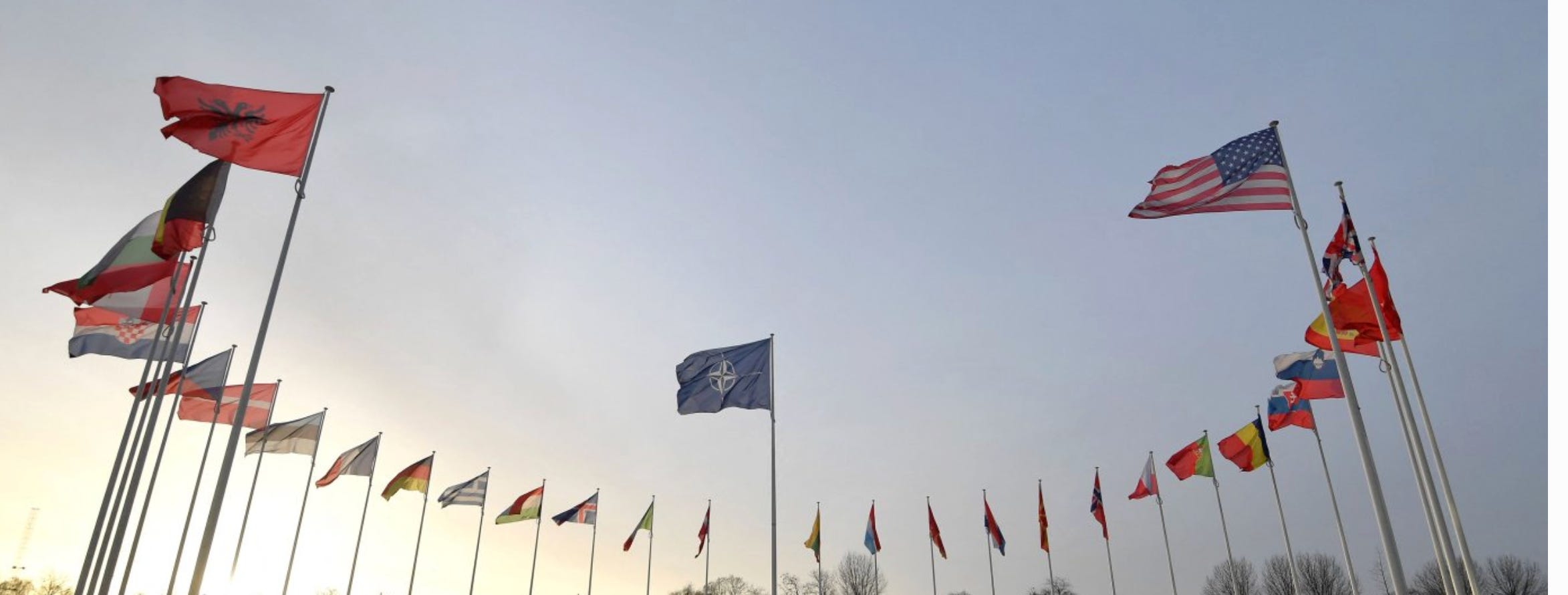
Europe’s defense and dual use ecosystem is entering a period of accelerated change. Strategic pressure, industrial mobilization, and shifting security assumptions are driving investment and experimentation across multiple domains at once. Rather than focusing on what Europe lacks, a more useful question for 2026 is where growth, capability expansion, and operational relevance are most likely to concentrate.
Progress will not be uniform. But across a small number of areas, operational need, political urgency, and industrial feasibility are beginning to align. These are the areas where Europe is likely to see the most meaningful advances over the next two years.
Undersea Security and Maritime Autonomy
Undersea security is emerging as one of the most dynamic areas of growth in European defense activity, particularly along the northern maritime flank. The United Kingdom, the Nordic countries, and the Baltic states are prioritizing the protection of subsea cables, pipelines, and offshore infrastructure in response to heightened concern about activity below the threshold of war. Recent incidents involving damaged cables in the Baltic Sea and increased monitoring of Russian undersea activity in the North Atlantic have sharpened attention on the need for persistent presence below the surface.
What distinguishes this area from past naval modernization efforts is the shift away from episodic patrols toward continuous monitoring. Growth is being driven less by traditional shipbuilding programs and more by maritime autonomy, unmanned underwater vehicles, and civilian derived sensing and communication technologies that can be fielded incrementally. Autonomous inspection, seabed sensing, and underwater communications are increasingly viewed not as niche capabilities, but as foundational infrastructure for maritime security. By 2026, Europe is likely to see a significant expansion in persistent undersea awareness enabled by dual use autonomous systems operating at scale.
Space Access, Resilience, and Reconstitution
Europe’s space sector is undergoing a quiet but consequential shift. Space is no longer treated primarily as a scientific or prestige domain, but as operational infrastructure that underpins communications, navigation, intelligence, and command and control. As congestion and contestation in orbit increase, growth is concentrating around resilience rather than singular capability.
The most important developments over the next two years are likely to occur in responsive launch, space domain awareness, and architectures designed for rapid replacement rather than permanence. Political urgency around sovereign access to orbit, combined with growing recognition of the fragility of existing systems, is accelerating investment in small launch, in orbit servicing, and traffic management. By 2026, Europe’s space ecosystem is likely to be more distributed, more redundant, and more operationally focused than it is today, with greater emphasis on continuity under disruption.
Autonomy Designed for Real World Constraints
Autonomy remains a major area of growth, but along a distinctly European trajectory. Rather than pursuing artificial intelligence abundance, European efforts are increasingly focused on autonomy that functions under real world constraints. Limited data availability, degraded connectivity, restricted compute, and regulatory requirements shape how autonomous systems can be deployed in practice.
As a result, growth is occurring in approaches that emphasize robustness over raw performance. Simulation first development, hybrid systems combining rules and learning, and edge based autonomy are gaining traction because they can be fielded, tested, and scaled within Europe’s operational realities. By 2026, Europe’s contribution to autonomous systems is likely to be defined less by model size or training data and more by deployability, resilience, and integration into existing force structures.
Strategic Mobility, Logistics, and Sustainment Technologies
Sustainment and logistics are moving from the background to the foreground of European defense planning. Recent conflicts have reinforced the importance of endurance, repair, and energy resilience, driving growth in deployable power, autonomous logistics, field manufacturing, and maintenance technologies.
This area is particularly well suited to dual use innovation. Many of the most relevant technologies mature first in civilian contexts, including energy systems, logistics optimization, and additive manufacturing, before being adapted for defense use. Over the next two years, Europe is likely to see expanded investment in technologies that reduce dependency on fragile supply chains and enable forces to operate longer and with greater flexibility. By 2026, sustainment capabilities will increasingly be recognized as force multipliers rather than supporting functions.
Scalable Production, Industrial Automation, and Supply Chain Security
Underlying all of these areas is a broader shift toward scalable production and industrial readiness. Growth in European defense capability is increasingly tied not just to innovation, but to the ability to produce, adapt, and replenish systems efficiently at scale. Attention is therefore turning toward industrial automation, testing and validation infrastructure, and supply chain security as enablers of capability across domains.
Rather than focusing solely on new platforms, policymakers and industry are increasingly concerned with how quickly systems can be manufactured, integrated, and replaced. Investment in automated production, resilient supply chains, and modular manufacturing processes is beginning to reshape how defense and dual use technologies are brought to market. By 2026, progress in this area will be decisive, because it determines whether advances in autonomy, space, undersea security, and sustainment translate into durable capability.
Looking Ahead
Taken together, these five areas highlight where Europe’s defense and dual use ecosystem is likely to see the most growth over the next two years. Undersea security, space resilience, constraint aware autonomy, sustainment, and scalable production are not isolated trends. They reinforce one another, and their convergence will shape Europe’s security posture well beyond 2026.
The most consequential developments are unlikely to be defined by individual platforms or headline programs. Instead, they will emerge from steady progress in capabilities that can be produced, integrated, and sustained at scale. For policymakers, industry, and investors alike, these are the areas to watch as Europe’s defense landscape continues to evolve.