

Firefly Aerospace Secures $50 Million Investment from Northrop Grumman
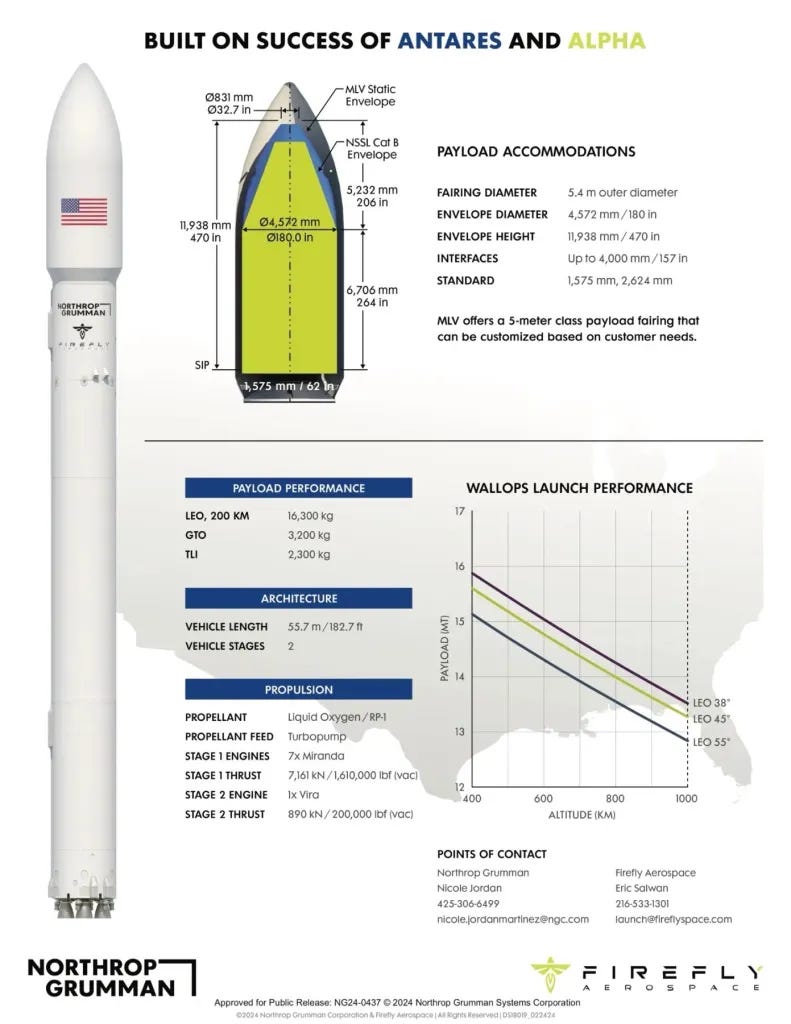
Northrop Grumman ($NOC) invested $50M in Firefly Aerospace’s Series D to expedite their joint production of the Antares 330 rocket as well as production of Firefly’s medium-lift vehicle, now named Eclipse. The two companies have been working together since 2022 to develop an American-built first-stage upgrade for Northrop Grumman’s Antares 330 rocket and a new medium-lift launch vehicle.
This investment, which adds to the $175M Series D Firefly closed in November, will enable Firefly to hire dedicated Eclipse engineers and conduct additional engine and hardware tests to meet the scheduled first launch from Wallops Island, Virginia in 2026.
Eclipse is developed using scaled-up technology from Firefly’s smaller launch vehicle—Alpha—and shared systems from Northrop’s Antares program.
Eclipse’s seven first-stage Miranda engines and single second-stage Vira engine are larger versions of Alpha’s Reaver and Lightning engines. The carbon composite rocket body of Alpha, currently the largest in operation, has been doubled in size for Eclipse. Eclipse also utilizes avionics from Northrop’s Antares program and features an upgraded payload fairing with a diameter increased from 2.2m on Alpha to 5.4m on Eclipse.
Despite relying on Alpha as a model, challenges remain. Last month, Alpha encountered an anomaly during a launch, failing to reach orbit and depositing a Lockheed Martin satellite in the Pacific Ocean.
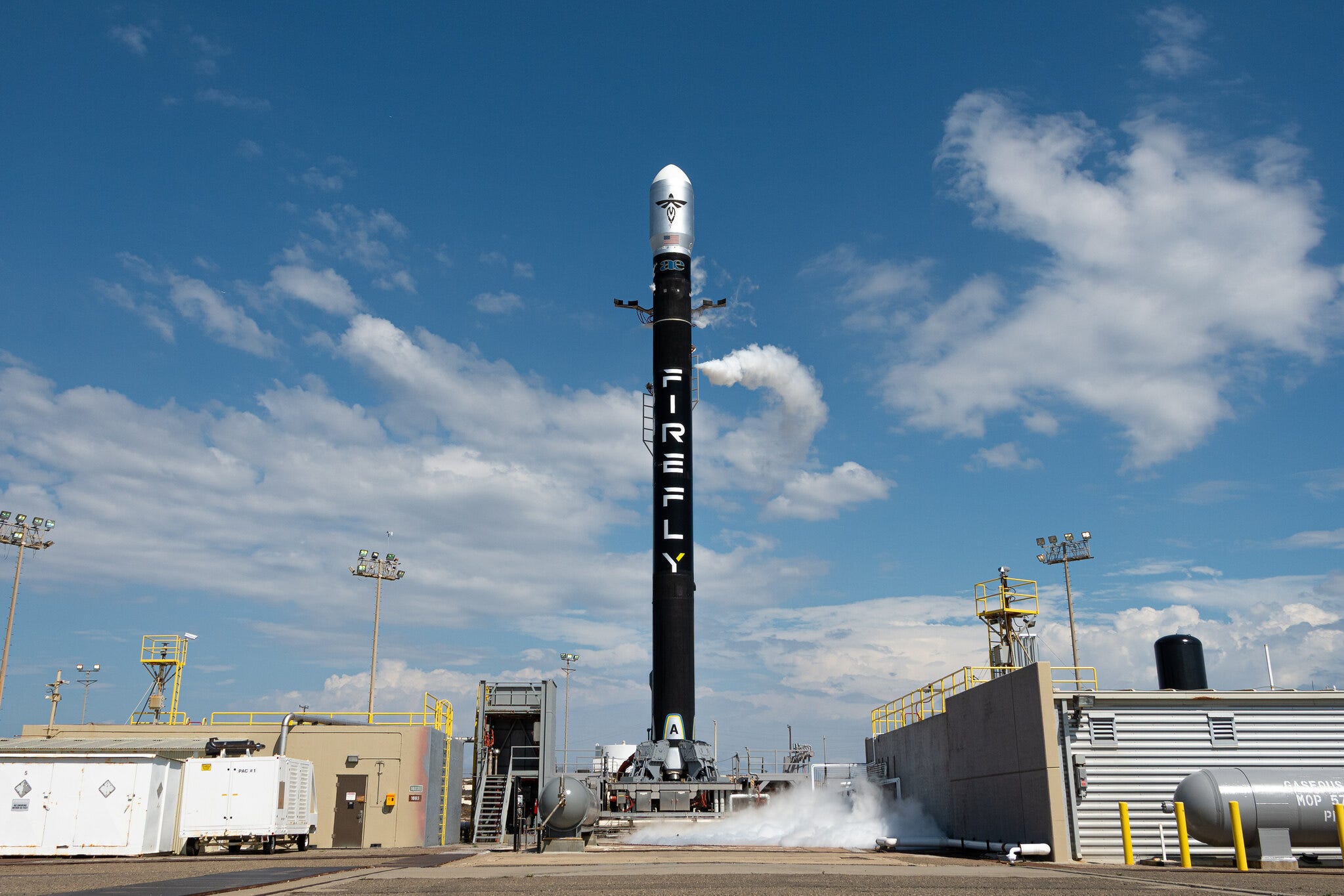
Nevertheless, Firefly has achieved several milestones during Eclipse's two years of development, including conducting over 60 Miranda engine tests and a 206-second hot-fire test—the longest duration the engine will burn on a full orbital mission.
Northrop previously collaborated with Firefly to replace the first stage of its Antares 230+ after Russia’s invasion of Ukraine disrupted the use of Russian engines. Northrop plans to use the Eclipse first stage for future Antares 330 flights for Cygnus resupply missions to the ISS.
Firefly aims for Eclipse to bridge the gap between small, dedicated launch vehicles and heavy-lift rideshares. The vehicle is designed to deliver 16,300 kg (36,000 lbs) to LEO. While initial flights will be single-use, the goal is to return the first stage for reuse eventually. This approach will allow companies and the US government to transport proliferated constellations or larger payloads to orbit at competitive prices.
Firefly CEO Jason Kim said in a statement that Eclipse will be a fit for the U.S. Space Force’s National Security Space Launch (NSSL) Lane 1 and to launch proliferated constellations.
From 2026 onwards, Kim foresees a bottleneck in launch capacity. The CEO anticipates that there will be sufficient market demand for both Eclipse and Alpha. Increasing capacity will assist in servicing future customers, including commercial entities, national security interests, and NASA.
Related:
Emerging launch companies see strong demand but look for government support
Toyota announces move into rocket launches at CES 2025 with $45M investment in Japanese startup