

FEMA Awards $250 Million for U.S. Air Security Before the FIFA World Cup 2026
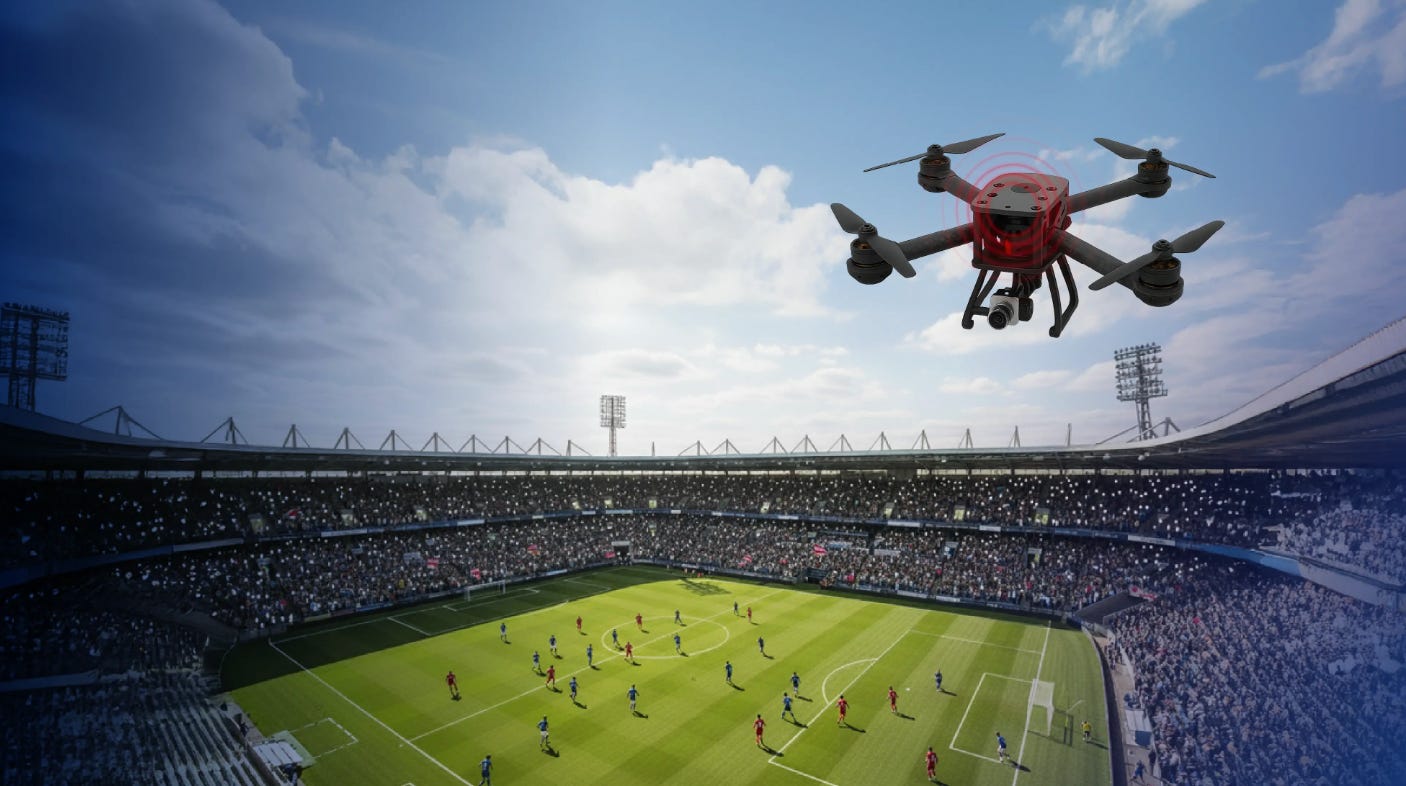
The Federal Emergency Management Agency has awarded 250 million dollars through its new Counter Unmanned Aircraft Systems Grant Program to states hosting FIFA World Cup 2026 matches and to the National Capital Region. The funding, which FEMA pushed out roughly twenty five days after the application deadline in its fastest non disaster grant process to date, is intended to help state and local agencies detect, identify, track, and respond to unauthorized drone activity at major public events, beginning with World Cup venues across the United States.
Drones are already commonplace at large American public events. Stadium operators, broadcasters, and local authorities routinely deploy unmanned aircraft for aerial filming, traffic monitoring, perimeter observation, and crowd awareness. These flights operate under FAA authorization and have become an accepted feature of modern event management. What has been missing is a parallel ability for state and local agencies to reliably detect and manage drones that are not authorized to be in the air.
Until recently, most jurisdictions lacked both the legal authority and technical capacity to do much more than issue temporary flight restrictions or call in federal assistance when an unknown drone appeared over a crowded venue. That approach is increasingly misaligned with reality. Commercial drones are inexpensive, easy to fly, and widely available, and they have been used globally for surveillance, disruption, and attack. Large public gatherings present obvious vulnerabilities.
The FEMA grants are designed to close that gap by funding systems that allow authorities to understand what is happening in the low altitude airspace above major events. The emphasis is on detection, identification, and tracking, with mitigation tools available only to properly authorized and trained agencies. The objective is not aggressive enforcement, but situational awareness and controlled response integrated into existing emergency operations.
The initial awards are targeted at World Cup host states and the National Capital Region, with funding levels reflecting venue density and operational complexity. Texas received the largest allocation at more than 67 million dollars, followed by California at roughly 45 million dollars. Florida, New York and New Jersey, Georgia, Washington, Pennsylvania, Massachusetts, Missouri, and Kansas also received substantial funding, while the National Capital Region received a separate award tied to both World Cup matches and upcoming America 250 events. These are not symbolic sums. They are intended to support real procurement, training, and integration ahead of a fixed global deadline.
What makes this program notable is that it represents one of the clearest examples yet of drone and counter drone technology being applied outside the battlefield in a sustained civilian context. Much of the counter UAS ecosystem was shaped by military needs overseas, where speed and lethality dominated design priorities. Public event security imposes different constraints. Systems must be precise, interoperable, legally compliant, and accountable. They must distinguish between authorized broadcast drones, law enforcement platforms, hobbyist aircraft, and genuine threats without disrupting lawful activity.
This shift also aligns with a broader change in US drone policy that has significant implications for the market. Federal guidance now restricts the use of drones and counter drone systems that contain parts manufactured in China or are tied to Chinese companies. Agencies receiving FEMA funds are expected to comply with sourcing rules that reflect longstanding national security concerns about supply chain dependence and data exposure. For state and local governments, this raises the bar on procurement discipline. For US and allied manufacturers, it reinforces a policy environment that favors trusted supply chains.
The World Cup serves as a forcing function, but the significance of this funding extends well beyond a single tournament. Major public events are increasingly acting as test environments for how emerging technologies are folded into routine governance. Counter drone systems deployed for stadium security today will inform how cities approach airspace management over political conventions, parades, and critical infrastructure in the future.
In that sense, FEMA’s counter drone grants are not about exceptional security measures. They reflect a growing recognition that low altitude airspace is now part of the public safety domain. Drones are no longer novel tools or distant military assets. They are a permanent feature of modern life, and managing them has become a civilian responsibility.