

Exobiosphere Secures $2.2M Seed Funding for Space-Based Drug Discovery
Do you associate biotechnology with space exploration? Space is not solely about rockets and satellites; it is increasingly becoming a valuable environment for conducting biomedical experiments that are impossible to perform on Earth. Under microgravity, biological systems behave differently, and this unique behavior is precisely what makes space so advantageous for drug discovery and disease research. Exobiosphere, a Luxembourg-based contract and research organization (CRO), is leveraging this environment.
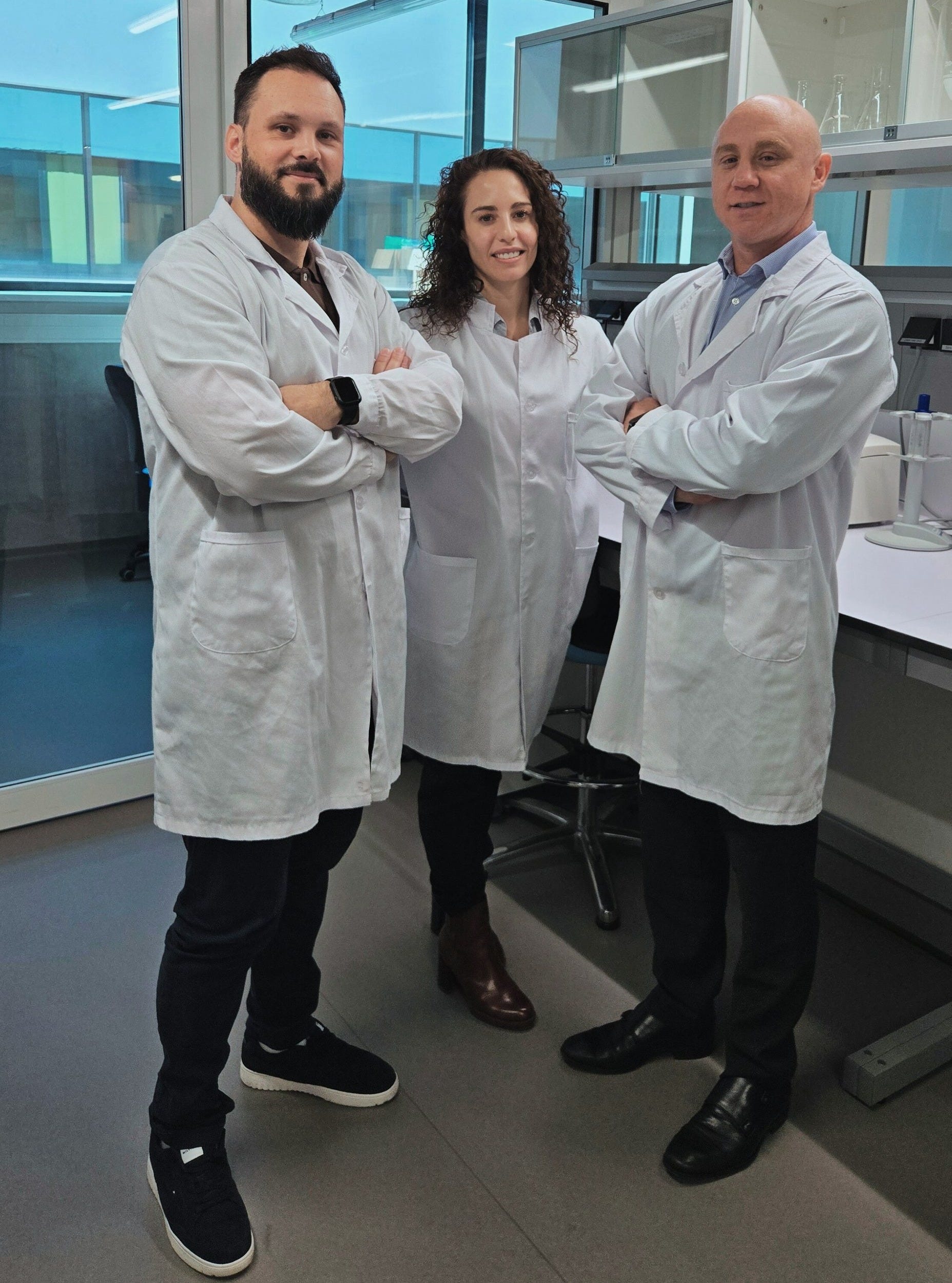
On April 4th, Exobiosphere completed a $2.2 million seed round to develop its microgravity-enabled drug discovery platform. The funding round was led by Expansion Ventures, a €200M pan-European venture capital fund that supports category-defining founders in the aerospace and defence sectors. Expon Capital, a premier Luxembourg-based firm investing in transformative technologies with the potential to reshape entire industries, significantly participated as a co-lead. The round also secured support from Boryung, a Life Science infrastructure company founded in 1957 and Space Data Inc., an innovative Japanese company pioneering real-time digital twin technology for Earth and space systems.
The funding will expedite the development of Exobiosphere's Orbital High-Throughput Screener (OHTS), an automated lab platform designed for microgravity. Given the high drug failure rates and lengthy, costly R&D processes, OHTS offers a compelling alternative—using space conditions to improve disease modelling and AI-based drug discovery, increasing success rates and reducing costs.
This funding follows the company's launch of its R&D hub at the House of BioHealth Incubator in Luxembourg and a grant from the Government of Luxembourg through the ESA contract in the Luxembourg National Space Programme, LuxIMPULSE. Supported by the Luxembourg Space Agency, the company is preparing for its first space mission.
Exobiosphere is not an isolated case. NASA has facilitated numerous companies in conducting experiments in space. But what makes space an intriguing environment that can accelerate biotechnology innovation?
Why Space? The Biological Case for Biotech Off-Earth
In orbit, the absence of gravity-driven convection and sedimentation allows protein crystals to grow more slowly and evenly. This leads to larger and well-ordered crystals, which are easier to analyze. Insights gained from these space-grown crystals can accelerate the design of new drugs, especially for proteins that are difficult to crystallize on Earth.
NASA has supported several such experiments on the International Space Station (ISS), including a recent project led by Merck on the crystallization of key oncology targets.
Microgravity also changes how human cells grow and interact. For example, cancer cells cultured in space often form three-dimensional structures that more closely resemble real tumors than flat cell layers in petri dishes. Similarly, kidney cell models in orbit have provided new insights into fluid balance, inflammation, and tissue degradation, allowing for a better understanding of renal disease progression.
Exposure to radiation, microgravity, and limited oxygen in space creates an accelerated stress environment for cells. This makes space a valuable platform for building relevant disease models, which could help bridge the gap between laboratory results and patient outcomes.
This environment also induces oxidative stress and triggers forms of cell death such as necrosis, which are harder to study in standard laboratory setups. This is particularly relevant to companies like LinkGevity, which is developing anti-necrotic compounds with potential applications in both Earth-based medicine and astronaut health.
The emergence of dedicated biotechnology companies, like Exobiosphere and LinkGevity, aims to industrialize and scale what used to be niche experiments. With space becoming more accessible, biotechnology may soon be one of the most unexpected sectors to take off.
Exobiosphere and the Rise of Space-Based Platforms
for years, space-based biotechnology was primarily about one-off experiments – growing protein crystals, testing how cells behave in orbit, or observing the effects of microgravity on muscle atrophy. But that is starting to change. A new wave of companies is working to build actual platforms in space – not just experiments – which can make research in microgravity more systematic, scalable, and accessible.
Exobiosphere is one such company. Founded in 2024 and based in Luxembourg, this CRO is developing a high-throughput drug discovery platform designed specifically for microgravity conditions. The company has already secured support from the Luxembourg Space Agency and won a LuxIMPULSE contract co-backed by the European Space Agency (ESA). Its aim is to conduct large-scale preclinical testing in orbit, focusing initially on applications in oncology, regenerative medicine, and immunotherapy.
“We are building critical infrastructure that lowers the barrier to entry for pharmaceutical and biotechnology companies. This investment marks a pivotal step in making microgravity drug discovery accessible, scalable, and commercially viable,” said Kyle Acierno, Chief Executive Officer (CEO) of Exobiosphere in a press release.
The concept is straightforward: utilize space as an integral part of the drug development pipeline, where compounds can be screened and optimized based on their behavior under stressors such as microgravity and radiation. If successful, this could unlock new mechanisms of action or reveal biological behaviors that are difficult to detect on Earth.
Exobiosphere is far from alone in venturing into space. A growing number of startups are exploring microgravity as a tool for therapeutic discovery or production—from Space Tango’s modular payload units designed to conduct autonomous biomedical research in space, to LambdaVision’s space-grown artificial retinas, to Varda and Redwire’s efforts to improve drug crystallization in orbit. The field is still emerging, but biotechnology is beginning to take space seriously.
Another company seeking to make microgravity useful for biotechnology is SpacePharma. It has developed small, automated laboratories that can be sent into orbit and controlled from Earth, enabling researchers to conduct experiments without needing astronauts or custom payloads. This approach aims to make space research less of a one-off mission and more of a service.
Sometimes, biotechnology developed on Earth finds additional use in space, as is the case with LinkGevity.
Linkgevity: Rethinking Aging and Cell Death in Orbit
LinkGevity did not start as a space-focused company. Its initial goal was much more grounded: to rethink our understanding of aging and the decline associated with it. Founded by sisters Carina Kern, a longevity scientist, and Serena Kern-Libera, a lawyer, the company is built on the blueprint theory of aging—a framework for identifying shared biological pathways that drive multiple age-related diseases, rather than focusing on individual diagnoses.
The company’s lead drug is a set of anti-necrotic compounds capable of blocking necrosis. Unlike apoptosis, which is a controlled and often beneficial form of cell death, necrosis is chaotic and irreversible, leading to tissue and organ failure. According to LinkGevity’s research, this process plays a central role in six of the top ten global causes of death, including acute kidney injury.
Where Does Space Come into Play?
It turns out that necrosis—and the stresses that trigger it, such as oxidative damage, inflammation, and oxygen deprivation—are significant concerns for long-duration space missions. Astronauts on extended flights experience physiological deterioration that resembles accelerated aging, and the kidney is one of the most vulnerable organs. As Serena Kern noted in the podcast, “We did not start out thinking we were a space company. It just so happens that our technology, which is highly useful on Earth, is also extremely applicable in space.”
This realization led LinkGevity to apply for and win a place in NASA’s Space-H accelerator, a program designed to support startups working on health technologies for space travel. The biotechnology company views this as an opportunity to apply its anti-necrotic drugs in space—for instance, to prevent organ damage during deep space missions or even to support organoid growth and cryopreservation, two areas where necrosis presents a major bottleneck.
The Next Chapter of Biotech’s Space Odyssey
Between Exobiosphere developing a discovery platform, LinkGevity designing therapies to protect astronauts from organ failure, and SpacePharma offering remote-controlled laboratory systems, an ecosystem is beginning to form. It is not just startups driving this shift; agencies like NASA and ESA are providing support, not only with access to orbit but increasingly through programs such as NASA’s Space-H accelerator or ESA’s LuxIMPULSE initiative.
However, substantial questions remain. How do you validate results obtained in orbit and translate them to Earth-based applications? And will pharmaceutical companies be willing to scale research and development beyond gravity once the novelty wears off?
Currently, space biotechnology is in its early stages. Nevertheless, companies like Exobiosphere and LinkGevity are not merely conducting experiments—they are striving to build something repeatable and scalable. If they succeed, the next generation of drugs might originate not from a laboratory bench but from a space station.