

Europe’s Launch Gap - and the Startup Trying to Close It
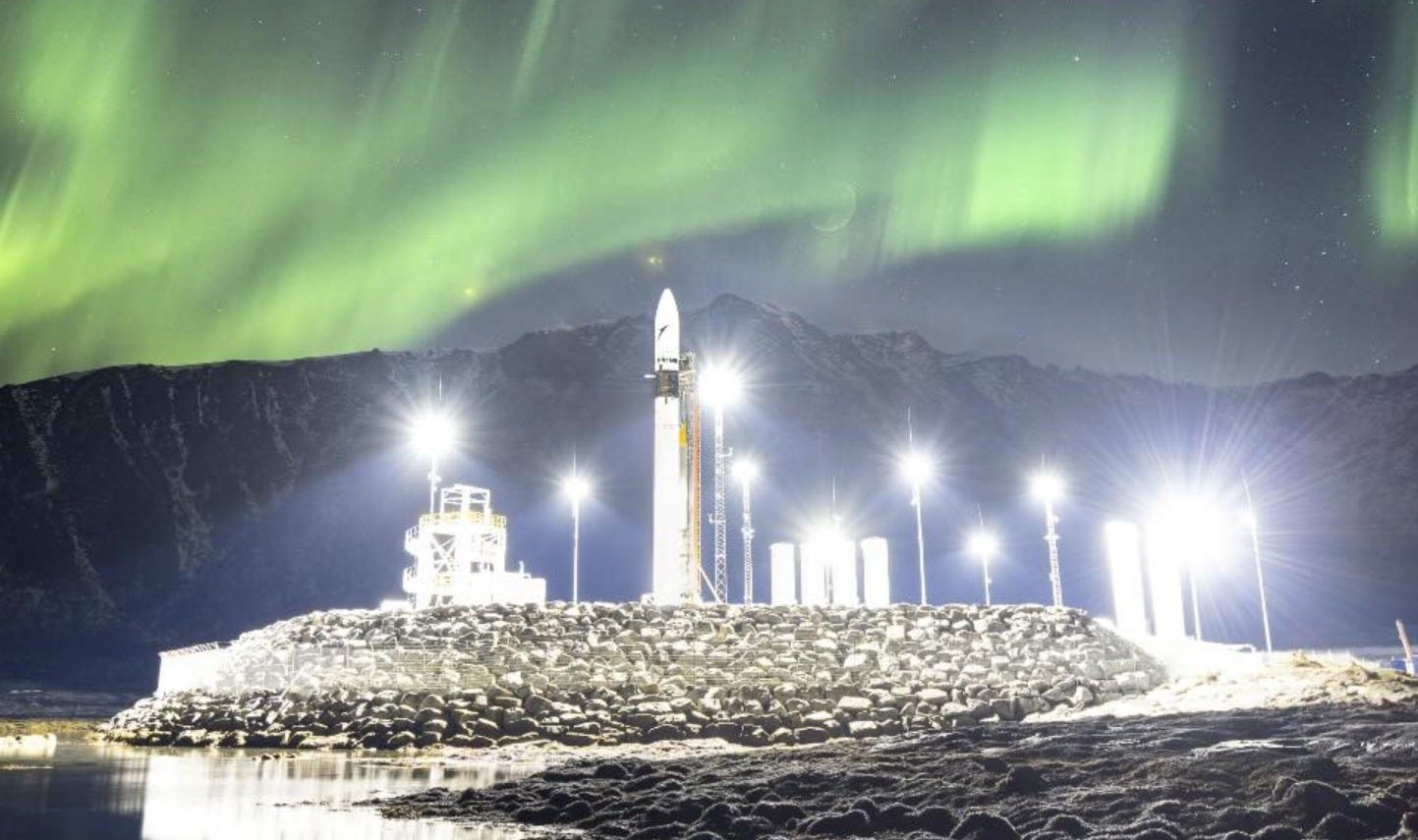
This week, a German startup’s attempt to change that was delayed by something mundane: an unauthorized boat drifting into a maritime safety zone. Isar Aerospace scrubbed its planned launch of the Spectrum rocket from Andøya Spaceport in northern Norway after the range violation forced a reset beyond the available launch window. On the surface, it was a minor operational disruption. But the episode points to something larger. Europe is still struggling to reliably launch its own rockets and the consequences of that gap are becoming harder to ignore.
For much of the past decade, Europe maintained independent access to space through a combination of Ariane 5 heavy-lift launches, Vega rockets, and Russian Soyuz vehicles launched from French Guiana. That system has since fractured. Ariane 5 was retired in 2023, Ariane 6 has faced repeated delays, Vega C was grounded after a 2022 failure, and access to Soyuz ended following Russia’s invasion of Ukraine. The result was a period in which Europe, for the first time in decades, lacked reliable sovereign launch capability, forcing governments and institutions to turn to external providers, most notably SpaceX. Even as Ariane 6 and Vega C return to flight, capacity remains constrained at a time when demand is rising sharply across civil, commercial, and military missions.
A striking detail underscores the depth of the problem: no rocket has ever reached orbit from continental European soil. European launch capability has historically depended on French Guiana, a geographically advantageous but politically distant location. What Isar is attempting at Andøya is not just another test flight. It is part of a broader effort to bring launch capability back onto the continent itself, under conditions that are far less forgiving than in the past.
Isar’s Spectrum is not a heavy-lift system, but that is precisely the point. It is designed as a small-to-medium launch vehicle capable of more frequent, flexible missions. Traditional European launch systems were built for scale and reliability, but not for speed. Newer commercial providers are pursuing a different model, one based on rapid iteration, shorter development cycles, and more responsive launch timelines. For civil and commercial users, that means faster access to orbit. For defense, it means something more consequential: the ability to replace satellites quickly.
That capability is becoming increasingly important as space transitions into a contested domain. Satellites underpin modern military operations, from communications and navigation to intelligence and targeting. At the same time, they are increasingly vulnerable to anti-satellite weapons, electronic warfare, and cyber disruption. In this environment, resilience depends not just on protecting assets in orbit, but on the ability to reconstitute them. That, in turn, depends on launch systems that are available, flexible, and fast - capabilities Europe does not yet have at scale.
Microlaunchers like Spectrum are an attempt to address that gap. They are not a replacement for heavy-lift systems, but a complement that prioritizes responsiveness over payload mass. In a conflict scenario, that distinction could matter more than raw capacity.
Isar’s choice of Andøya reflects both geography and policy. Located above the Arctic Circle, the spaceport offers direct access to polar and high-inclination orbits, which are particularly valuable for Earth observation, reconnaissance, and weather monitoring. The region’s sparse population and large maritime safety corridors simplify launch operations compared with much of mainland Europe. Just as importantly, Norway has moved quickly to establish a clear regulatory framework for commercial orbital launches under a single national authority, enabling faster iteration than Europe’s more fragmented regulatory environment. In effect, Europe’s push for more agile launch capability is being driven at its edges by startups and by countries willing to move faster.
Spectrum’s upcoming mission is officially a test flight, but it carries real payloads: five cubesats and a scientific experiment. Its first flight last year ended in failure less than a minute after liftoff, an outcome that, while dramatic, is typical for new orbital launch systems. This is how launch capability is built - through iteration, failure, and incremental progress. The company has already faced multiple delays leading up to this attempt, from technical issues to weather. The latest scrub, caused by a range violation rather than a system fault, is another reminder of how many variables must align for even a single launch to succeed.
The significance of Spectrum is not whether this particular launch succeeds or fails. It is that Europe is trying to rebuild a capability it once took for granted, at a time when demand is higher, threats are more complex, and dependence on external providers carries greater risk. The systems being developed to close that gap - commercial, iterative, and still unproven - look very different from the legacy architecture they are meant to complement.
Isar Aerospace is one of several companies attempting to establish a new layer of European launch capability. Whether Spectrum ultimately reaches orbit or not, it will not be the last attempt. The broader question is whether these efforts can scale fast enough to meet Europe’s needs. Access to space is no longer just an industrial capability. It underpins economic systems, military operations, and political autonomy. Without it, sovereignty is incomplete. Europe is moving to close that gap; however, for now, even a single launch remains a challenge.