

European Space Agency Launches Mission to Grow Food in Space
Steak, mashed potatoes, and desserts for astronauts could soon be grown from individual cells in space.
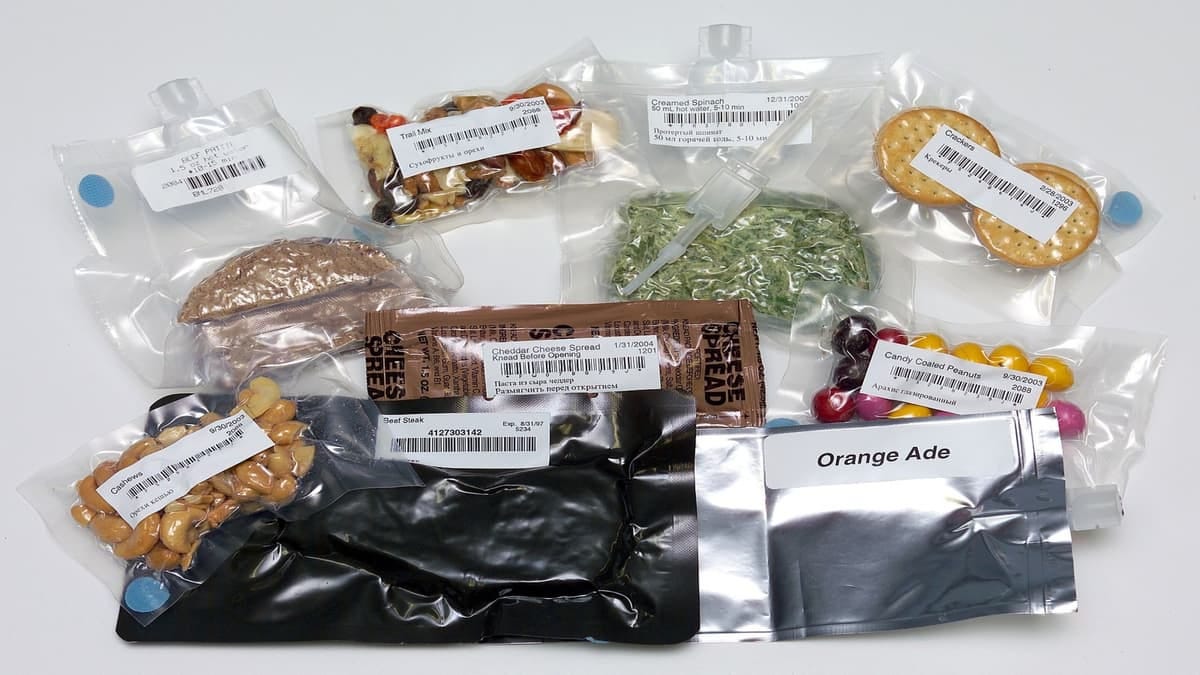
A SpaceX Falcon 9 mission has launched a miniature bioreactor into space to evaluate the possibility of growing food from cells in microgravity and high radiation. If successful, the experiment could contribute to autonomous food production in orbit, on the Moon, or Mars.
The research, funded by the European Space Agency (ESA) with British startup Frontier Space and Imperial College, has launched a laboratory into space as an initial step in manufacturing food in space. In addition to assessing lab-grown food viability in low gravity and higher radiation, the research aims to reduce astronaut feeding costs, which can reach $27,000 daily.
Lab-grown food is crucial for NASA's goal of multi-planetary human habitation. Lab-grown food involves producing ingredients like protein, fat, and carbohydrates in test tubes and vats, using precision fermentation, then processing them to resemble traditional food, such as steak or mashed potatoes. Precision fermentation involving genetically engineered yeast can create a variety of different food elements. The team is working with Imperial College's master chef, Jakub Radzikowski, who is developing recipes using starches and proteins from fungi, with the goal of creating familiar dishes for astronauts from diverse backgrounds, potentially replicating any cuisine in space. Lab-grown chicken is sold in the US and Singapore; steak awaits approval in the UK and Israel. On Earth, lab grown food offers environmental benefits, such as reduced land use and greenhouse gas emissions; in space, it primarily reduces costs.
Once released by the SpaceX Falcon 9 rocket, a small cube satellite holding a mini-lab will orbit the Earth in Europe’s first commercial returnable spacecraft, Phoenix. Researcher Drs. Ledesma-Amaro, Director of Imperial College's Bezos Centre for Sustainable Proteins, and Dr. Shamsul, CEO of Frontier Space, hope that their yeast concoction will provide data for a larger bioreactor next year.
Research shows astronauts' biochemistry changes during missions, requiring supplements. In addition to reducing costs and making long-term off-world habitation viable, lab-grown food could incorporate additional nutrients, enhancing astronauts’ diet and overall well-being. The team has stated that this study is the first step toward developing a small pilot food production plant on the International Space Station in two years’ time.
Related:
In-Space Manufacturing of Space Food