

Europe Commences Investigation of SES' Acquisition of Intelsat
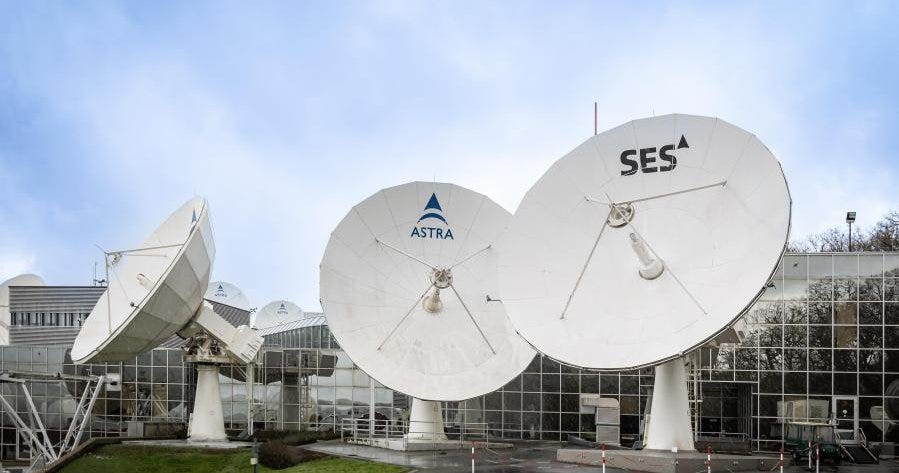
European regulators have commenced a preliminary investigation into Luxembourg satellite fleet operator SES’s multi-billion-dollar proposal to acquire U.S.-based rival Intelsat.
The European Commission has set a deadline of June 10 to decide whether to approve the deal with or without conditions, or to initiate a comprehensive, potentially four-month-long examination regarding any substantial concerns about its impact on competition. SES CEO Adel Al-Saleh informed analysts during the company’s April 30 earnings call that the operator expects to finalize the transaction early in the previously forecasted window of the second half of 2025.
Earlier this month, the United Kingdom’s Competition and Markets Authority (CMA) began reviewing the deal, establishing a June 12 deadline for its initial inquiry, though this could be extended several weeks. The transaction necessitates approvals across multiple jurisdictions due to the global scale of both businesses, which combined would operate over 100 geostationary and 26 medium Earth orbit (MEO) satellites. Additionally, the companies plan to deploy another eight geostationary and seven MEO satellites before the end of 2026, significantly enhancing capacity to address increasing broadband competition from SpaceX’s Starlink network in low Earth orbit (LEO).
During the earnings call, Al-Saleh mentioned that the merger had already secured smaller regulatory approvals in countries such as Brazil. He identified the European Commission and CMA as among the most critical remaining reviews, along with the Federal Communications Commission and Department of Justice in the United States. Regulators are likely to evaluate whether the merger could diminish competition in areas where SES and Intelsat possess complementary or overlapping capabilities, such as government and mobility services, which serve mission-critical customers, as well as in fixed data markets supporting telecom and cloud integration.
In an F-4 regulatory filing submitted on April 29 to the U.S. Securities and Exchange Commission, SES estimated the acquisition cost at 3.5 billion euros ($4 billion), comprising 3 billion euros in cash and 531 million euros in contingent payments linked to the potential monetization of Intelsat’s C-band spectrum. SES also projected that the combined entity would have generated 3.7 billion euros in revenue in 2024 and 1.8 billion euros in adjusted EBITDA on a pro forma basis. The operators have previously estimated 2.4 billion euros in synergies from their combination, including savings from optimizing their combined fleets and ground infrastructure, with 70% achievable within three years of closing the deal. “The Combined Group is anticipated to be a stronger multi-orbit operator better positioned to compete in the dynamic communications landscape and respond to evolving competing communications technologies,” SES stated in the F-4 filing, “such as new and rapidly emerging non-GEO satellite constellations from well-funded LEO satellite providers and greater commoditization of satellite capacity and connectivity.”
The need to counteract growing competition from Starlink and other upcoming LEO operators contributed to the approvals granted to U.S.-based Viasat in 2023 to acquire British peer Inmarsat. Despite initiating extensive investigations into Viasat’s acquisition, both the European Commission and CMA concluded that new entrants would likely exert sufficient competitive pressure on the merged group in markets such as inflight connectivity.
Publicly listed SES’s acquisition of its privately held rival comes amid continued declines in the Luxembourg-based company’s legacy media business, which continue to affect its financials adversely. Media revenues decreased by 10.6% year-on-year to 206 million euros for the three months ending March 31, when adjusted for foreign exchange rates, impacted by the bankruptcy of Brazilian customer Oi. Conversely, revenues from its networks business increased by 8.4% to 302 million euros, driven by robust demand for mobility and government services. Total SES revenues for the first quarter of 2025 declined by 0.5% to 509 million euros, and adjusted EBITDA decreased by nearly 1% to 280 million euros. French satellite fleet operator Eutelsat similarly reported ongoing declines in its broadcast segment alongside growth in connectivity services, reflecting the industry’s broader shift away from legacy media and towards data-centric applications.
Related:
SES to Acquire Intelsat in Compelling Transaction Focused on the Future