

Energy Startup, Marathon Fusion, Produces Gold Using Nuclear Fusion Technology
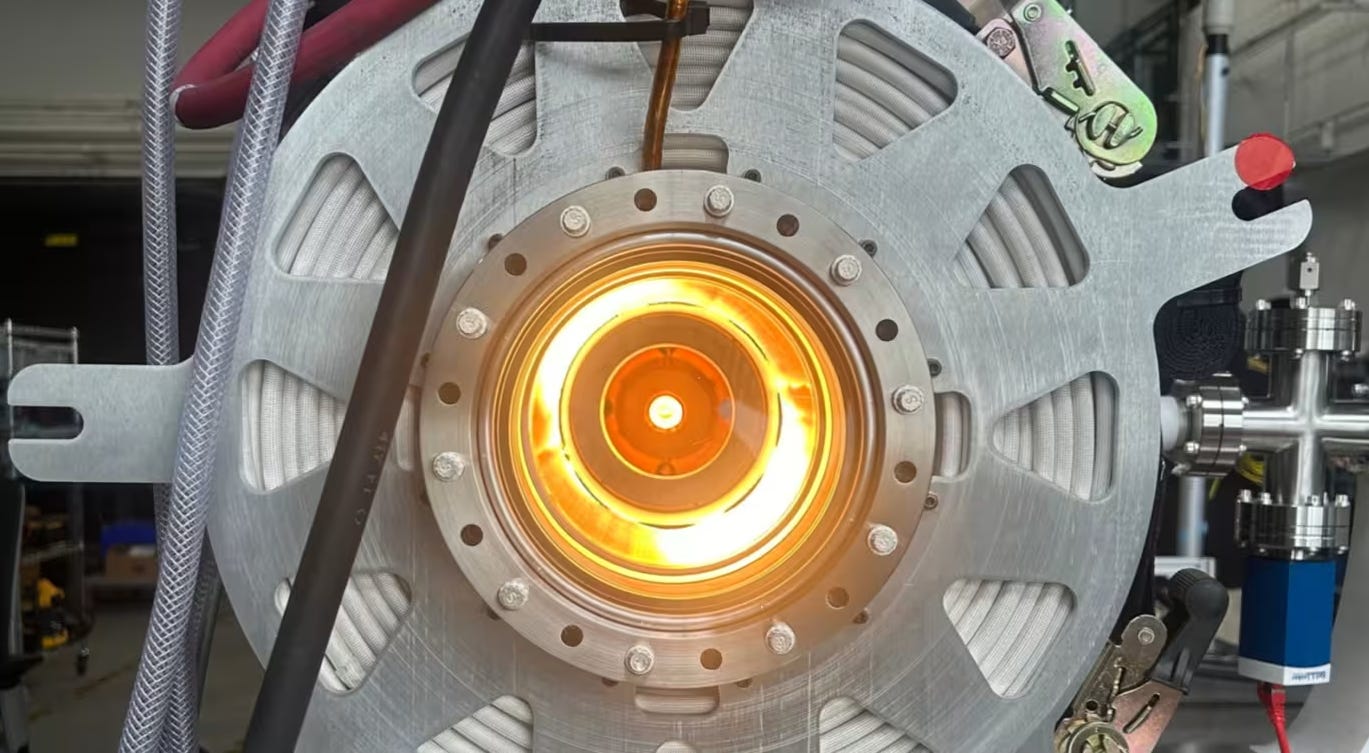
Energy startup, Marathon Fusion, is poised to advance a concept reminiscent of medieval alchemy. In a recently published paper, the company presented a method to convert the mercury isotope 198Hg into 197Au, the most stable form of gold.
According to their research, this transmutation can be achieved alongside substantial clean energy production via nuclear fusion in a tokamak reactor. Notably, the team’s simulations indicate the process could yield up to two metric tons of gold per gigawatt of thermal power annually.
While the paper has not yet undergone peer review, it has been positively received by several experts in the field. Dr. Ahmed Diallo, a plasma physicist at the US Department of Energy’s national laboratory at Princeton who reviewed the study, commented: “On paper it looks great and everyone so far that I talk to remains intrigued and excited.”
Chrysopoeia, the transformation of base metals, such as mercury, into gold, has previously been demonstrated at limited scales through particle accelerators and neutron capture, yet these methods have not proven economically viable. Marathon Fusion proposes that its technique will render both gold synthesis and energy generation profitable, thus supporting the expansion of fusion energy and addressing climate change through enhanced energy availability. The company asserts, “Implementation of this concept allows fusion power plants to double the revenue generated by the system, dramatically enhancing the economic viability of fusion energy.”
Marathon was established in 2023 by Chief Executive Officer Kyle Schiller and Chief Technology Officer Adam Rutkowski, as an engineering firm dedicated to addressing the technical challenges associated with the construction of fusion power plants. The start-up, with 12 employees, has raised $5.9 million in investment and $4 million from US government grants. Rutkowski said the team first focused on improving fusion power plant fuel efficiency and began exploring nuclear transmutation earlier this year.
The company’s approach involves integrating mercury into the reactor's breeding blanket, which traditionally consists of lithium. This innovative mercury/lithium alloy blanket aims to maximize (n, 2n) reactions, whereby one neutron is absorbed and two are emitted, thereby improving both tritium fuel and gold output. Fast neutrons produced within the system bombard 198Hg, converting it to unstable 197Hg, which subsequently decays into stable 197Au.
With a half-life of approximately 64 hours, 197Hg transitions to gold relatively quickly. However, minor quantities of other radioactive isotopes are also generated, necessitating a “cooling time” before the final product is deemed safe for public release. The benchmark is to reduce the radioactivity below that of a banana; for this gold, this results in an estimated cooling period of 17.7 years.
The study’s authors do not view this as a significant challenge. “In practice, given that much gold is used for value storage rather than active use, we do not expect the need to store it for 7–17 years to be a major impediment; at worst, the product will initially hold slightly less value than pure 197Au, warranting a discount on newly produced gold.”
Despite promising simulation results, practical implementation may require several more years due to challenges such as sourcing enriched mercury and developing suitable reactor materials. If successful, this technology could offer considerable environmental benefits, not only by generating clean energy but also by curbing environmentally damaging gold mining activities.