

EnduroSat Raises $49 Million Series B to Expand Gen3 Satellite Manufacturing
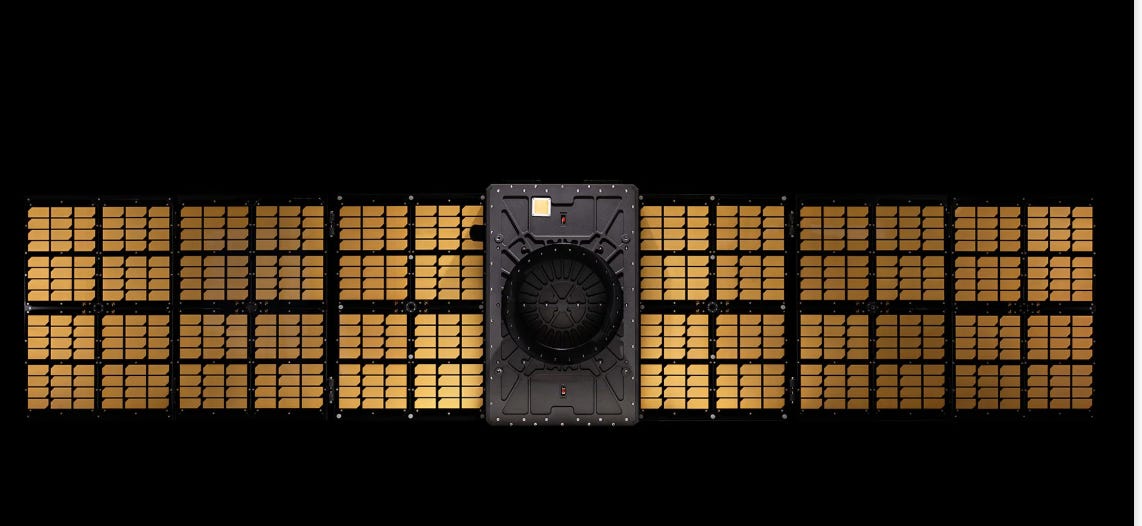
Bulgaria-based microsatellite specialist, EnduroSat, announced $49 million in funding on May 27th to enhance production capabilities for a larger class of next-generation satellites that will form its Endurance constellation. Founders Fund led the round with CEECAT Capital, Morphosis Capital, and other returning investors participating. This investment follows a $10 million Series A funding round led by European investment firm CEECAT Capital two years ago.
Currently, the company manufactures 12–15 cubesats monthly, each weighing no more than 36 kilograms, according to founder and CEO Raycho Raychev. The new funding will facilitate the development of a 17,500-square-meter facility in Sofia, enabling a significant production increase of up to 60 satellites per month, and allow the company to speed up the production of its new Gen3 ESPA-class satellites, which have a weight range of 200 to 500 kilograms and include advanced avionics and a modular, software-defined design.
These satellites are designed for quick deployment and versatility, suitable for missions involving hyperspectral imaging, SAR, broadband, navigation, and other payloads in high demand. Utilizing consumer electronics and automotive supply chains, Gen3 platforms aim to improve efficiency and scalability compared to traditional aerospace methods.
This marks a substantial advancement for the 10-year-old venture, which has successfully delivered approximately 150 satellites since its inaugural launch in 2018. “We are already observing significantly higher demand for 2025/2026,” Raychev stated. “Our plan is to deliver at least 120 units by the end of the year.”
EnduroSat intends to conduct two Gen3 Endurance validation missions in 2025, one to demonstrate propulsion technology and another to test an Earth observation system utilizing in-orbit processing and a multispectral payload. The Gen3 Endurance platform is designed to offer up to 3.5 kilowatts of power and 2 gigabits per second of downlink capability, compared to existing EnduroSat satellites that provide around 50 watts and 1 Gbps.
Raychev emphasized that the Gen3 line was developed with accelerated manufacturing processes in mind. “Significant efforts were made to simplify both mechanical elements and electronics, allowing a single AIT [assembly, integration, and test] engineer to assemble and test an entire ESPA-class satellite within just one day,” he explained, referring to the platform's compatibility with adapters used for secondary payloads on launch vehicles. “This makes the Endurance class of satellites ideal for responsive space programs, defense applications, and other missions requiring rapid deployment and integration across multiple satellites.”
Raychev noted that demand is primarily driven by constellation programs in remote sensing domains, including optical and synthetic aperture radar, alongside growing interest in broadband connectivity. Initial customer deliveries for Gen3 Endurance are scheduled for the end of this year, with first deployments anticipated in early Q2 2026.