

Chariot Defense Emerges from Stealth to Address Military Battlefield Energy Gaps
Chariot Defense, a newly launched energy and power startup, emerged from stealth mode today with $8 million in seed funding, led by General Catalyst and XYZ, with participation from Cubit Capital, Ravelin, Forward Deployed VC, Pax, New Vista, D3, and Brave Capital. The company aims to revolutionize energy management and distribution on the battlefield.
Founder and CEO Adam Warmoth explained that the future of warfare will be mobile, expeditionary, distributed, and decentralized, heavily reliant on edge computing. He emphasized that reliable power is a fundamental enabler of these advancements, a challenge that has not been fully addressed, due to previous operational paradigms. "We're building for real-world needs, side-by-side with the people who will use and benefit from our platform," said Warmoth. "Our goal isn't just to provide better power systems, it's to become the power backbone that enables a new class of warfighting capabilities and makes next-generation military operations possible."
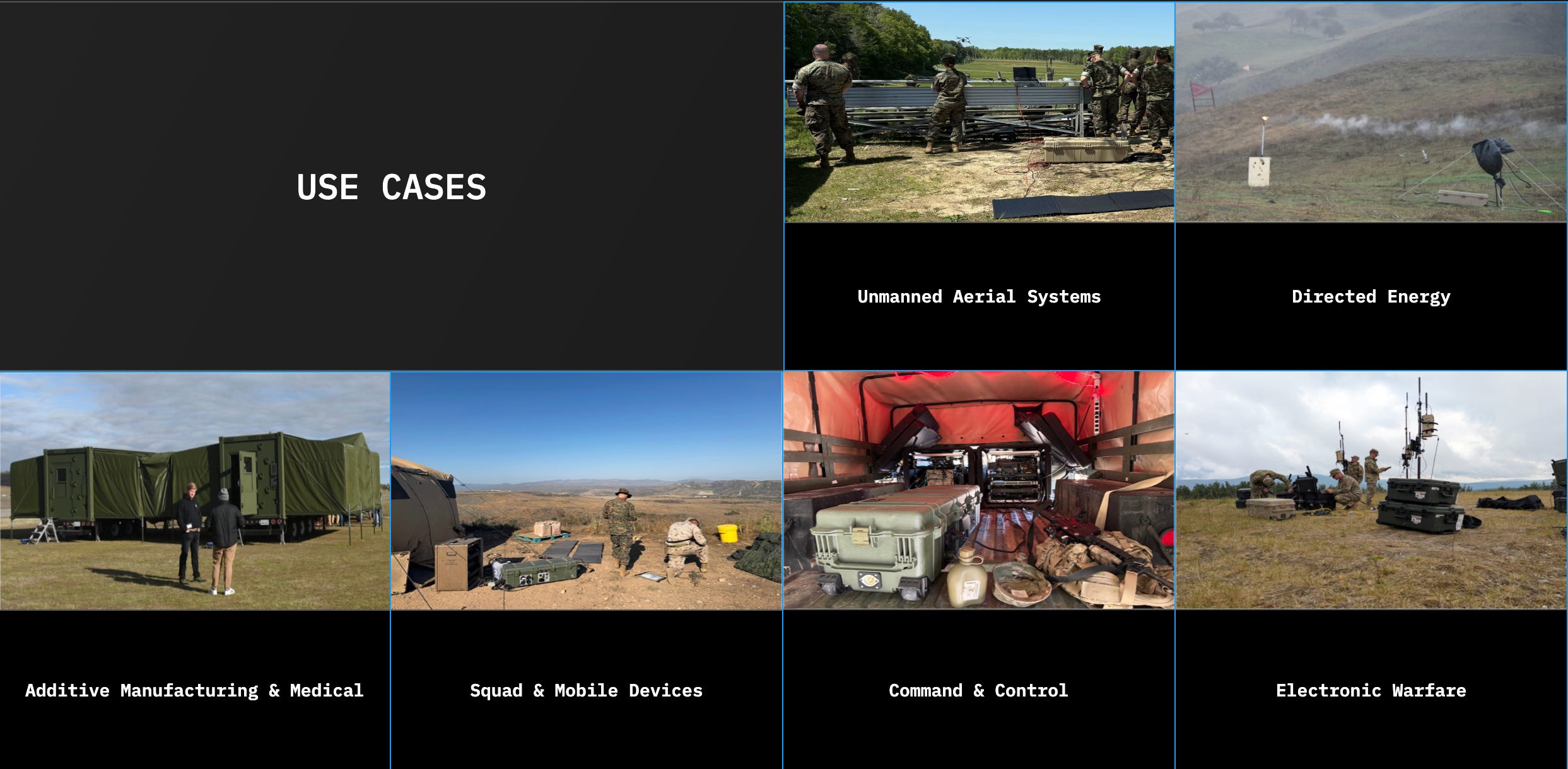
Advancements in technology are transforming modern warfare, with tools such as drones, directed energy weapons, and advanced sensor suites reshaping the battlefield. However, these innovations have also led to increased power demands, often in environments where electricity is difficult to obtain. At the frontline, military personnel frequently depend on traditional generators, devices that are noisy, cumbersome, inefficient, and can compromise operational security by revealing positions. When these generators fail, critical equipment like sensors and drones become inoperable, resulting in a loss of technological advantage. Chariot's technology addresses these critical energy needs.
Chariot’s flagship product, Amphora, is a sophisticated power system that employs high-voltage architecture and intelligent software to maximize the efficiency of limited energy resources in remote or contested environments. This system is designed to manage and distribute power dynamically, ensuring optimal performance of advanced technologies even when resources are scarce.

Warmoth's experience at Anduril, where power constraints emerged as the primary limitation for advanced defense systems, directly informed Chariot’s approach. Traditionally, available solutions were limited to generators and low-voltage lead-acid batteries, both of which come with significant drawbacks. Generators, for instance, scale in size and weight based on their maximum output but are inefficient for energy storage, as they must be sized for peak demand even if that level is only required briefly. In addition to their cumbersome weight, generators produce considerable noise, potentially compromising troop positions and negatively impacting hearing health. Their reliance on fuel also means that a generator failure can cascade into broader equipment outages, while their substantial fuel consumption and the logistical challenge of transporting large, powerful units further complicate deployment in the field.
Inspired by practices in the electric vehicle and eVTOL industries, where high-voltage batteries deliver greater power with reduced material, Warmoth and his team integrated similar battery technology with smart distribution software to develop Amphora. This solution provides a quiet, lightweight, modular power system suitable for deployment and mobility by small teams.
Amphora accommodates multiple power sources, including generators and solar panels, and features an onboard battery to store and release energy as needed, enhancing overall efficiency. This capability allows, for example, short bursts of high power without continuous generator operation, reducing fuel consumption. Additionally, Amphora operates with minimal noise and heat emission, making detection challenging. Even the larger, higher-voltage variant remains highly portable, capable of being transported on tracks.
"While everyone focuses on building smarter weapons, Chariot is building the intelligent power systems that makes them all work," said Ross Fubini, Managing Partner at XYZ Venture Capital. "Chariot sees this more clearly than anyone and is building the distributed power infrastructure that will define how future conflicts are fought. This isn't just better batteries or quieter generators - it's positioning to become the power prime contractor for modern warfare."
Chariot’s power systems are already undergoing evaluation by several military units, including the 101st Airborne Division, the Defense Innovation Unit, and select Marine Corps teams. The company conducted its initial field test with the Naval Postgraduate School in February and had Amphora operating with military personnel by May, reflecting a rapid development timeline.
Looking ahead, Chariot Defense will continue refining its systems based on user feedback and expanding its Bay Area engineering team. With increased reliance on automation and next-generation technologies in upcoming defense budgets, the demand for innovative battlefield power solutions is poised for continued growth, supporting Chariot’s mission.