

CEO Eric Schmidt Indicates Relativity Space Could Be Planning to Launch Data Centers in Space
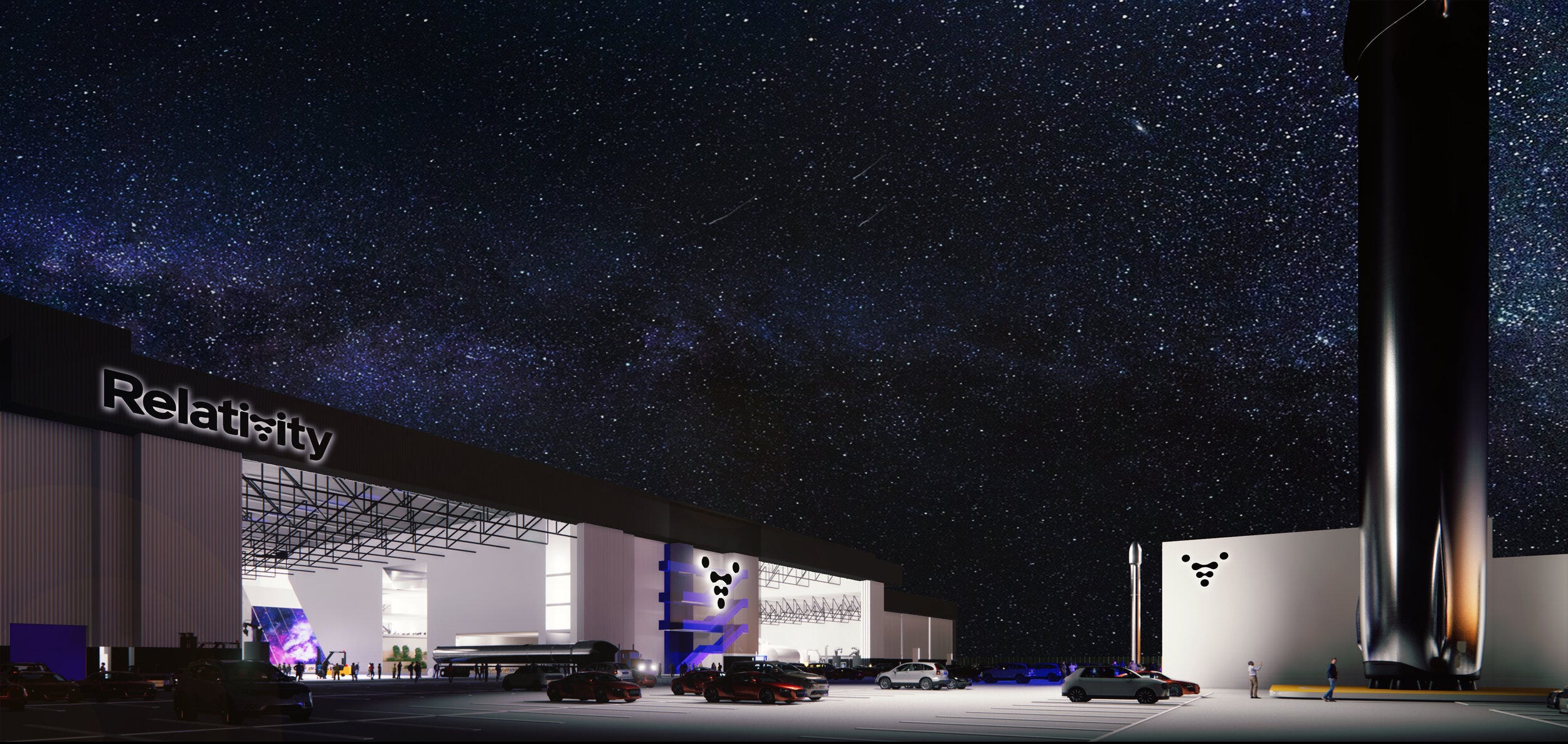
In the nearly two months since former Google chief executive Eric Schmidt acquired Relativity Space, he has provided limited public commentary on his plans for the launch company. However, his intentions are becoming more apparent: it appears Schmidt aims to develop the capability to launch substantial computing infrastructure into space.
Schmidt's goals were inferred from his appearance before the House Committee on Energy and Commerce during an April hearing about the future of AI and US competitiveness. During this hearing, Schmidt discussed the increasing need for electricity—both renewable and non-renewable—to power data centers required for AI development and applications. He noted that the average nuclear power plant in the United States generates 1 gigawatt of power.
"People are planning 10-gigawatt data centers," Schmidt stated. "This gives a sense of the scale of the issue. Many believe that the energy demand for our industry will increase from 3% to 9% of total generation. Estimates suggest that data centers will require an additional 29 gigawatts of power by 2027 and 67 more gigawatts by 2030. These facilities are industrial at an unprecedented scale."
AI applications consume substantial computing power, with a single ChatGPT query using approximately ten times more energy than a Google search. The US energy sector is not adequately prepared for this significant growth in energy demand, as power consumption has increased by about 0.5% annually over the last decade. Data centers also require considerable amounts of water for cooling purposes.
Following Schmidt's comments, it was speculated that he might have acquired Relativity Space to support the development of data centers in space. Presumably, these centers would be powered by solar panels and benefit from the ability to radiate heat in the vacuum of space. "This likely explains why Schmidt acquired Relativity Space," was commented on social media site X after Schmidt's remarks. Schmidt responded with a single word, "Yes."
There are few US launch companies with large rockets or those developing them, making options limited for space entrepreneurs seeking control over their access to space. SpaceX and Blue Origin are owned by billionaires with total decision-making authority. United Launch Alliance's Vulcan rocket is expensive and has a busy manifest. Rocket Lab's Neutron vehicle is expected soon, but may not meet Schmidt's needs.
Relativity Space, which may be a couple of years away from flying the partially reusable Terran R rocket, is one viable option. The Terran R could potentially launch 33.5 metric tons to low-Earth orbit in expendable mode and 23.5 tons with a reusable first stage. For a billionaire wanting to put large data centers into space and maintain control over launches, Relativity Space presents a feasible solution.
Although there are challenges associated with developing Terran R, Schmidt has provided financial support to address these issues over the past six months. Schmidt's personal fortune is roughly $20 billion, less than Elon Musk or Jeff Bezos. According to financial industry sources, Schmidt is currently seeking additional partners to help finance a revitalized Relativity.
Developing launch capabilities is only one of several hurdles for this concept. Questions arise regarding the size and location of these data centers within low-Earth orbit, whether space-based solar power can meet their energy needs, efficient heat radiation in space, and the economic feasibility of such endeavors. These questions are complex, but Schmidt highlights the unsustainable trajectory of power and environmental demands created by AI data centers.
Considering innovative solutions is certainly important for addressing these challenges, and the idea of space-based data centers is an interesting concept. Axiom Space and Skyloom, Lonestar Data Holdings, and Starcloud are just a few of the latest space start-ups seeking to extend compute capacity beyond Earth. However, the current state of technology and the significant challenges they present, indicate that the idea may not be suitable for most data center needs in the near future.
Related:
Should We Be Moving Data Centers to Space?
The Plans to Put Data Center in Orbit and on the Moon
Axiom Space to Launch Orbital Data Centers on Kepler Satellites