

Capella Space Embraces Quantum Future with IonQ
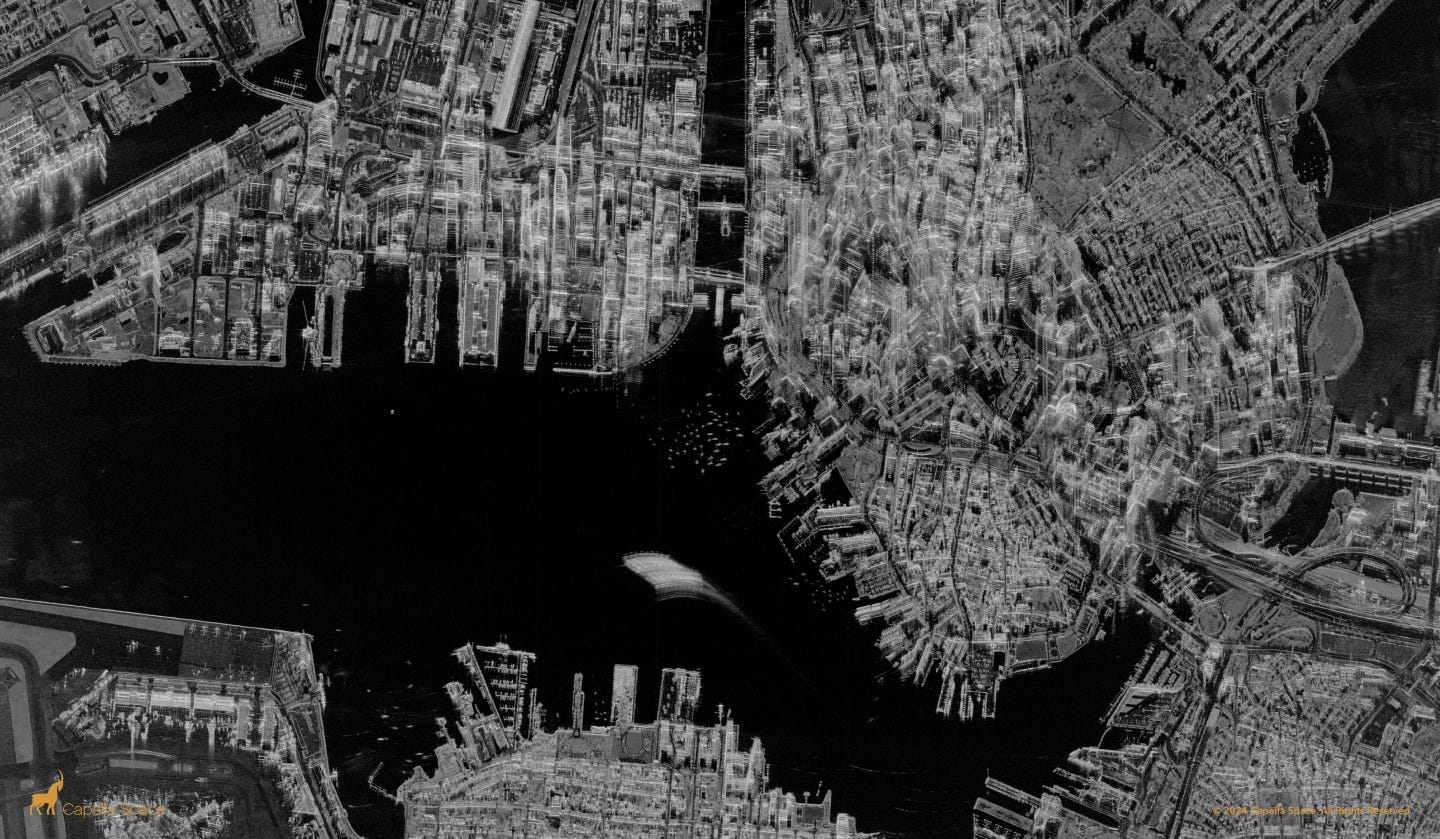
Capella Space, the synthetic aperture radar (SAR) satellite company renowned for producing high-resolution images of Earth in various weather and lighting conditions, is preparing to undertake a significant strategic shift that may redefine the delivery and security of Earth-observation data.
Earlier this month, IonQ, a Maryland-based quantum computing firm, announced its intention to acquire Capella in an all-stock transaction valued at nearly $318 million. The acquisition is anticipated to be finalized in the second half of 2025, subject to regulatory approval. Capella will function as a wholly owned subsidiary of IonQ while continuing to operate and enhance its SAR satellite constellation.
IonQ's CEO, Niccolo de Masi—a physicist and entrepreneur—publicly listed the company in 2021 through a merger with a special purpose acquisition company (SPAC).
IonQ has set a long-term objective to establish the world's first space-based quantum key distribution network, a technology promising ultra-secure communications. Acquiring Capella marks an initial step in integrating space-based sensors with IonQ’s terrestrial quantum infrastructure, thereby creating a new layer of secure data transmission from space to Earth. However, there are no plans to discontinue the SAR business.
Capella’s CEO, Frank Backes, stated that the company aims to modernize and expand its SAR constellation from four to eight satellites by next year. With the introduction of quantum computing, the company's future focus will extend beyond merely capturing images from space to enhancing the speed, movement, and security of that data.
De Masi highlighted Capella’s appeal due to its government and intelligence customer base. Beyond SAR imaging, the vision includes leveraging IonQ’s quantum systems to tackle longstanding issues in space-based Earth observation, such as latency, security, and data throughput. "We are very keen on accelerating their growth, not just with capital," de Masi said, "but also by addressing some of the latency issues that are inherent to operations conducted at high altitudes, hundreds of kilometers above Earth."
Latency is a critical challenge for SAR companies. Currently, the difficulty lies not just in data capture but also in transmitting, processing, and securing that data quickly. Backes described the integration with IonQ as a significant advancement in resolving these issues. "In the SAR industry, there are three primary challenges: latency, security, and capacity. This alignment with IonQ enables us to surpass others in addressing all three areas simultaneously," Backes asserted.
Backes mentioned that the goal is to deliver SAR data to end users within 15 minutes, a benchmark that would significantly enhance the relevance of radar imagery for commercial and emergency-response applications. "Achieving this requires efficient data movement, enhanced security, and rapid processing," he explained. "Through secure optical networks, we can move the data; using quantum computers, we can process it faster; and we can transfer substantial amounts of data through the network."
Quantum key distribution (QKD) is central to this vision. QKD uses quantum mechanics to share encryption keys between parties in a manner that makes any interception immediately apparent. China leads in developing this technology. IonQ intends to deploy its quantum encryption technology into orbit using optical inter-satellite links—laser-based data connections between satellites—and photon detectors essential for quantum communication. "We're discussing technologies that IonQ currently provides terrestrially," Backes said, "and we aim to bring these capabilities to space to resolve the major problems in Earth observation that everyone is trying to solve."
Although Capella has been working to integrate optical inter-satellite links with its satellites, progress has been hindered by production delays at Mynaric, a German laser communications provider recently acquired by Rocket Lab. Nevertheless, the plan remains to utilize these links for secure, high-speed data transfer across a quantum-encrypted network in space.
The potential for unhackable communications holds significant implications for national security and could open new commercial markets for SAR. Backes believes that addressing latency, security, and capacity collectively could facilitate broader adoption of SAR technology beyond defense applications. "SAR consumption has been predominantly driven by military and intelligence sectors," he noted. "This presents an opportunity to transform the foundation of synthetic aperture radar for global use." De Masi shared this perspective: "By implementing quantum key distribution, we can accelerate their business and ensure information security."
IonQ, currently valued at approximately $8 billion, plans to support Capella’s expansion into new sensor capabilities, such as signals intelligence. The combined strengths of high-resolution radar imaging and quantum-secured data delivery could position the company as a formidable player in the satellite services market. For Capella, this acquisition represents more than a financial boost—it is a long-term commitment to a new infrastructural model for space, according to Backes. Under IonQ, the company will gain access to public markets. "This marks our next leap forward. Not every space company reaches this level, and not every space company succeeds," he concluded.