

Boom Supersonic Secures $300 Million to Develop Natural Gas Turbines for Crusoe Data Centers
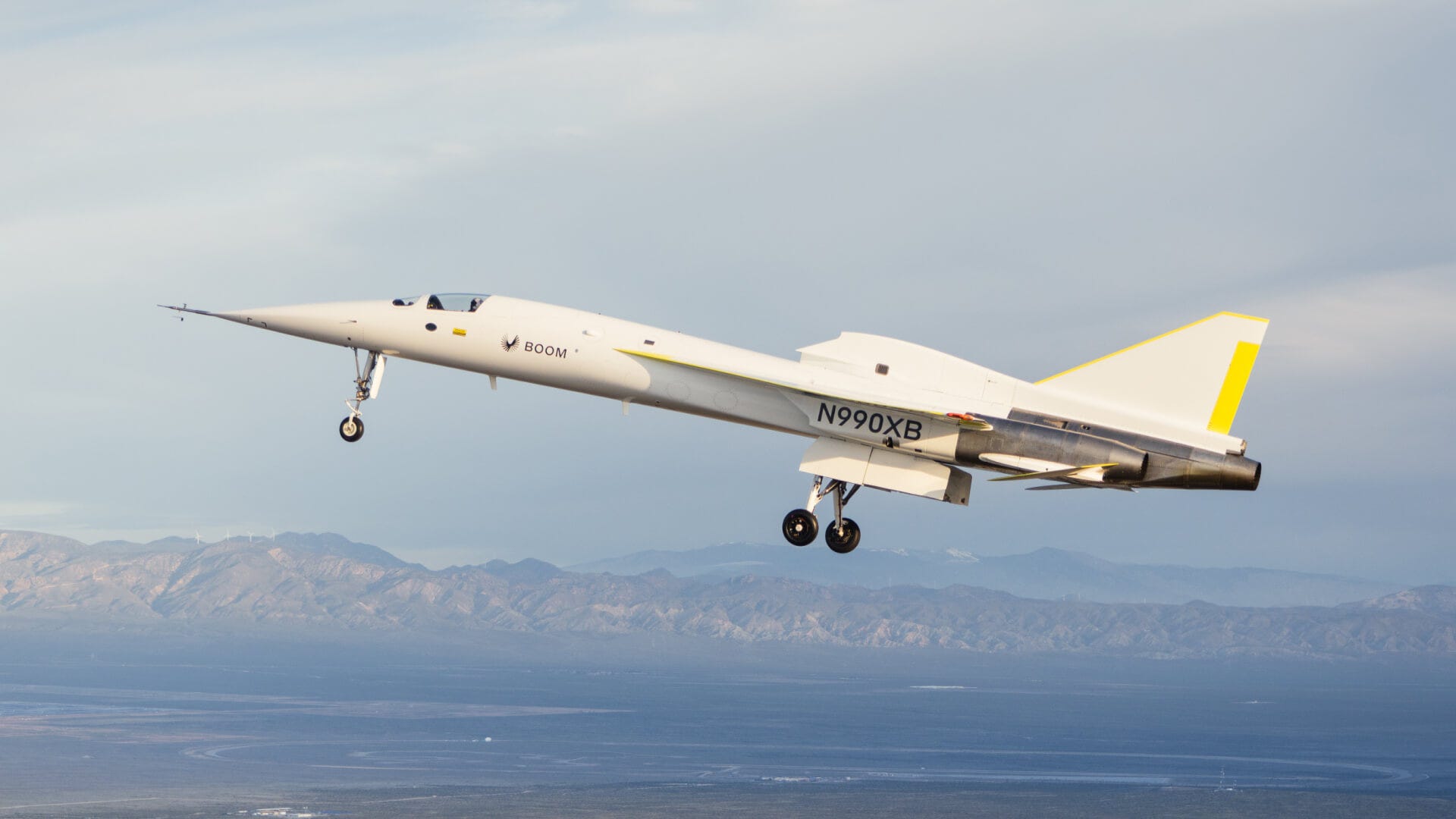
Boom Supersonic, a company aiming to bring back supersonic air travel, has shifted its focus to the datacenter power industry. On Tuesday, December 9th, the company announced its intention to offer a stationary power plant variant of its turbine engine, with data center startup Crusoe as its initial customer, in addition to $300 million in new funding to advance commercialization of its Superpower stationary turbine. The round led by Darsana Capital Partners, with Altimeter Capital, Ark Invest, Bessemer Venture Partners, Robinhood Ventures, and Y Combinator participating.
Founder and CEO Blake Scholl shared that he had been doomscrolling on X and noticed numerous posts about the ongoing power crisis affecting AI data centers. He decided to reach out to OpenAI’s CEO, Sam Altman, who confirmed the accuracy of the information. Scholl then contacted Boom’s engineering team, only to discover they had already drafted a plan for a power turbine inspired by their Symphony supersonic engine.
After several discussions, it became apparent that AI didn’t just require more turbines - it needed a completely new and better design. According to Scholl, Symphony emerged as the ideal solution to support AI development in the United States.
According to Scholl, his company’s supersonic engines operate continuously under intense heat, which matches the requirements of data centers and made adapting Boom’s engines a logical choice. Boom indicated that the Superpower turbine and the airborne Symphony engine share approximately 80% of their components. Earlier this year, Boom’s XB-1 demonstrator became the first civil aircraft developed by a private company to break the sound barrier. In contrast, turbines from conventional aircraft aren’t suitable for datacenter power plants because they only deliver peak power during certain parts of a flight, require cool conditions, and need plenty of water for cooling.
Approximately three months later, the company executed a contract for 1.21 gigawatts and commenced production of the initial turbine, which it designated as “Superpower” - rating it at 42 megawatts using natural gas as fuel.
The recent agreement with Crusoe includes the purchase 29 units of Boom’s 42-megawatt turbines for $1.25 billion, intending to generate 1.21 gigawatts for its data centers. Boom further stated that additional information regarding the planned turbine manufacturing facility will be disclosed next year, and the first deliveries are anticipated in 2027.
Proceeds from Superpower unit sales will support continued development of Boom’s Overture supersonic aircraft, according to Scholl: “This development represents a pivotal moment,” Scholl stated. “Boom now has a self-sustaining financial trajectory toward both Superpower and the Overture supersonic airliner.”
Scholl compared this strategy to SpaceX’s Starlink satellite service, which generates profits that contribute to funding rocket development. “For the past decade, I have considered various opportunities for a sustainable revenue stream akin to Starlink,” Scholl noted. “After evaluating numerous options, we identified this path as fully aligned with our core objectives.”
Crusoe is paying $1,033 per kilowatt of generating capacity. Under the agreement, Boom will provide turbines, generators, control systems, and preventative maintenance, while Crusoe will be responsible for ancillary infrastructure including pollution controls and electrical connections.
This pricing is considered high for such power plants; standard aeroderivative turbines typically cost around $1,600 per kilowatt, inclusive of pollution controls, engineering, construction, land acquisition, permitting, and pipelines. Typically, turbine and pollution controls account for roughly 46% of a project’s total expenditures. Applying this proportion to Boom’s figures may increase the overall cost above $2,000 per kilowatt, which is comparable to combined-cycle gas turbine projects scheduled for deployment in the early 2030s.
Boom’s Superpower is designed to achieve 39% efficiency, consistent with industry standards. Combined-cycle turbines can improve efficiency beyond 60% by utilizing exhaust heat recovery. Additionally, Boom is developing a “field upgrade” kit to enable conversion of its turbines from simple cycle to combined cycle operation. Operators have access to existing combined-cycle kits, although installation requires extended timelines due to increased construction complexity.
Superpower, similar to other aeroderivative turbine generators, will be delivered in shipping containers. Developers, including Crusoe, are responsible for establishing electrical and gas connections as well as implementing pollution control measures.
Scholl said the power plants should be “no louder” than existing aeroderivative turbines, though that’s not exactly quiet: Residents near xAI’s Colossus data center report hearing similarly sized turbines from at least half a mile away.
The first few stationary turbines will be made at Boom’s existing facilities while the company builds a larger factory. The goal is to produce 1 gigawatts’ worth in 2028, 2 gigawatts’ worth in 2029, and 4 gigawatts’ worth in 2030. If Boom can hit those numbers, it would represent a significant expansion in the turbines available to be deployed.
Boom still has a challenging few years ahead of it. If the company can pull it off, supersonic commercial flights could happen sooner than even Boom expected. But scaling production is never easy, and many startups have struggled to cross the valley of death that separates early-stage hardware companies from their commercial peers.