

Blue Water Autonomy Secures $50 Million for U.S. Navy Autonomous Ships
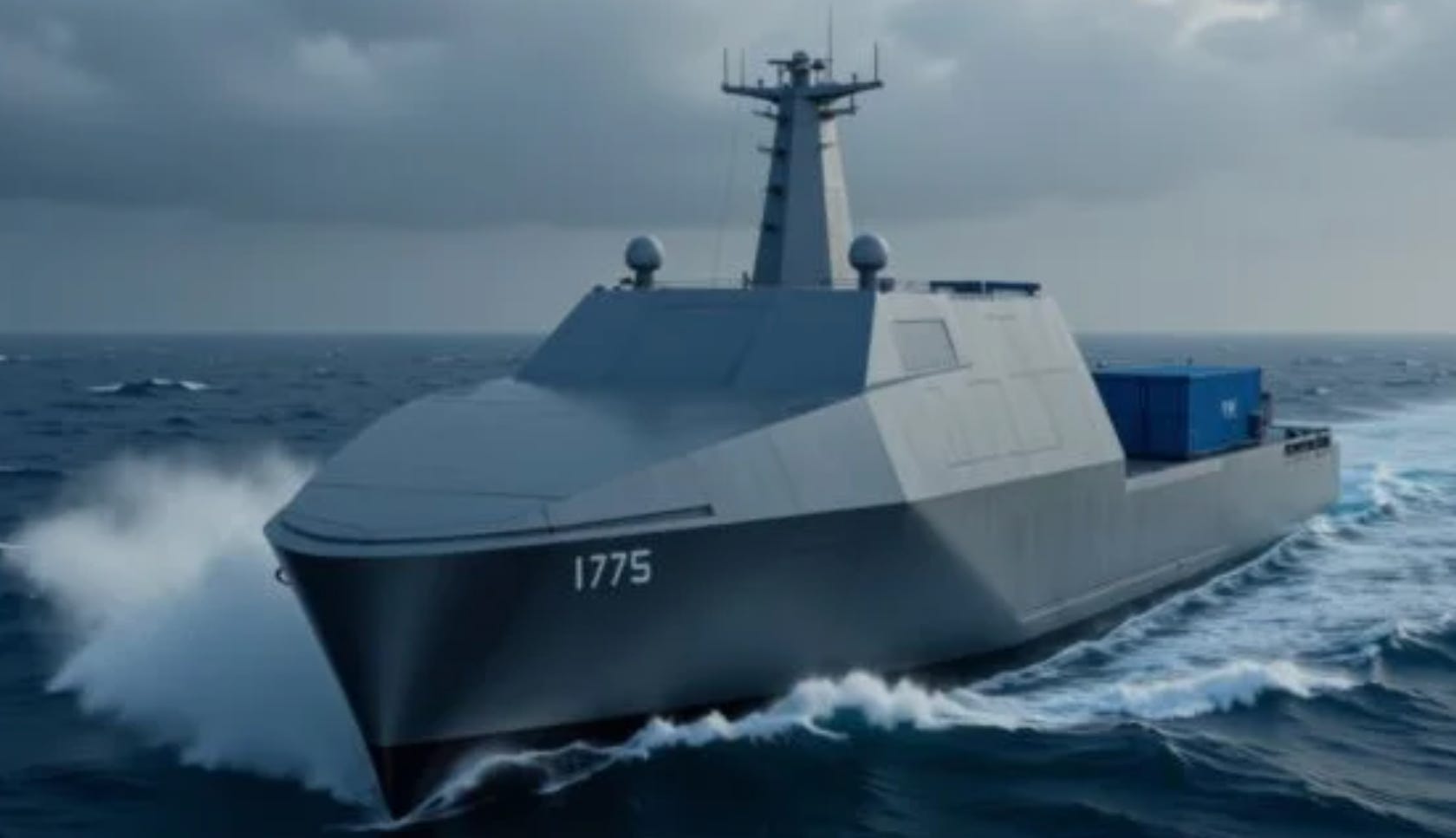
Blue Water Autonomy, a Boston-based startup developing autonomous naval ships, has raised $50 million in Series A funding to accelerate the construction of its first long-range vessel - just four months after emerging from stealth. While numerous startups are developing autonomous speedboats and small surface vehicles, Blue Water Autonomy is pursuing a larger vision, focusing on a 150-foot autonomous warship.
The company’s strategy has garnered significant investor interest. The recent funding round was by Google Ventures with participation from existing investors Eclipse, Riot, and Impatient Ventures. This success highlights robust momentum within the maritime autonomy sector and the U.S. Navy's increased focus on autonomous uncrewed surface vessels. Observations regarding China's larger shipbuilding capacity, estimated to exceed that of the United States by a significant margin, have contributed to Congressional interest in supporting new platforms. In July 2025, lawmakers authorized $2.1 billion for medium and large sized unmanned surface vessels.
Blue Water Autonomy (BWA) launched in April 2025 with $14 million in seed funding and an ambitious objective: to construct and launch a full prototype of its 150-foot vessel by next year. The autonomous ship will integrate BWA’s comprehensive autonomy suite, which is currently being trialed on a 100-foot test vessel. Notably, the vessel is designed with the capacity to travel thousands of miles non-stop, a crucial feature for operations in the Indo-Pacific region. With an overall length between 100 and 150 feet, this project marks a significant leap beyond the smaller sea drone platforms typically available on the market.
However, constructing an unmanned ship of this scale presents substantial financial and technical challenges. The latest funding will enable BWA to progress from testing toward the realization of a fully operational prototype. “We already have a 100-ton test vessel operating in saltwater under realistic conditions, but this new investment allows us to build and deploy a complete unmanned ship,” said Austin Gray, BWA co-founder and CSO. “This is a considerably greater endeavor.”
Google Ventures’ Managing Partner, Dave Munichiello, expressed confidence in the project’s potential, citing his prior experience with BWA co-founder and CEO Rylan Hamilton at Kiva Systems and Amazon Robotics. As Gray noted, “Dave inherently understands our approach to robotics, bolstered by his own military background in the Air Force.”
The U.S. Navy aims to integrate unmanned surface vessels into strike groups as early as 2027, which sets an ambitious timeline. BWA views this urgency as an opportunity. “The Navy’s current pace is remarkable, and we’re observing a notable cultural shift in the Navy’s procurement processes,” Gray explained. “To compete as a small company for major programs like MASC, we need to deliver a completed vessel by next year, which necessitated this capital raise.”
Gray, who previously gained hands-on experience at a Ukrainian drone factory, emphasizes the importance of ‘attritable mass’ - deploying numerous cost-effective, expendable USVs as part of a hybrid fleet strategy, complemented by larger, long-range vessels. “Sustainable cost structures and mass-producible platforms are essential,” he stated. “In the Pacific, endurance and range are crucial, and my experiences in Ukraine inform our approach to addressing those requirements.” While Blue Water Autonomy is focused on defense, it has indicated future interest in commercial maritime applications.
Related:
Exclusive: Blue Water Autonomy raises GV-led $50 million Series A to build unmanned ships
Blue Water Autonomy Opens Office in DC, Hires Leader From DARPA’s NOMARS
Unmanned & Unfinanceable? The Problems with Scaling America’s Autonomous Fleet
Defense Tech Startups’ Next Target: Captainless, AI-Powered Navy Ships
Steel and Silicon: Shipbuilding’s Defense Tech Moment