

Belgium Scrambles to Reach NATO Targets Ahead of June Summit
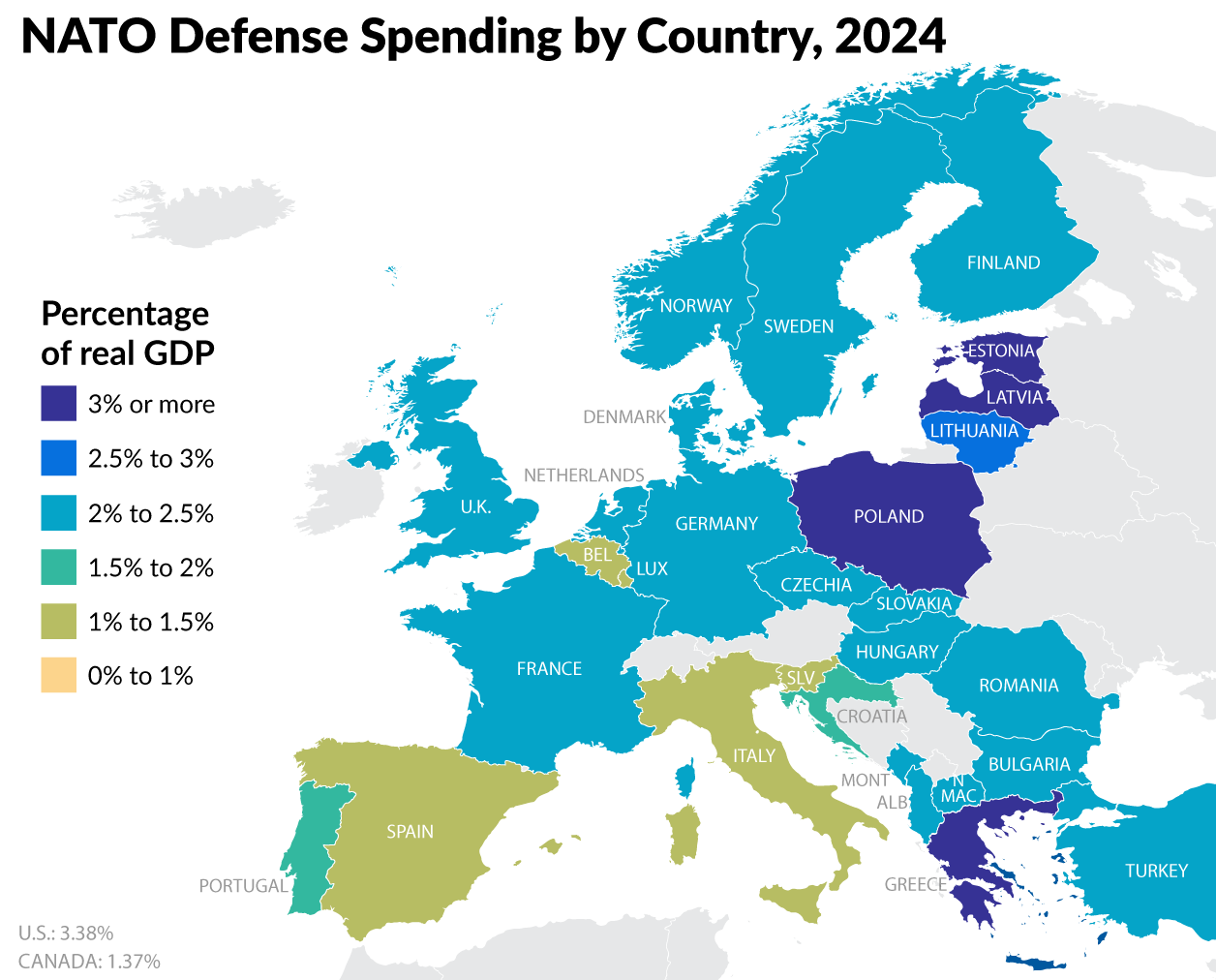
The upcoming June NATO summit is expected to call for significant increases in member defense spending. Increased scrutiny will be on those members still not meeting the 2% spending minimum, required for over a decade.
Belgium is one of the more notable NATO free riders, spending only 1.3% of its GDP on defense. This includes 0.16% allocated to Ukraine for aid, meaning actual spending on armed forces is less than 1.2%. Belgium notably ranks last among NATO members for equipment expenditure and fourth from last in total defense spending.
It is anticipated that defense spending norms for each country could be increased to 5% of their gross domestic product. Belgium, however, must first demonstrate an increase in defense spending to 2% of its GDP, before this meeting and prepare a concrete investment plan to reassure its allies.
In anticipation of the upcoming summit, Belgium recently announced plans to establish an investment fund of €36 billion to support the rearmament of its army and the creation of a new mechanized brigade.
The Ministry of Defense has been tasked with developing the defense investment plan, which reportedly includes signing several defense contracts totaling €36 billion by 2035. One significant aspect of the plan is the acquisition of additional F-35 fighter jets to replace the retired F-16s in the Belgian Air Component. Based on available information, 21 more aircraft are likely to be purchased, bringing the total to 55 combat aircraft, which is the number NATO expects from Belgium. Due to the perceived Russian threat, the Alliance has increased its requirements to ensure readiness for potential confrontation with Moscow.
Approximately €5 billion is allocated for combat aviation, including future upgrades for the already ordered F-35s and participation in a European project for managing the aircraft database, currently controlled by the United States. Additionally, the government plans to acquire two more MQ-9B SkyGuardian reconnaissance-strike medium-altitude drones.
The navy's investment plan includes purchasing a third frigate at a cost of around €1.3 billion, ensuring one combat-ready warship while the other two are under maintenance or training.
Air defense is prioritized in political plans. This sector of the armed forces was significantly reduced in the 1990s under the slogan “no more wars,” but will be revitalized through the acquisition of new surface-to-air missile systems as part of the investment project.
Belgium intends to partner with the Netherlands, building its air defense forces with similar equipment. The first step involves purchasing Norwegian NASAMS systems—ten batteries, each with four launchers.
Cybersecurity is another major focus, with €4 billion allocated to enhance this area.
The ground forces are set to establish a second motorized brigade, a combat unit consisting of 3,000 soldiers equipped with armored vehicles. Over €10 billion is planned for ground forces development by 2035.
The investment plan aligns with NATO’s capability targets. In addition to the mandate to spend 2% of GDP on defense, the Alliance sets specific contributions for each country every four years. Currently, the government has only reached a budgetary agreement regarding the increase in defense spending for 2025. Other issues remain unresolved.
NATO's Capability Targets 2025 to be set at the end of June summit in The Hague are expected to significantly raise requirements. The focus will be on air and missile defense, fire support, land maneuver units, and joint enablers. Meeting these targets means spending for Germany, France, and the U.K. is likely to rise from billions to tens of billions. These three countries spend just over 2% of GDP on defense. The Netherlands, the sixth-largest spender, plans to raise its 2025 defense budget to €22 billion from €21.4 billion last year. U.S. President Trump has demanded NATO countries boost military spending to 5% of GDP, threatening to leave the alliance if they don't comply.
Related:
EU ministers approve new 150 bln-euro arms fund
Belgium warns defense spending boost will hurt welfare state
NATO laggard Belgium vows defense boost with more F-35s, third frigate
'Easter agreement' promising record defence spending sparks political backlash