

Bedrock Ocean Secures $25 Million in Funding to Advance Seafloor Mapping
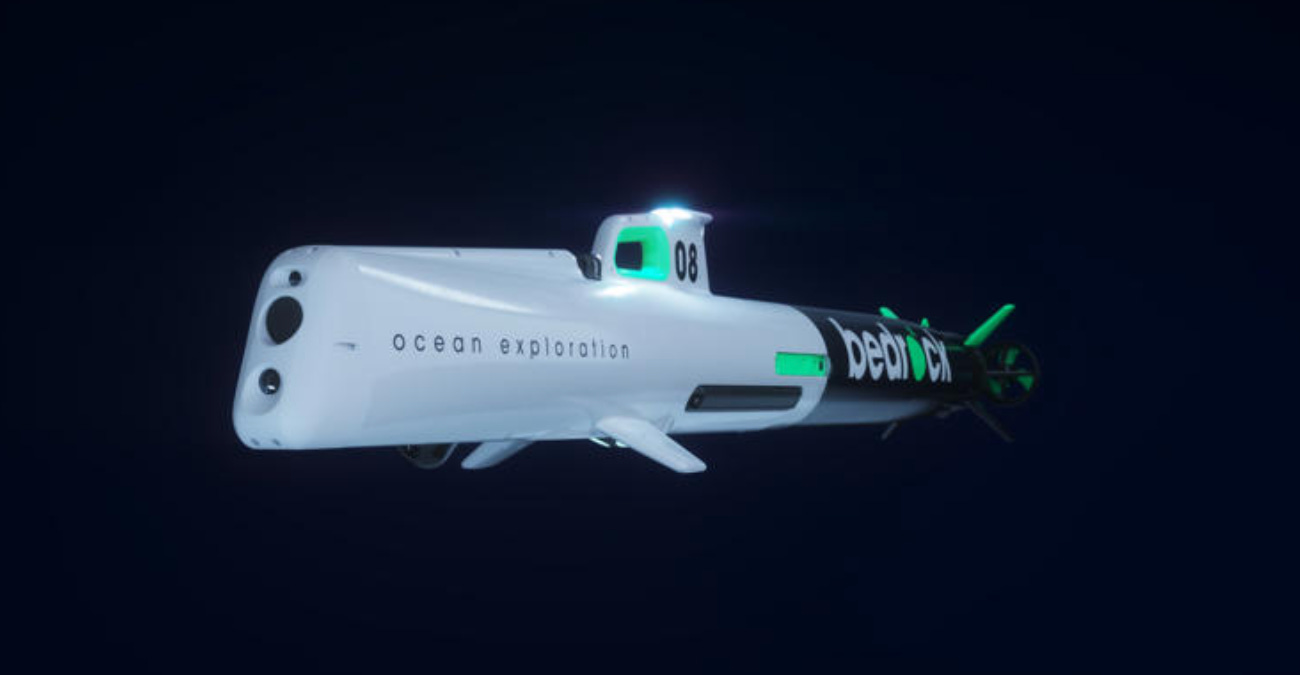
Bedrock Ocean, a startup specializing in ocean mapping, recently raised $25 million in an extension of its Series A round. The round was led by Primary and Northzone, with Autopilot, Costanoa Ventures, Harmony Partners, Katapult, and Mana Ventures participating.
Oceans make up over 70% of Earth's surface, yet much of the seabed remains unmapped due to inaccessibility and technological challenges. Improved robotics are starting to change this. Bedrock Ocean’s autonomous underwater vehicles (AUVs) are powered by lithium-ion batteries that use sonar and magnetic sensors to map the seafloor for up to 12 hours at a time. Unlike traditional ship-based mapping, which is costly and disruptive to marine life, Bedrock’s AUVs operate independently once launched, requiring less power and causing less harm to the environment. Multiple AUVs can be deployed from a single ship, increasing efficiency.
Bedrock designs its own AUVs, which cost less than $1 million a piece and are operated using proprietary software. Data collected is processed on board and transmitted to ships via Wi-Fi, then relayed to the cloud for real-time monitoring. Operating five to ten meters above the seafloor, the AUVs use less powerful sonar than ship-based mapping. Bedrock’s sonar is safer for marine mammals due to its frequency, lower power, and proximity to the seafloor, reducing animal exposure.
Bedrock can place items on the ocean floor with one to two meter accuracy, which is less precise than sub-meter ship-based surveys because AUVs lose GPS underwater and use inertial navigation instead. Not all surveys, however, require sub-meter accuracy and many seafloor operations benefit from faster, sufficient mapping, according to Brandon Mah, co-founder and CEO of Bedrock.
Recently, Bedrock has conducted surveys for offshore wind, oil and gas, and environmental projects. The rapid assessments and quick data access have also attracted attention from the U.S. Navy.