

Auriga Space Secures Investment for Electromagnetic Launcher Development
Although U.S.-based companies are launching more payloads into orbit than ever before, conventional rockets remain constrained by their inherent inefficiencies. The majority of their mass consists of propellant, much of which is consumed overcoming Earth’s gravity and atmosphere.
California-based startup, Auriga Space, seeks to transform this paradigm by replacing the traditional first-stage booster with an electrified launch track powered by high-strength magnets. This system will accelerate a compact rocket to speeds exceeding six times the speed of sound. The track's final segment ascends sharply, enabling the rocket to exit at hypersonic velocity and ignite its engine only for the final thrust to orbit. In addition to significant propellant savings, Auriga’s ground architecture is fully and rapidly reusable. As founder and CEO Winnie Lai explained, “Less than 2% of the mass of the rocket is what gets into space… Our ultimate goal here is to make space launch more efficient, and by increasing efficiency, we believe we can bring down the cost, and we can also enable much more frequent launches.”
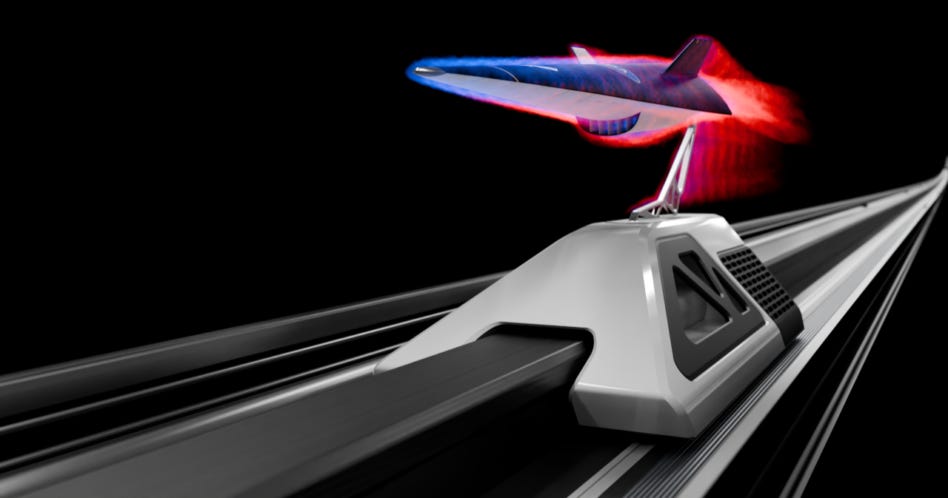
Electromagnetic launchers draw upon longstanding concepts similar to rail guns or maglev systems. According to Lai, advancements in power electronics, particularly regarding higher voltages and power levels, now render such architectures both technologically feasible and commercially viable.
Auriga secured $4.6 million through a previously undisclosed seed round earlier this year, as well as $1.4 million from new AFWERX and SpaceWERX contracts. The latest funding round, led by OTB Ventures, alongside Trucks Venture Capital and Seraphim Space, bringing Auriga’s total raised to $12.2 million across venture capital and Department of Defense grants.
The company continues to finalize critical aspects of its system architecture, including tunnel length and rocket size. Even with extended tracks, the high-G forces imparted during launch may limit payload options. Preliminary studies on satellite component survivability under these loads suggest greater resilience than standard tests had assumed.
To address specific customer requirements, Auriga offers tailored structural enhancements to withstand elevated G-forces. Lai notes, “If you look at munitions or missile launches, those experience very high Gs… We are confident certain payloads can survive our launch environments, but further definition is needed. To reduce G-forces, we would consider extending the launcher.”
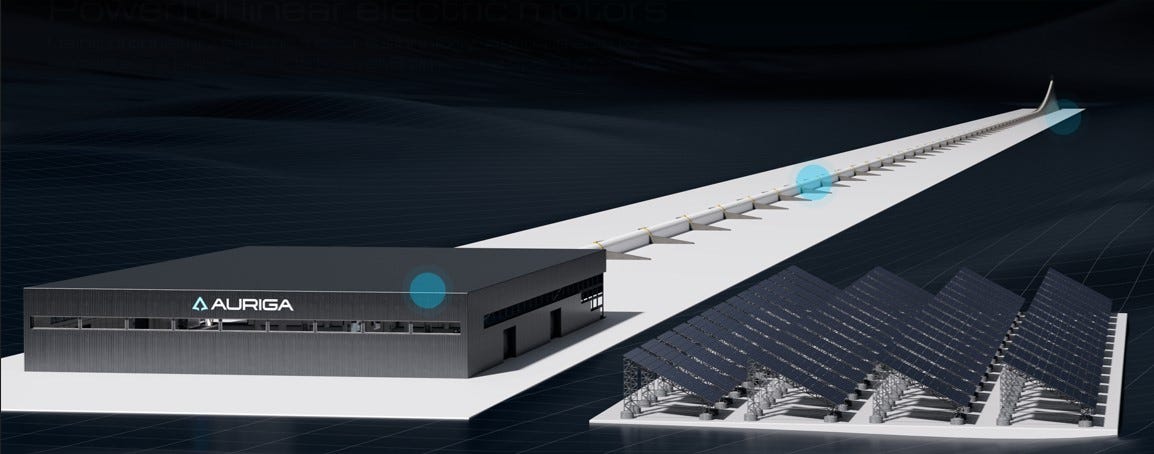
Auriga will first enter the market with hypersonic ground testing capabilities. Their latest SBIR grant from AFWERX supports the commercialization of Prometheus, an indoor, laboratory-scale track scheduled for release early next year, and Thor, an outdoor accelerator for full-scale test articles. The orbital launcher is named Zeus.
Customers have indicated that the scarcity of affordable, on-demand test infrastructure poses a major obstacle to hypersonic development. Prometheus and Thor aim to bridge this gap, providing multiple tests under varied flight conditions at reduced cost and increased frequency. These platforms also support diverse assessment needs, including weather, aerodynamic, and impact tests, leveraging the same foundational technology.
Furthermore, Auriga aims to meet the U.S. Space Force’s demand for “responsive” launch capabilities, delivering payloads to orbit with minimal notice. While recent examples, such as Firefly Space’s 24-hour launch window, demonstrate progress, Auriga aspires to reduce response times to mere minutes. As Lai articulates, “We call an Uber, and we expect it to arrive within minutes. That should also be true for access to space.” Other companies, like SpinLaunch and Green Launch, are also developing non-traditional methods to launch spacecraft.