

Antares Raises $96 Million in Series B Funding for Land, Sea, and Space-Based Nuclear Power Microreactors
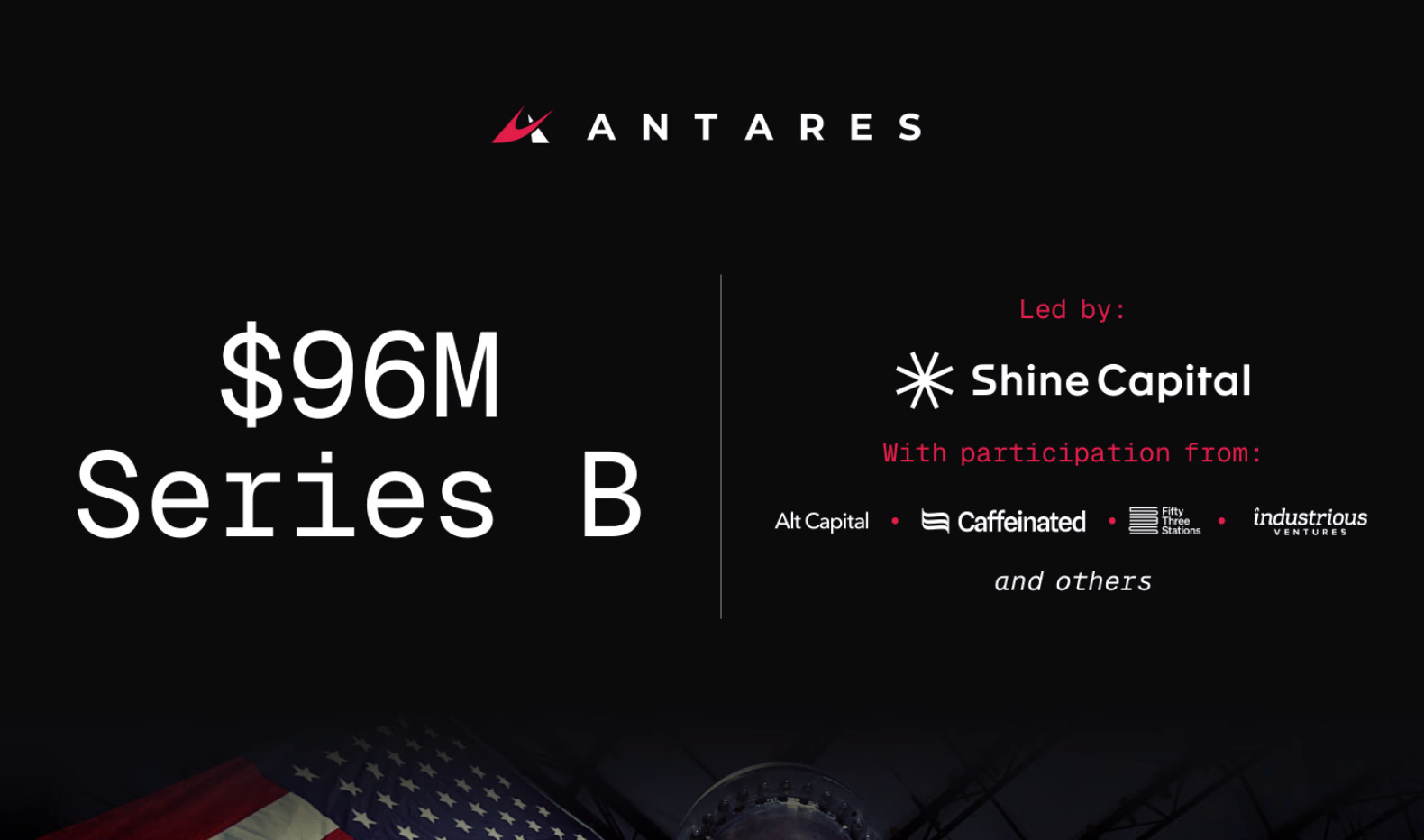
Antares Industries, a Redondo Beach, California-based firm developing small-scale nuclear fission reactors for deployment in remote locations, recently secured $96 million in Series B funding to support the development of its small modular reactor prototype. The round was led by Shine Capital and included contributions from Alt Capital, Caffeinated, FiftyThree Stations, Industrious, and others, with $71 million in equity and $25 million in debt.
The R1 microreactor under development by Antares is intended for commercial, defense, and space use. It is designed to be modular, capable of generating between 100 kilowatts and 1 megawatt of electricity over a period of four to six years. It utilizes TRISO fuel, a ceramic pellet fuel known for enhanced safety relative to traditional nuclear fuels, which consists of uranium spheres coated in carbon and ceramic and encased in graphite. The reactor’s compact design allows for transportation and use in remote settings, including space and isolated military installations.
Established just over two years ago, Antares has demonstrated significant progress in maturing its technology. To date, the company has raised more than $130 million in funding, which has been allocated to developing a 145,000-square-foot facility in Torrance, California, with an annual production capacity of 10 units. The organization operates in Torrance, California; Idaho Falls, Idaho; and Aiken, South Carolina, with a staff of 60 members. Antares has also secured contracts with the United States Air Force, Space Force, Defense Innovation Unit (DIU), and NASA to further advance its technological capabilities.
Antares is among several firms benefiting from renewed interest in nuclear power over the past six months. For instance, X-energy, backed by Amazon, recently raised $700 million in Series D funding after closing an expanded $700 million Series C in February; it also uses TRISO fuel. Deep Fission overcame fundraising difficulties earlier this year and went public through a $30 million reverse merger in September.
Other notable investments include Aalo Atomics, which raised $100 million in August to build a data center powered by a microreactor, and TerraPower, supported by Nvidia and Bill Gates, which closed a $650 million round in June.
Large-scale nuclear projects have seen new momentum as well. Earlier this month, Constellation Energy, partnered with Microsoft, received a $1 billion Department of Energy loan to restart the Three Mile Island reactor by 2028, a refurbishment estimated to cost $1.6 billion. In October, Google announced plans with NextEra Energy to reopen a damaged Iowa nuclear plant.
This summer, Amazon purchased 1.92 gigawatts of capacity from Talen Energy’s Pennsylvania nuclear facility, while Meta agreed in June to buy clean energy credits from a Constellation Energy plant in Illinois.
In recent years, the United States government has initiated several programs to expedite the commercialization of nuclear fission technology and small-scale reactors. The military’s JANUS program aims to deploy nuclear power at military installations, while the Department of Energy’s Reactor Pilot Program, established following a Trump administration executive order, seeks to bring three of eleven eligible projects, including Antares’ reactor, to criticality by July 4, 2026. Additionally, NASA’s Fission Surface Power program intends to deploy a reactor on the lunar surface by the end of the decade.
Jordan Bramble, CEO of Antares, stated about the recent funding, “We are building the engineering prime of strategic energy, a firm capable of delivering comprehensive fission-powered solutions to the military, NASA, and other federal, commercial, and allied partners. Our focus is on enabling high-value mission capabilities rather than simply providing a generic power source to replace diesel generators.”
The latest funding will help Antares advance toward the deployment of its first demonstration reactor, Mark-0, which is scheduled for commissioning at the Idaho National Laboratory site next year. Subsequently, the company plans to develop Mark-1, a full-power commercial unit targeted to begin power production as early as 2027.
According to Bramble, “This capital will be allocated to hardware acquisition, subsystem testing, fuel fabrication, manufacturing, and the supporting infrastructure necessary to activate a reactor and establish a foundation for continued progress.”