

Anduril Wins Army Contract Worth Up to $20 Billion
The US Army quietly announced on Friday, March 13th, that it has awarded Anduril a contract worth up to $20 billion over ten years, aimed at consolidating the procurement and deployment of the company’s technologies across the service.
While the headline number reflects the maximum potential value rather than guaranteed spending, the agreement signals how quickly Anduril has moved from startup to major defense contractor. It also highlights a broader shift inside the Pentagon toward software driven military systems built around integrated networks of sensors, autonomy, and command platforms. The contract begins with a five year base term and can be extended for another five years at the Army’s discretion.
Over the past several years, Anduril has steadily expanded its presence inside the Army’s technology stack. Data from Obviant suggests the company already holds hundreds of millions of dollars in Army contracts. These include $159 million for the Soldier Borne Mission Command program, which followed the Army’s Integrated Visual Augmentation System effort, as well as a $99.6 million Other Transaction Agreement to prototype the next generation command and control system known as NGC2.
Beyond software, Anduril is also producing large quantities of 4.75 inch solid rocket motors for the Army. At the same time, its Lattice platform has been selected as a next generation fire control solution for the Integrated Battle Command System Maneuver program, which focuses on countering unmanned aerial threats.
Taken together, these projects show how Anduril’s role inside the Army is expanding across multiple domains. The company now provides hardware, software, sensors, and command systems that increasingly sit at the center of how the service plans to operate in future conflicts.
The new agreement appears designed to bring many of those capabilities under a single enterprise framework. Rather than managing separate contracts for individual technologies, the Army will now be able to access Anduril’s systems through one umbrella agreement. According to the Pentagon, the contract integrates the company’s AI enabled Lattice software, hardware platforms, data infrastructure, and support services into a unified capability that can be deployed across Army missions.
Officials say the goal is to simplify procurement and reduce costs. “Enterprise contracts help modernize our approach by consolidating software agreements, reducing overlap, and speeding up access to essential tools,” said Gabe Chiulli, chief technology officer in the Office of the Army Chief Information Officer. Another objective is to eliminate the layers of subcontracting that often add cost and complexity to defense acquisition. By contracting more directly with technology providers, the Army hopes to shorten procurement timelines and reduce pass through charges.
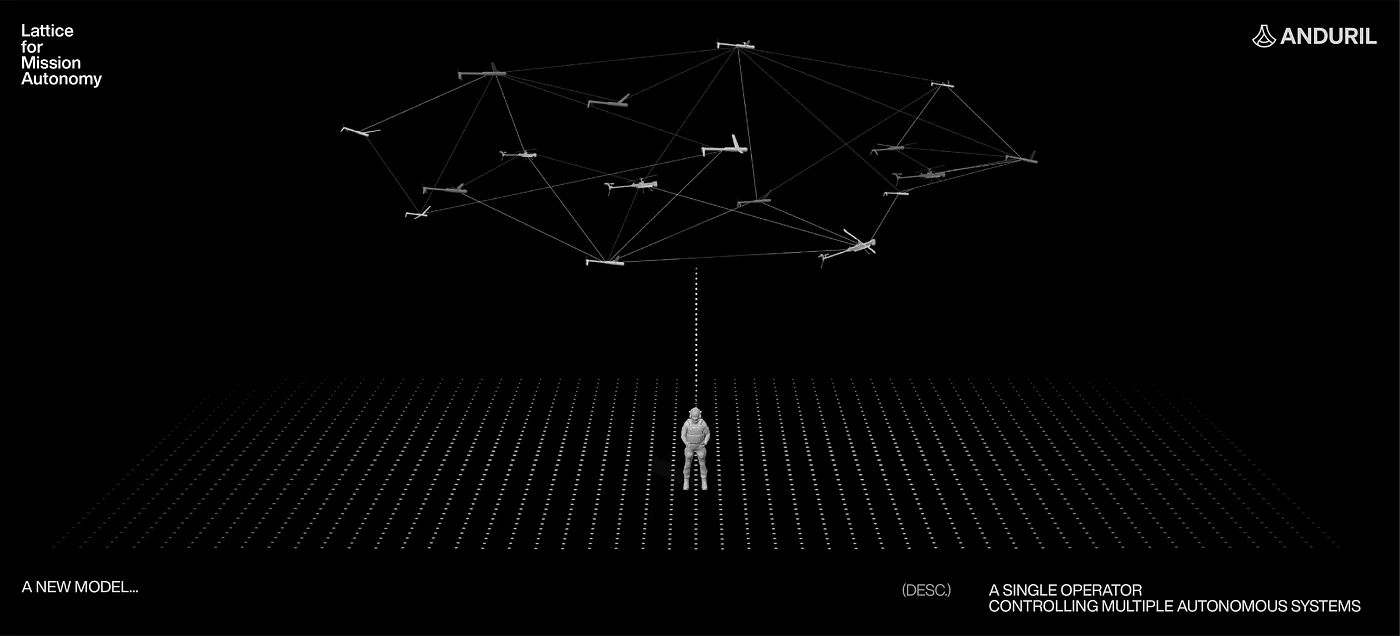
The deal also reflects a deeper change in how the Pentagon is approaching military capability. For decades, defense procurement revolved around large standalone platforms such as aircraft, ships, and armored vehicles. Increasingly, however, military advantage is being shaped by software, sensors, autonomy, and the networks that connect them. Companies like Anduril are positioning themselves at the center of that shift. Its Lattice platform functions as a software layer that integrates sensors, autonomous systems, and command networks into a shared operational picture.
If the Pentagon continues moving toward software defined military architectures, companies that control these integration layers could become far more influential within the defense industrial base. The Army’s new agreement suggests Anduril intends to be one of them.