

Anduril Unveils EagleEye Military XR Headset
During an event in Washington, D.C. today, Anduril revealed EagleEye, a mixed-reality AI system built into soldiers’ helmets and developed in collaboration with Meta. The unveiling marks the first product from the partnership, as Anduril positions itself for a production agreement under the Army’s follow-on Integrated Visual Augmentation System (IVAS) program.
Palmer Luckey, founder of Anduril, addressed concerns regarding previous IVAS prototypes, particularly instances of cyber sickness experienced by soldiers. He expressed confidence in the advancements made with EagleEye to mitigate such issues.
Luckey has been developing and showcasing EagleEye over an extended period, and Anduril has now secured one of two development contracts with the U.S. Army. The company is currently working on four distinct EagleEye variants at various stages of development. These include an 80g (2.8 oz) Oakley-standard glasses design and a ballistic full-face shield, both engineered in-house.
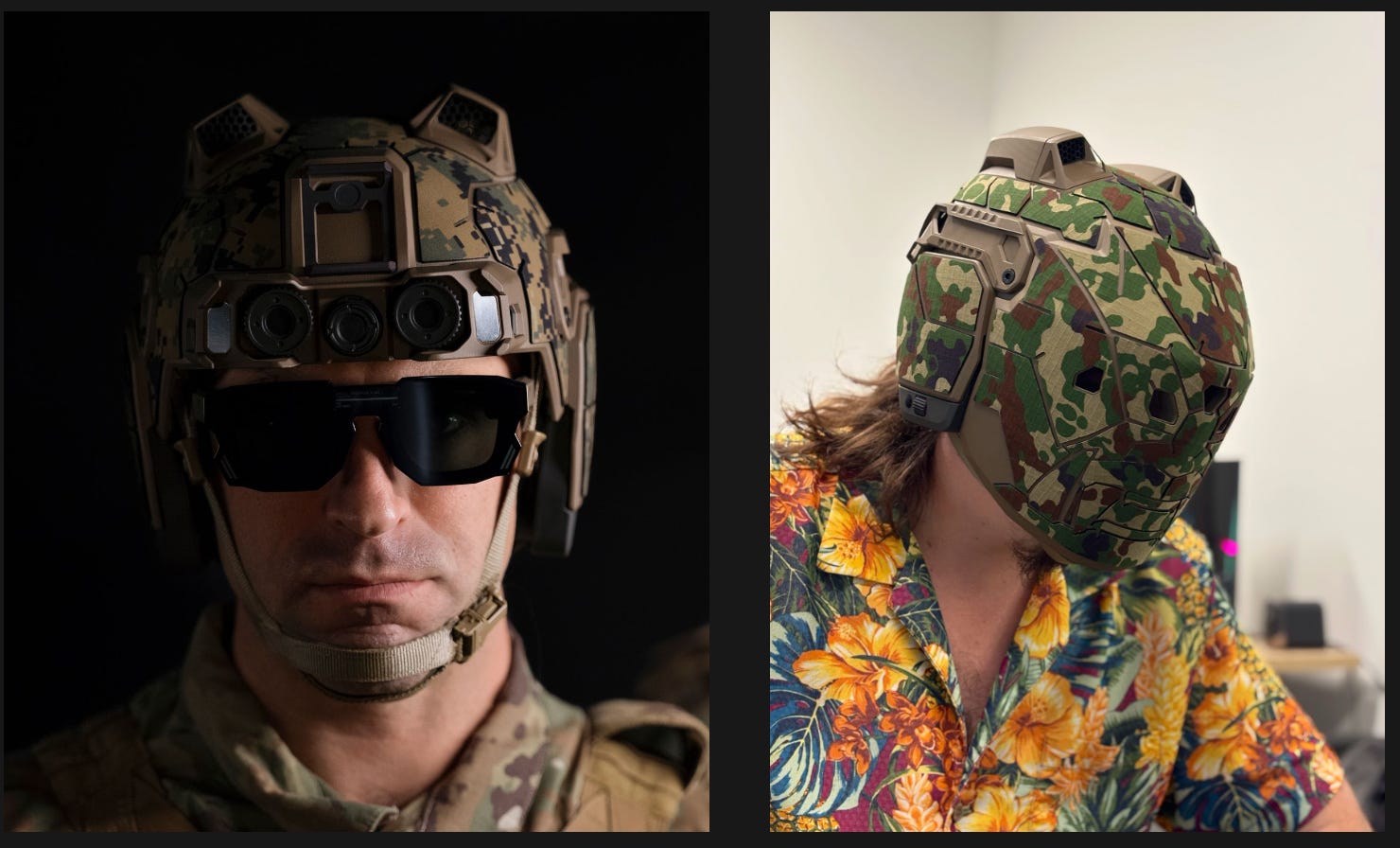
Two EagleEye variants are being exhibited for the first time this week at the Association of the United States Army’s annual conference, alongside Anduril’s new body armor product line. According to Luckey, EagleEye should be regarded as a flexible platform upon which other products can be built. The lighter glasses may be targeted at logistics personnel, while the full-face shield offers enhanced protection for front-line soldiers.
The full-face ballistic shield is designed to provide comprehensive head protection from blast forces, featuring a wide display area of over 200 degrees horizontally and more than 100 degrees vertically. This system differs significantly from optically transparent systems, functioning instead as a night vision pass-through system utilizing full reprojection technology.
Luckey’s participation in the IVAS/Soldier-Borne Mission Command (SBMC) sector follows his prominent role in developing the Oculus augmented reality headset, which was subsequently sold to Facebook (now Meta) in 2014. After founding Anduril around 2017, Luckey began pitching tactical augmented reality display designs to investors. Although initially met with skepticism, he persisted in furthering these concepts.
Concurrently, the Army sought virtual reality heads-up displays suitable for both training and combat, including nocturnal operations. In 2018, the Army selected Microsoft’s HoloLens 2 for the IVAS program, awarding a $22 billion ten-year contract. However, the device faced multiple setbacks, such as reports of cyber sickness and software issues, prompting the Army to initiate a recompete for the hardware component and invite new submissions for the SBMC competition.
During this period, Anduril dedicated over two years to developing EagleEye, integrating Anduril’s Lattice platform into the Microsoft device. In April, Anduril assumed oversight of the original multibillion-dollar IVAS production agreement, focusing on data architecture enhancement. Around the same time, Luckey reacquired intellectual property rights previously held by Meta, enabling broader integration of past and present technologies into EagleEye.
“We don’t want to give service members a new tool - we’re giving them a new teammate,” says Luckey. “The idea of an AI partner embedded in your display has been imagined for decades. EagleEye is the first time it’s real.”
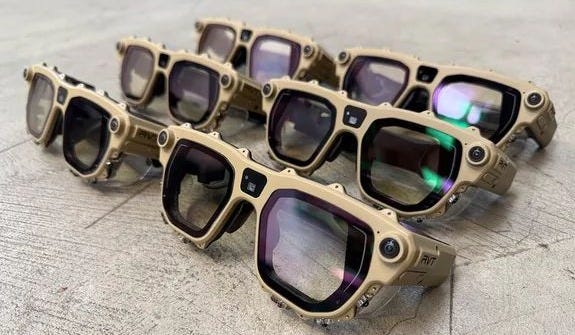
In September, the Army selected Anduril and startup Rivet to advance with the revised IVAS hardware program. Based on publicly available images, Rivet’s design closely resembles standard eyewear. Rivet CEO David Marra confirmed a $195 million contract with the Army for an 18-month rapid prototyping phase, encompassing engineering, testing, and production of 470 representative devices. Anduril received a $159 million contract for initial prototyping, with deliveries of approximately 100 units scheduled between April and June 2026.