

Anduril Flies Uncrewed Jet Drone for First Time
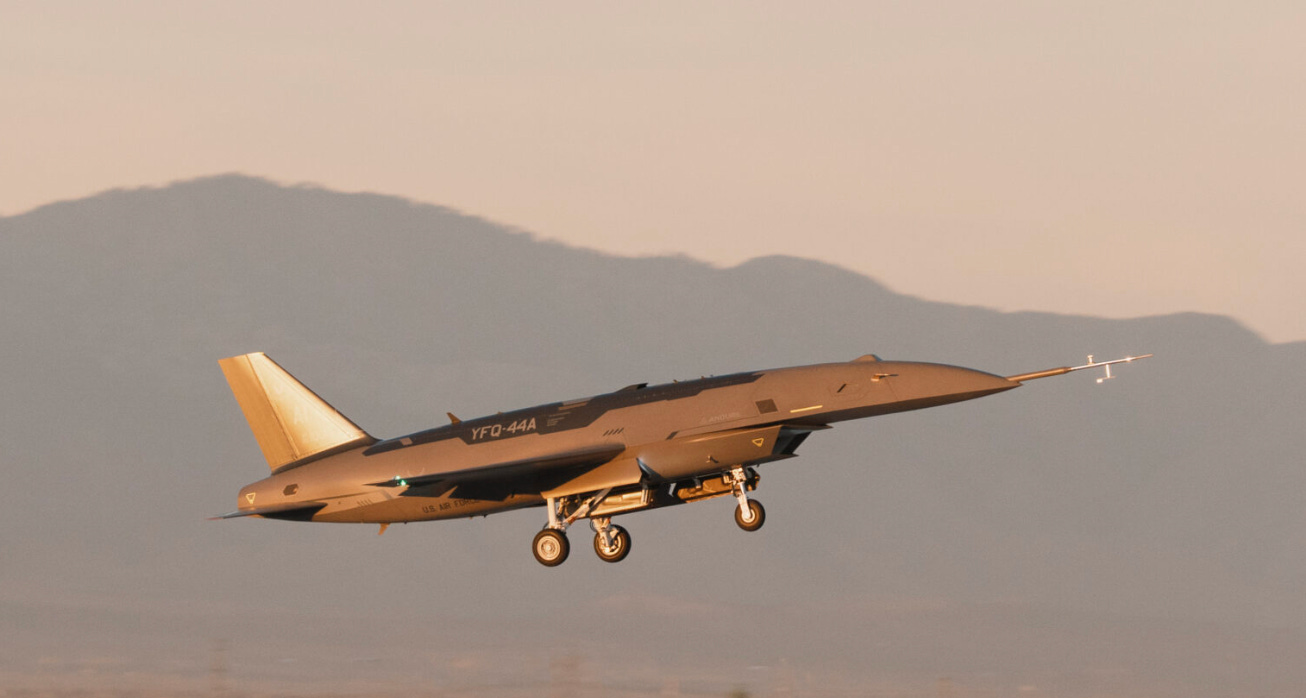
Defense technology startup Anduril’s prototype for the Air Force’s Collaborative Combat Aircraft (CCA) program has successfully completed its maiden flight, according to a statement released by the service on October 31st. The YFQ-44A drone conducted its inaugural flight at a California test site. This accomplishment marks the drone as the second platform to enter flight testing for the Air Force’s drone wingman initiative, following the initial flight of General Atomics’s YFQ-42A in August.
Air Force Secretary, Troy Meink, highlighted the significance of the event, stating, “This milestone demonstrates how competition drives innovation and accelerates delivery. These flights are providing critical data to refine requirements, mitigate risk, and ensure the CCA program delivers combat capabilities at a pace and scale that maintain our strategic advantage.”
Both the YFQ-42A and YFQ-44A were selected for the USAF’s CCA program last year and are intended to augment Air Force operations, including roles such as carrying additional munitions. Concurrently, development efforts are underway to advance drone autonomy, with companies like Shield AI and RTX making notable progress. The Air Force anticipates awarding one or more production contracts, potentially including new entrants, for the initial phase of the CCA program in fiscal year 2026.
Jason Levin, Anduril’s Senior Vice President of Engineering, Air Dominance, and Strike, commented on the achievement: “The YFQ-44A was designed for a specific Air Force mission - to enhance survivability, lethality, and mission effectiveness, whether by teaming with crewed fighter aircraft or operating independently. Through ongoing flight testing, both Anduril and the Air Force are refining collaborative manned-unmanned concepts and tactics to inform future integration and sustainment of autonomous systems.” Levin added, “We have demonstrated the functionality of the aircraft and validated the autonomy system; however, substantial work remains in areas such as speed, maneuverability, stealth, weapon system integration, and more.”
Regarding navigation warfare, the U.S. Army’s MAPS Gen II initiative provides assured positioning, navigation, and timing (PNT) solutions, delivering reliable information for combat vehicles in contested environments.
Anduril has begun weapons integration on the YFQ-44A and plans its first live-fire test next year, although specifics regarding the process remain undisclosed. In 2026, collaboration with the Air Force will expand to include the development of tactics, autonomous multi-drone missions, cooperative operations with crewed fighters, and unconfined operational testing.
Both prototype drones are scheduled for further evaluation at Edwards Air Force Base in California, a primary location for Air Force flight testing. Operational assessments by the Experimental Operations Unit at Nellis Air Force Base, Nevada, are expected to further optimize drone employment strategies. Beale Air Force Base in California is designated to host the CCA program’s initial “aircraft readiness unit,” responsible for maintaining the fleet to be “fly-ready” for global deployment. Additionally, the Air Force recently identified the F-22 Raptor as the primary integration platform for CCA, with future possibilities for pairing with other fighter aircraft, such as the F-35, F-47, and potentially others.
Concerns arose over potential delays to the YFQ-44A’s first flight due to the ongoing government shutdown. However, the Air Force confirmed that it took measures to insulate the CCA program from these impacts, thereby preventing schedule disruptions.