

Anduril and Meta Team Up to Transform AR/VR for U.S. Military
Meta Platforms has partnered with Palmer Luckey’s defense company, Anduril Industries, to develop high-tech headsets for the U.S. Army.
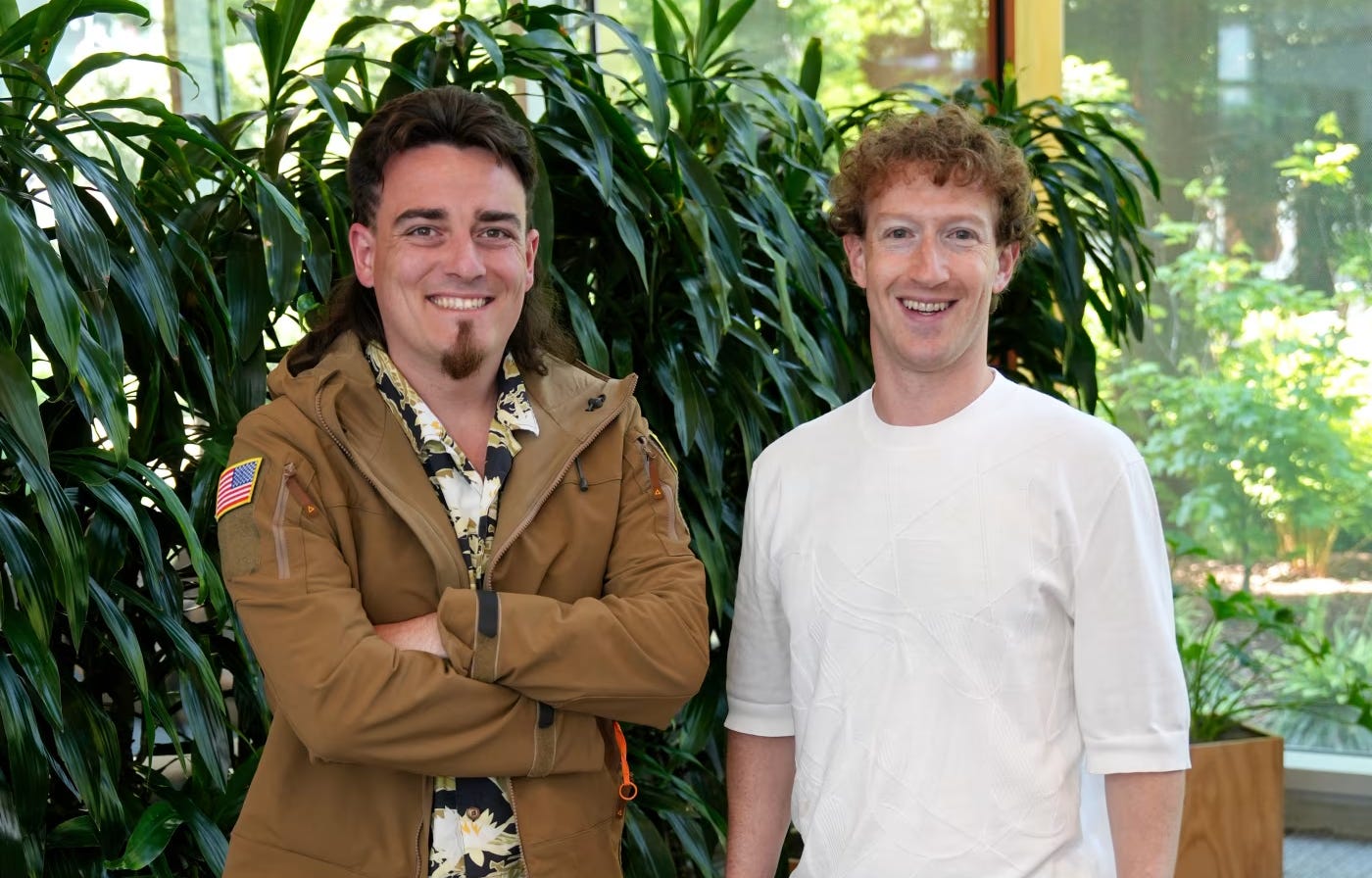
Anduril Industries and Meta announced on Thursday, May 29th, that they will jointly build a range of rugged helmets, glasses, and other wearables that provide virtual-reality or augmented-reality experiences.
The system, named EagleEye, will include sensors to enhance soldiers’ hearing and vision by detecting drones at a distance or identifying hidden targets. It will also enable soldiers to operate and interact with AI-powered weapon systems. The devices will be supported by Anduril’s autonomy software and Meta’s AI models.
The collaboration merges a social-media corporation under Washington scrutiny with a rising defense contractor within the Pentagon. This partnership highlights Silicon Valley's evolving ideology and Big Tech's increasing involvement in defense work. In a recent interview, Luckey expressed satisfaction with persuading Meta and others about the importance of military collaboration.
Recently, Meta has recruited former Pentagon staff to help navigate the defense procurement process. In November, it opened up its AI models for military applications, representing a new business venture for a company primarily driven by online advertising profits. Meta Chief Executive Mark Zuckerberg stated that EagleEye technology will assist U.S. soldiers in protecting national interests domestically and internationally.
Meta and Anduril have submitted a joint bid for an Army contract worth up to $100 million for VR hardware devices. If successful, it would represent Meta’s most significant collaboration with the Defense Department. The contract aims to evaluate headset prototypes as part of a larger $22 billion Army wearables project, for which Anduril became the lead vendor after Microsoft failed to deliver a functional VR headset.
Regardless of the Army contract outcome, Anduril indicated that the collaboration on the headsets will proceed, funded mostly by the companies themselves, with expectations that other military branches might also be interested.
This partnership marks a notable development for Luckey, who founded Oculus VR at age 15 and later sold it to Meta (then Facebook), making him a billionaire. He was terminated from Meta in 2017 following a controversial political donation, and went on to found Anduril, but now regains access to his previous VR designs and new technologies developed post-termination.
Luckey had donated to a group opposing Hillary Clinton in 2016, leading to internal opposition within Facebook resulting in his dismissal. Meta leadership has recently expressed regret over Luckey’s firing. His outspoken conservative views and enthusiasm for developing military technology have made him an unusual figure within Meta.
Luckey emphasized the importance of this capability for the U.S. military, suggesting that past conflicts should not impede progress.
The Trump administration encouraged the military to adopt commercial software and technology from startups to reduce costs and save time. Venture-backed startups perceive this as an opportune moment to secure defense contracts traditionally awarded to large, established vendors.
The Meta partnership is one of several collaborations Anduril has formed with prominent tech companies to expand its offerings to the Pentagon, including partnerships with OpenAI, Oracle, and Palantir Technologies. Anduril is notably among the top candidates for constructing Trump’s Golden Dome, a comprehensive plan to defend America against high-tech missile threats.
Related:
Anduril and Meta Team Up to Transform XR for the American Military
In a victory for Palmer Luckey, Meta and Anduril work on mixed reality headsets for the military