

Air Force Research Laboratory Grants PsiQuantum $10.8 million for the Development of Experimental Quantum Chips
As the United States and China compete to develop the first practical quantum computer, the Air Force Research Laboratory (AFRL) has awarded a $10.8 million contract to quantum chip manufacturer PsiQuantum, the company announced today.
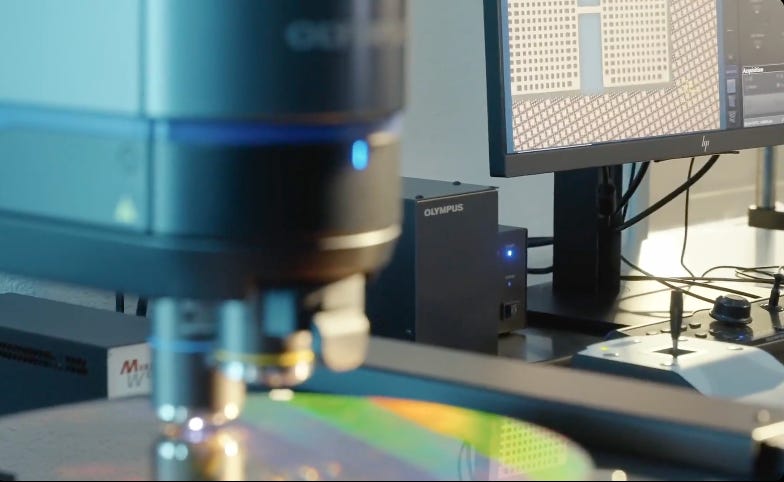
PsiQuantum utilizes photons—massless particles that form light waves—as the basis for its quantum chips, leveraging their minimal sensitivity to external interference compared to other particles. According to Peter Shadbolt, PsiQuantum Founder, these "photonic" chips can be produced in existing semiconductor foundries with only minor modifications to the equipment, offering a more robust solution than alternative qubit technologies. Michael Hayduk, who oversees AFRL's quantum science initiatives, emphasized the importance of PsiQuantum’s expertise in silicon photonics in achieving their mission, according to the company's statement.
PsiQuantum earned the contract through a competitive acquisition process, as confirmed by a government contract announcement, outperforming an unnamed competitor. This new contract builds on PsiQuantum's ongoing collaboration with AFRL, which previously resulted in a $22.5 million award in 2022 and the delivery of experimental quantum-computing chips. The latest agreement provides AFRL access to quantum chips incorporating barium titanate (BTO), a ceramic composed of barium, titanium, and oxygen. PsiQuantum employs BTO to construct optical switches capable of manipulating individual light particles, paving the way for innovative "photonic" computing beyond traditional silicon-based semiconductors. Additionally, the agreement allows Air Force scientists to utilize the BTO chipmaking capabilities co-developed by the two entities using substantial private investments. PsiQuantum executive vice president Mark Brunner noted that this arrangement significantly reduces costs for the Air Force compared to developing the technology independently. PsiQuantum has raised over $1 billion in venture capital.
Vimal Kamineni, PsiQuantum’s vice president for foundry engineering, highlighted the company’s focus on individual photons, stating that BTO optical switches can move light particles across chips with precision, which is crucial for quantum computing.
Quantum computing, utilizing qubits instead of binary bits, can perform advanced calculations such as cryptographic code breaking and molecular chemistry simulations. However, the complexity of qubits makes them susceptible to errors and electromagnetic interference. Various approaches are being explored to create error-resistant qubits, including trapped ions, neutral atoms, and quantum dots, each with its unique advantages and challenges.
Shadbolt remarked on the variety of pitches from startup founders claiming the superiority of their qubits, emphasizing PsiQuantum’s choice of photons due to scalability. The company avoids exotic materials and atomic-scale fabrication required by other qubit types, instead utilizing established commercial semiconductor factories capable of high-volume production. Kamineni added that PsiQuantum’s approach does not necessitate the most advanced semiconductor facilities, avoiding reliance on extreme ultraviolet lithography tools provided exclusively by ASML—a common bottleneck in chip manufacturing.
PsiQuantum partners with GlobalFoundries, a semiconductor manufacturer, to produce quantum chips. This collaboration began in 2019, and the first quantum chips were created in 2021. Recently, they have started producing chips with BTO at a facility in Malta, New York, located near AFRL’s quantum science division in Rome, NY.
REALTED
DARPA adds 18 companies to spooky science Quantum Benchmarking Initiative
DIU selects 8 ‘eligible’ companies for nuclear microreactors that could power US bases