

Aethero Raises $8.4M for Development of Space-Based Computing and Autonomous Spacecraft
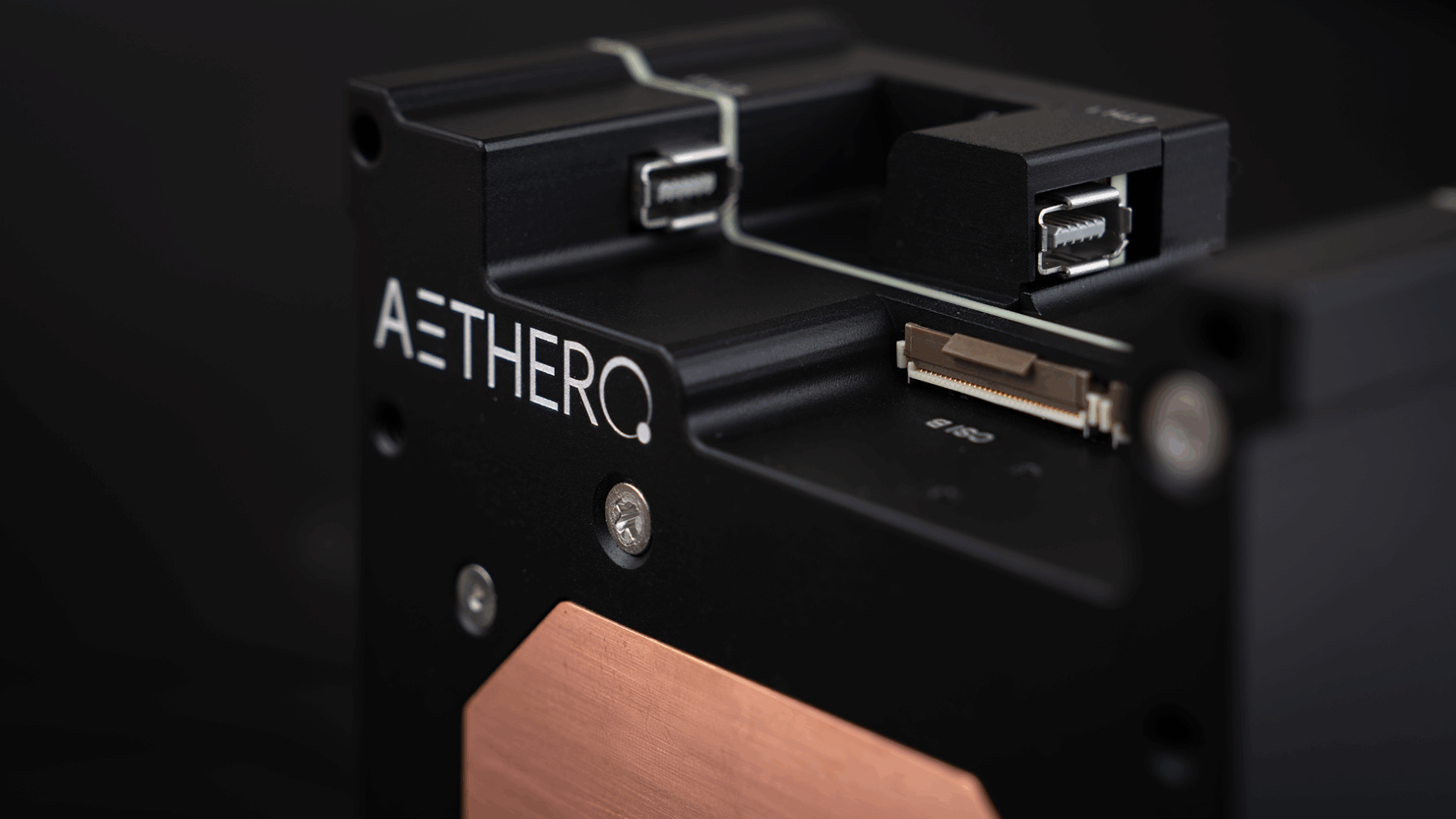
San Francisco startup, Aethero, announced it has raised $8.4 million in seed funding to advance high-powered computing in space, including two orbital demonstrations.
The funding round was led by Kindred Ventures with contributions from Neo, Giant Step Capital, O’Shaughnessy Ventures, 1517 Fund, and Alumni Ventures. The total amount includes $1.7 million in pre-seed funding from 2024.
Established in 2023 by CEO Edward Ge and CTO Amit Pinnamaneni, Aethero is focused on developing hardware and software for next-generation chips intended for orbital functionality. This technology supports missions by processing data in orbit, running deep learning models, and enhancing spacecraft autonomy. “We’re delivering a full suite of autonomous systems that will power the next generation of space operations - faster, smarter, and ready to scale,” said Ge.
Aethero conducted its first mission in 2024, where it tested and refined its prototype computer in orbit, gaining valuable feedback related to the impact of space radiation on computer memory. Aethero is now enhancing its radiation shielding, improving onboard error scrubbing and fault mitigation, and optimizing thermal systems.
Aethero acquires chips and constructs custom computers around them. However, its key value proposition lies in the software that enables seamless operation of programs, including deep learning models, without significant modifications for space applications.
Aethero plans to launch its next demonstration mission in February 2026, featuring an upgraded computer equipped with an NVidia Super Orin NX Som chip. A third mission is anticipated to take place aboard an ESPA-class spacecraft, with the schedule yet to be finalized.
Aethero is presenting its products to various potential clients, including NASA, for integration into their space vehicles. Its initial computer offering features flexible over-the-air software updates and an expansion ecosystem designed to assume the roles of other satellite components, such as software-defined radios.
Investor Kindred Ventures expressed enthusiasm for the potential of establishing a new market for distributed processing in space, noting that the primary interest in the technology came from national security buyers. “Similar to DARPA's role in the formation of the internet, I anticipate that defense will drive significant advancements in compute, logistics, and robotics,” Kindred Ventures Partner Steve Jang stated. “Eventually, this will extend to telecom, hedge funds for investment purposes, weather, climate, and various other applications.”
Ge predicts the initial deployment of processing power in orbit will focus on supporting in-space applications rather than replacing terrestrial cloud computing. “I eventually believe that by the end of this century, space-based computing will surpass terrestrial computing,” Ge remarked. “However, I am not convinced this will occur within the next 20 years.”
Meanwhile, China recently launched the initial 12 of 2,800 satellites for an AI supercomputer constellation in space - part of a plan to lower the country’s dependence on ground-based computers.
Related:
Computing and shielding startups join forces to put AI-capable chips in space
Cosmic Shielding works with Aethero to protect Nvidia Jetson Orin NX GPU
China is building a constellation of AI supercomputers in space — and just launched the first pieces
ESA Space HPC: High-Performance Computing for Space