

A Ukrainian Drone Warfare Unicorn Emerges
UFORCE wants to industrialize the naval drone tactics that pushed Russia’s Black Sea Fleet back from Crimea.
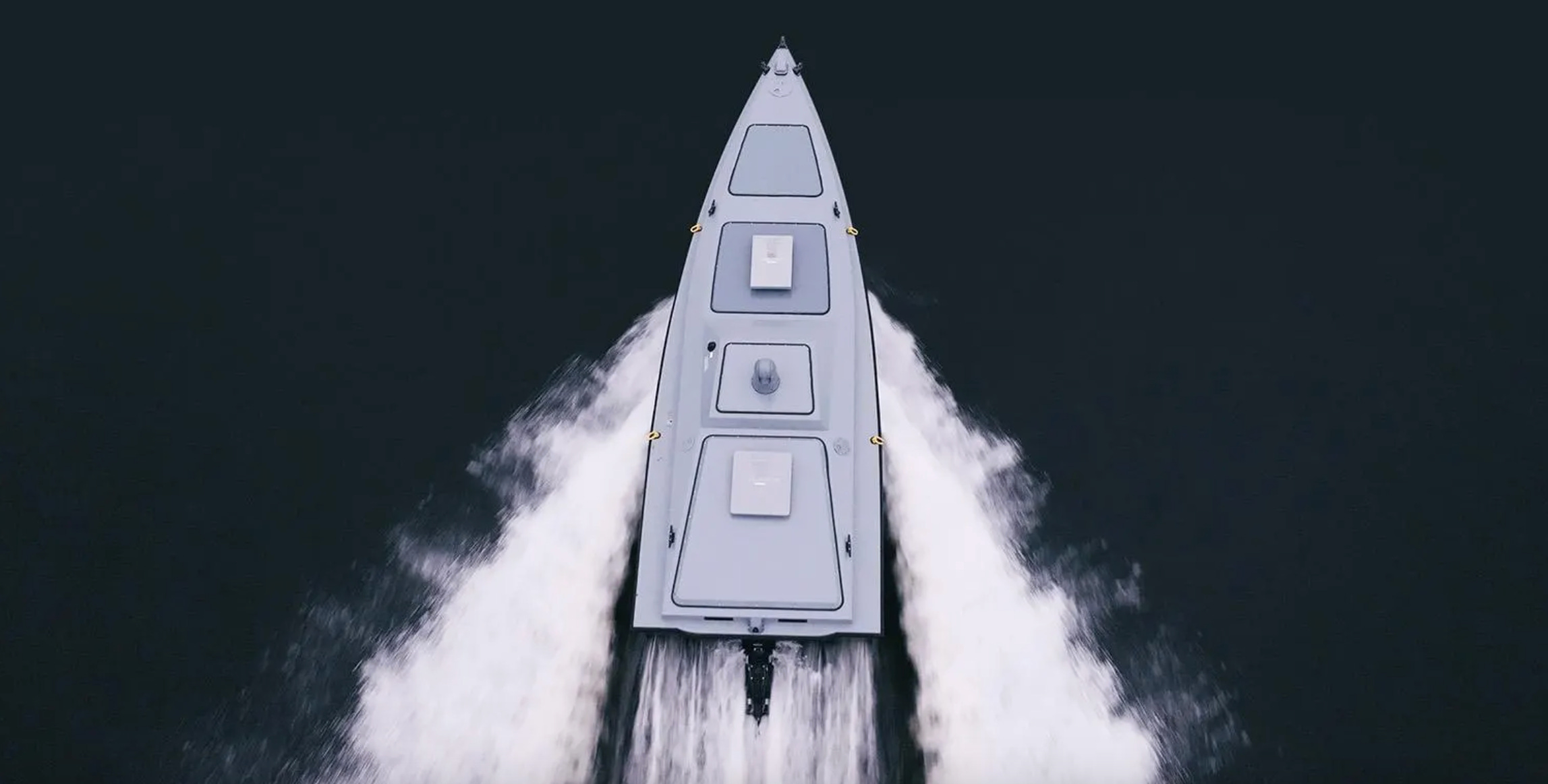
Ukraine’s naval drones have done something few military planners expected: they have forced one of the world’s largest naval fleets to retreat.
Over the past two years, remotely operated explosive boats have repeatedly struck Russian warships, patrol vessels, and infrastructure across the Black Sea. The attacks have damaged or sunk multiple ships and forced the Russian Black Sea Fleet to relocate much of its presence away from Crimea. What began as improvised wartime innovation has quickly evolved into one of the most consequential demonstrations of maritime autonomy in modern warfare.
Now a new company is attempting to industrialize that capability.
UFORCE, a defense technology firm built from a group of Ukrainian unmanned systems developers, has emerged from stealth with a valuation exceeding $1 billion following a funding round of more than $50 million led by Shield Capital and Lakestar. The company aims to scale battlefield proven Ukrainian drone technologies into systems that can be produced for Ukraine and, eventually, allied militaries.
The emergence of UFORCE highlights a broader shift underway in defense technology. For decades, military innovation largely flowed from established defense contractors or research programs in the United States and Europe. Ukraine’s war has produced a parallel ecosystem where engineers iterate directly against battlefield feedback, producing new systems at a pace rarely seen in traditional defense procurement.
Consolidating Ukraine’s Wartime Drone Ecosystem
UFORCE was created through the merger of nine Ukrainian defense companies that had already been collaborating closely during the war. The consolidation brought together teams developing unmanned aerial systems, robotic ground vehicles, counter drone technologies, and maritime drones.
The company is led by Oleg Rogynskyy, the founder of enterprise software company People.ai, which became the first Silicon Valley unicorn founded by a Ukrainian entrepreneur. Under his leadership, UFORCE is positioning itself as a bridge between Ukraine’s wartime engineering ecosystem and Western capital.
Since launching last year, the company says it has secured orders worth hundreds of millions of dollars and expanded operations across fifteen locations in six allied countries, including Ukraine and the United Kingdom.
The core of its portfolio consists of systems already widely used on the battlefield.
Among the most prominent is MAGURA, a family of unmanned surface vessels that have become central to Ukraine’s naval drone campaign in the Black Sea. These remotely controlled boats, typically packed with explosive payloads, can travel long distances at high speed and strike warships or port infrastructure. Their relatively low cost compared with traditional naval platforms allows them to be deployed in large numbers.
UFORCE’s portfolio also includes Nemesis, a series of heavy multirotor bomber drones that carry explosive payloads to front line targets. Russian forces have reportedly nicknamed the drones “Baba Yaga,” referencing a mythical figure from Slavic folklore. The nickname reflects the distinctive sound of large multirotor aircraft operating at night as well as their reputation among Russian troops.
In the ground domain, the company includes Lyut 2, an unmanned combat vehicle equipped with a turret capable of engaging both stationary and moving targets. Robotic ground vehicles remain an emerging category in warfare, but Ukraine has increasingly experimented with them for reconnaissance, logistics, and direct fire missions.
Another component of the portfolio is Sunray, a directed energy system designed to counter drones. Counter UAS capabilities have become one of the fastest growing segments of the defense market as inexpensive quadcopters and loitering munitions proliferate across modern battlefields.
Taken together, these systems reflect the increasing centrality of autonomy across every domain of warfare.
The Naval Drone Revolution
Among all these technologies, maritime drones may prove the most strategically disruptive. For centuries, naval power has been defined by large and expensive ships. Destroyers, frigates, and submarines represent some of the most costly assets in any military. Naval drones challenge that model by introducing platforms that cost a tiny fraction of traditional warships but can still threaten them.
Ukraine’s naval drone operations have demonstrated how these systems can be used to conduct long range strikes, swarm attacks, and maritime denial operations. Small autonomous vessels can be launched from dispersed coastal locations, navigate hundreds of kilometers, and strike ships or infrastructure with little warning.
The strategic implication is significant: relatively inexpensive autonomous systems can now impose real costs on large naval fleets. This dynamic is particularly relevant in contested maritime regions such as the Black Sea, the Persian Gulf, and the South China Sea, where smaller states may use autonomous systems to offset traditional naval disadvantages.
Surface vs Underwater Autonomy
The maritime autonomy sector is evolving across two distinct categories: unmanned surface vessels (USVs) and unmanned underwater vehicles (UUVs).
Surface drones like MAGURA are typically optimized for speed, payload delivery, and remote control operations. They are relatively inexpensive to produce and can be deployed in large numbers. Their main missions include strike operations, maritime denial, reconnaissance, and port attacks.
Underwater systems operate very differently. Because radio communication is extremely limited underwater, UUVs must operate with greater autonomy and sophisticated navigation systems. These platforms are often used for mine countermeasures, seabed mapping, infrastructure protection, and anti submarine missions.
Interest in underwater autonomy has grown rapidly in recent years, particularly after several incidents involving suspected sabotage of subsea pipelines and communications cables. NATO countries have begun investing heavily in unmanned underwater systems to monitor and protect critical infrastructure. Many defense companies are now attempting to build integrated maritime autonomy fleets that combine both surface and underwater vehicles.
A Growing Global Market
Demand for autonomous maritime systems is rising quickly. Analysts estimate that the global market for unmanned maritime platforms could reach tens of billions of dollars over the next decade. Several factors are driving this growth.
Naval fleets are becoming increasingly expensive to build and maintain, forcing governments to search for more cost effective alternatives. At the same time, modern naval strategy increasingly emphasizes distributed operations and large numbers of smaller platforms rather than a few large ships. Autonomous vessels can also operate for extended periods performing surveillance or patrol missions without putting crews at risk. This makes them attractive for tasks such as maritime domain awareness, infrastructure monitoring, and border security. As a result, maritime autonomy has become one of the most active areas of defense technology investment.
A Competitive Landscape
UFORCE enters a field that is rapidly attracting startups and defense contractors.
In the United States, companies such as Saildrone have focused on long endurance autonomous surface vessels for surveillance and maritime domain awareness. Saronic Technologies has raised significant venture capital to develop autonomous ships for the U.S. Navy. Defense technology firm, Anduril, has also expanded into maritime autonomy as part of its broader portfolio of autonomous systems.
Europe has seen increasing activity as well. Several defense contractors are developing robotic mine countermeasure fleets, while companies such as, Helsing, are expanding their work in AI driven defense systems into maritime applications.
Ukraine itself has become a major source of innovation in the sector. The war has forced Ukrainian engineers to develop and deploy naval drones at scale, creating operational experience that few Western companies possess. This battlefield experience may prove to be one of UFORCE’s most important advantages.
Why Western Militaries Are Watching
The interest from Western governments in Ukrainian drone technology reflects a broader shift in military thinking. Navies around the world are facing three structural challenges. First, shipbuilding capacity is limited and construction timelines are long. Second, the cost of modern warships continues to rise. Third, many militaries are seeking new ways to operate in contested maritime environments without exposing large crews to risk. Autonomous vessels offer potential solutions to all three problems. They can be produced faster, deployed in larger numbers, and used for missions that would otherwise require crewed platforms. For NATO countries confronting growing naval competition from Russia and China, these capabilities are increasingly attractive.
A Wartime Innovation Ecosystem
The emergence of UFORCE illustrates how Ukraine’s war has reshaped the global defense technology landscape. The country has effectively become one of the world’s most active laboratories for autonomous warfare. Engineers, startups, and volunteer teams have developed thousands of drones and robotic systems in response to rapidly changing battlefield conditions. Many of these innovations were initially built in small workshops or improvised production lines.
Companies like UFORCE represent the next phase of that ecosystem: the effort to consolidate wartime innovation into scalable defense technology firms. If that effort succeeds, Ukraine’s battlefield engineering culture could evolve into a new generation of globally competitive defense companies. And in the emerging world of maritime autonomy, some of the most important innovations may no longer originate in traditional defense laboratories, but in a war fought along the shores of the Black Sea.