

15 Years in the Making: "Operation Midnight Hammer" and the Technology That Made it Possible
Late Saturday evening Eastern Daylight Time (EDT), US B-2 stealth bombers flew 37 hours nonstop from Whiteman Air Force Base in Missouri to Iran and back, dropping more than a dozen 30,000-pound “bunker buster” GBU-57 Massive Ordnance Penetrators (MOPs) on Iran’s three main nuclear enrichment facilities: Isfahan, Natanz and Fordow.
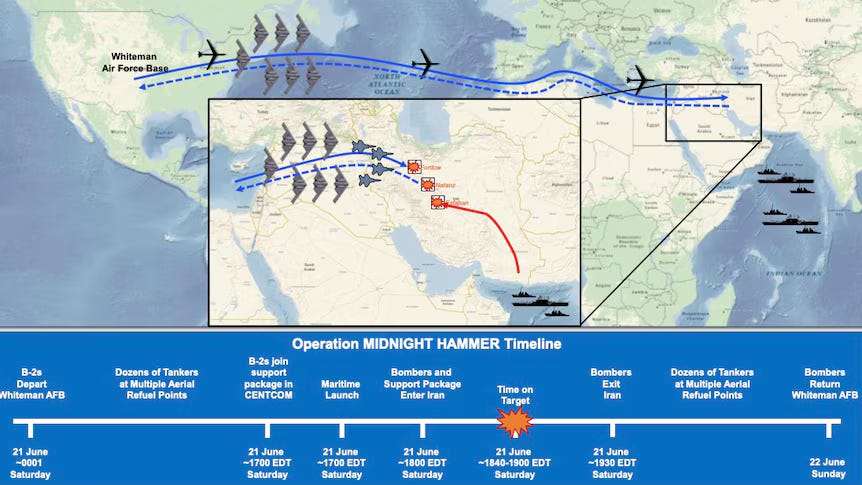
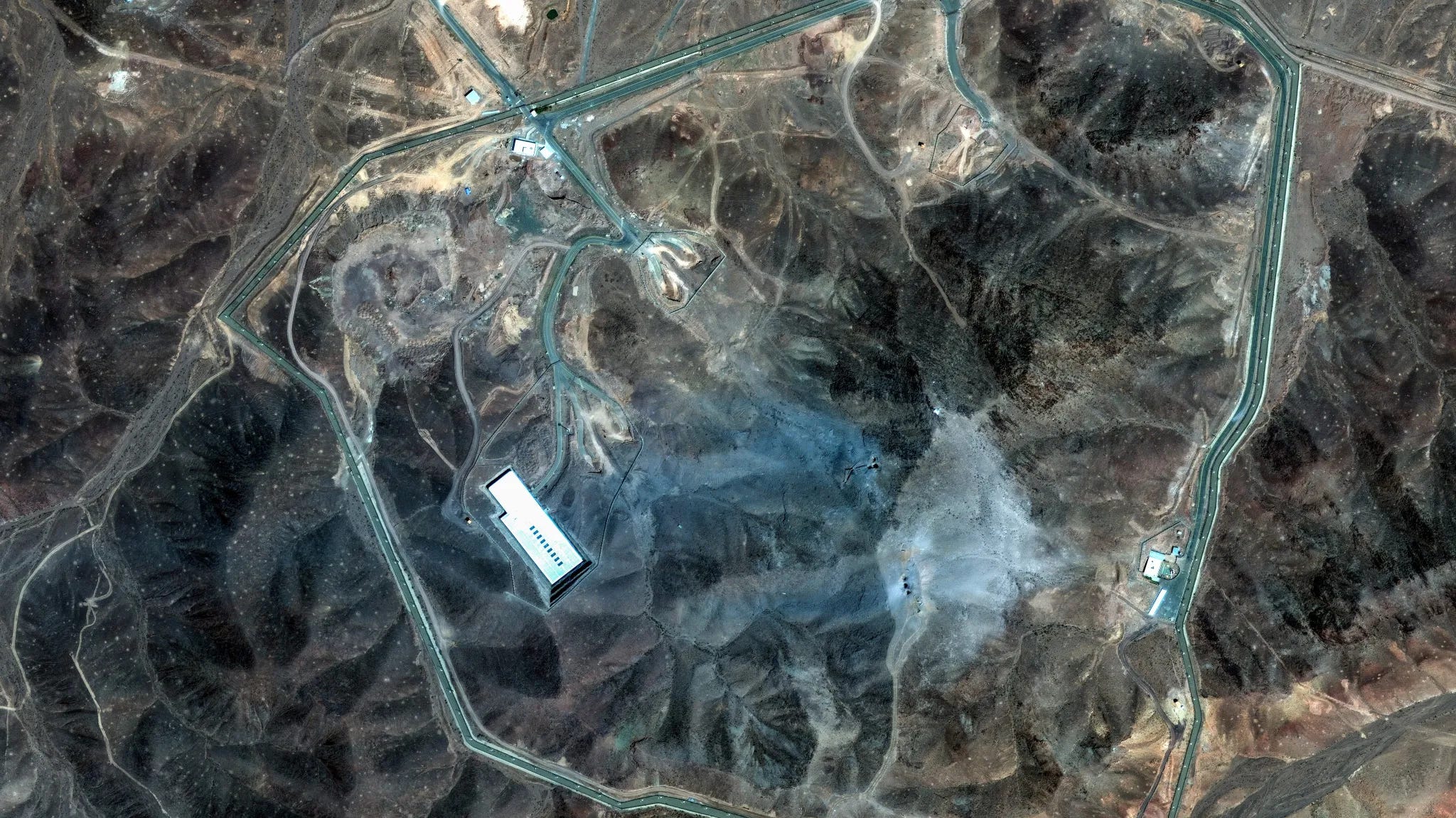
The White House stated that "Operation Midnight Hammer" significantly disrupted Iran's nuclear program, describing it as "decimated" and "completely obliterated." However, according to a leaked report from the Defense Intelligence Agency (DIA), the strikes only delayed Iran's enrichment activities by a few months. The White House claimed the report was "fake news" and suggested it had been leaked by an "anonymous, low-level individual within the intelligence community."
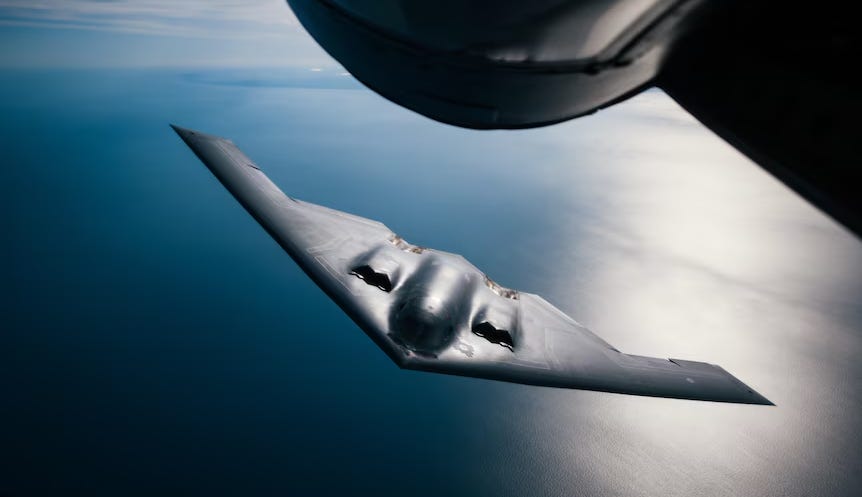
Among the more than 125 US aircraft involved in the mission, the seven B-2 bombers were particularly noteworthy. The United States possesses only 20 of these $2 billion stealth bombers, highlighting the significant allocation of Pentagon airpower towards Iran. In addition to the B-2 bombers, the operation was supported by a comprehensive array of military assets and technological capabilities. Multiple flights of fourth and fifth-generation fighter aircraft provided advance cover, engaging potential threats from enemy fighters and surface-to-air missile systems.
The mission also included the use of high-speed suppression weapons to neutralize Iran’s air defenses. These weapons likely included the AGM-88 HARM (High-speed Anti-Radiation Missile) and AGM-88E AARGM (Advanced Anti-Radiation Guided Missile) systems, which were launched from EA-18G Growlers and F-16s accompanying the B-2s. To sustain the extended mission, dozens of aerial refueling tankers facilitated multiple in-flight refuelings over the Atlantic, enabling the bombers’ uninterrupted 37-hour flight.
Furthermore, a guided missile submarine, presumably an Ohio-Class vessel, launched more than 24 Tomahawk missiles at Iran’s Isfahan nuclear facility from the Arabian Sea. The strike package was rounded out by an extensive suite of Intelligence, Surveillance, and Reconnaissance (ISR) aircraft, likely including Boeing’s RC-135 and P-8 Poseidon, although official sources did not specify the exact models employed. The operation deployed over 75 different precision-guided weapons.
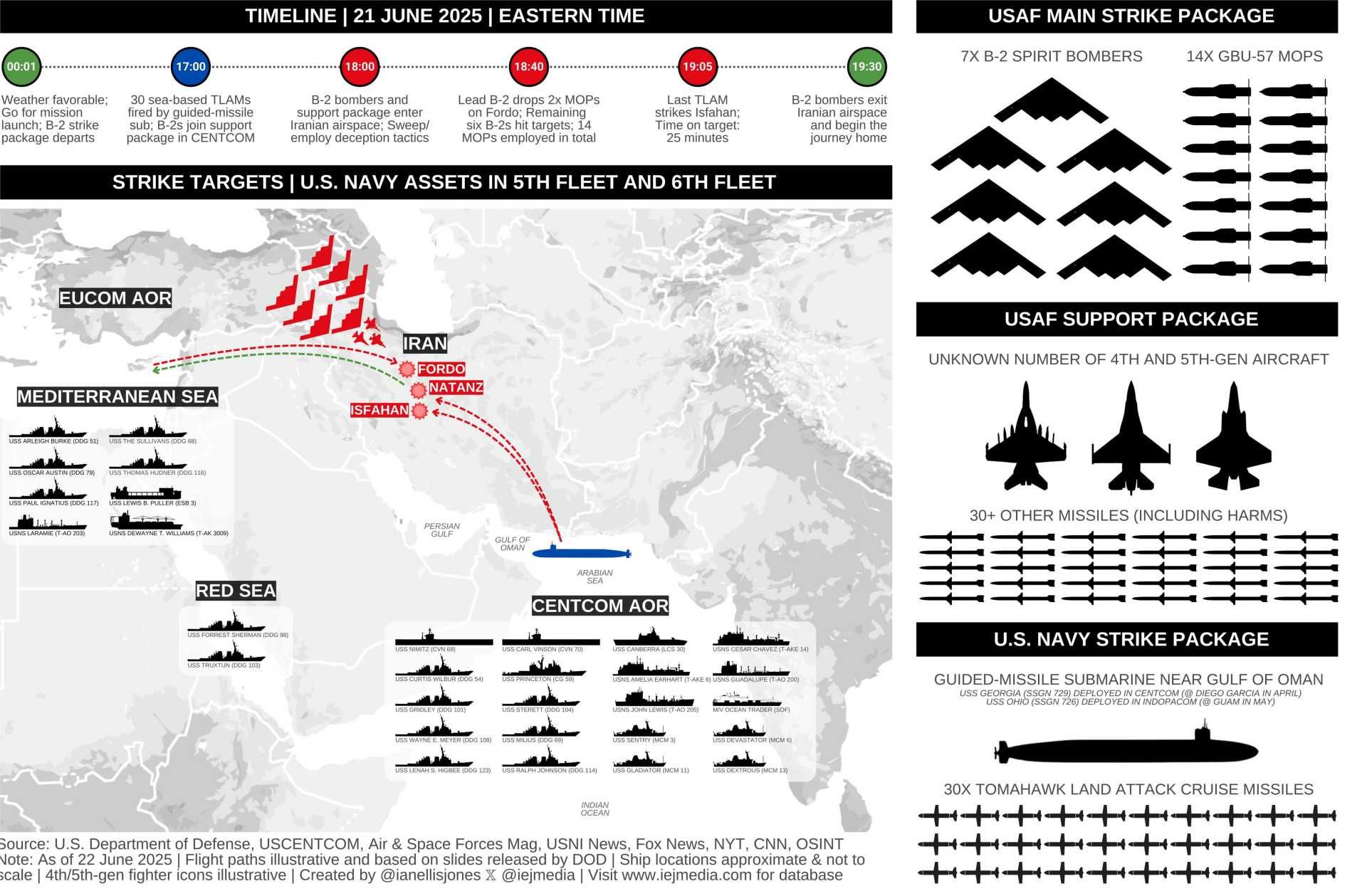
The "Bunker Buster", officially known as the Boeing-made GBU-57 Massive Ordnance Penetrator (MOP), has now become widely recognized. Weighing 30,000 pounds and containing over 5,000 pounds of explosives, it is the most powerful non-nuclear weapon in existence. Operation Midnight Hammer marked the first operational deployment of these bombs since their development in the early 2000s. The development of these weapons and the strategizing for the operation had been ongoing for approximately 15 years, according to DOD.
During the U.S. strikes, Iran’s fighters did not fly, and it appears that Iran’s surface-to-air missile systems were unable to detect the U.S. approach. In response to the U.S. attack, Iran launched 14 missiles at Al Udeid Air Base in Qatar. All were intercepted except for one - which, according to President Trump, was allowed to proceed. The United States had been warned of the impending attacks. Despite President Trump announcing a ceasefire in the "Twelve Day War," new Israeli airstrikes resumed followed by further missile launches from Iran.
Israel’s Operation Rising Lion aerial campaign against Iran, initiated on June 13, was spearheaded by the F-35I Adir, the F-16I Sufa, and the F-15I Ra’am - each an Israeli-modified variant of United States fighter aircraft. The Adir, Israel’s adaptation of the F-35 Lightning II, represents the most advanced platform in this suite of capabilities. Israel, specifically its intelligence agency Mossad, employed a range of sophisticated covert tactics during the campaign. Armed drones were clandestinely transported into Iran, operating alongside precision weapons that had been strategically positioned in advance for close-range strikes. Advanced artificial intelligence software was instrumental in identifying targets - including facilities, vehicles, and individuals such as more than ten senior Iranian military officials - for precision operations. In some instances, direct communication was utilized: Mossad operatives contacted Iranian generals by telephone, delivering unequivocal warnings of imminent danger should they fail to promptly vacate their positions.
The Islamic Republic launched 400 missiles towards Israel across 17 salvos during its retaliatory strikes, in addition to over 1,000 drones, including the Shahed-131 and 136 models. Most of these were intercepted by Israel’s air defense systems and electronic warfare tools, but some managed to make impact. Iranian officials also claim to have utilized “Fattah 1” hypersonic missiles against Israel, although this assertion has been met with skepticism. Jack Watling, a senior fellow at RUSI, informed AP, “The Iranians don’t have the capacity to manufacture them.” Nevertheless, the IDF confirmed that Iran struck Israel with a ballistic missile armed with a cluster munition warhead. Only two missiles in Iran’s arsenal - the Scud-like Qiam and the larger, more advanced Khorramshahr - are capable of carrying the type of cluster munitions reported.
Related:
US strikes only set back Iran's nuclear program by a few months, leaked intelligence says
Operation Midnight Hammer: How the US conducted surprise strikes on Iran
What Operation Midnight Hammer Means for the Future of Iran’s Nuclear Ambitions